Teacher Sketch

Jon Rees

Teacher of English, Theory of Knowledge, Human Technologies and Sustainability Coordinator
Why did you want to become a teacher?

I had completed a post-graduate degree in journalism, yet faced with the prospect of covering the grind of daily news for a local paper, “Rabbit Escapes From Hutch” and all of that, I knew I wanted to live and travel overseas. So, off to the university job centre I went. I applied for a teaching assistant for a school in Uganda…and ended up working as Head of PE. I loved the challenge, the collegiality, the responsibility, so went back to get a formal qualification.

What is your first memory from school?

I wrote an adaptation of The Sleeping Giant, a beautiful, sad nursery story. Mrs. Wenbourne, a fantastic primary teacher, went to the trouble of having other students illustrate it then turn it into a real book! Which Tim Dean was sick on. But another was produced and my mum still has it.

What makes a ‘good day’ at school?

The student editors of Insight magazine amaze me with their time management, commitment and professionalism. It’s incredibly rewarding to have students create brilliant pieces of work for their formal assessments, it’s another feeling to have students working with a sense of purpose towards a creative end goal of their volition.

If I walked into your classroom on a typical afternoon, what would I see going on?

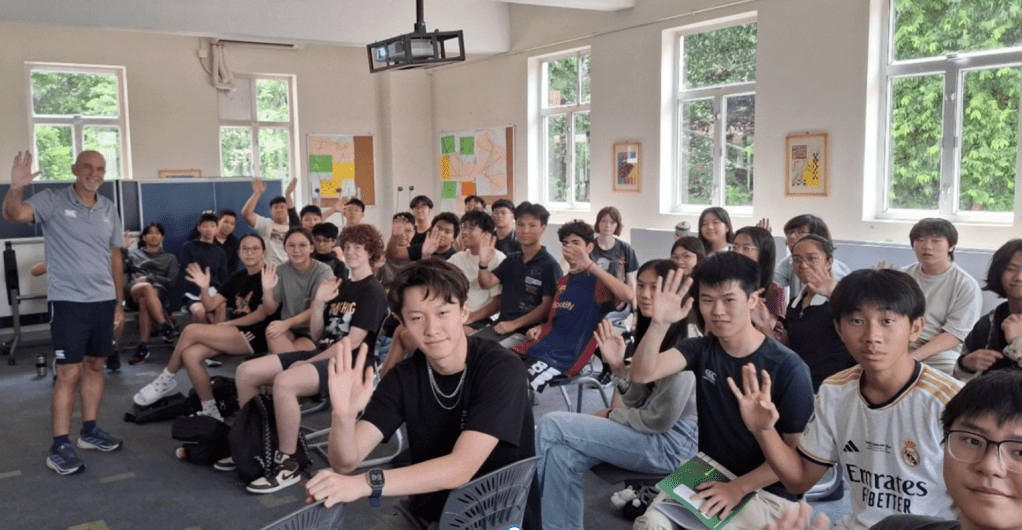
You’d see sofas, rugs and cushions scattered around, thanks to the creative re-design that Liam Greenall and Natalie Bailey worked on it. I would hope that you would see engaged students working collaboratively/individually with purpose. You would see a bit of a mess on my desk.

What’s the funniest thing a child has ever said to you?

Can’t narrow this down, but the funniest, most spontaneous, enthusiastic and engaging student I’ve travelled with was Kyle Chu on the Cambodia Service trip. He was a tour de force whose good nature broke down language barriers and got everyone laughing while working hard constructing bamboo houses.

What are your “trapped on a desert island” books or movies?

Wade Davis: The Wayfinders- Why Ancient Wisdom in the Modern World Matters (Hopefully I could use it to plan my exit!) I would gamble on some sort of collected Buddhist teachings as they seem to be the best belief system to focus your mind and are the foundation of the Mindfulness movement. I’m afraid I don’t know which though as I’m only getting into this! You would have plenty of time to mediate anyway. 

Moby Dick: “The Great American Novel” and of enormous length with so much depth to read and re-read.

The Star Wars Trilogy(original!)

What is the hardest thing about being a teacher?

Regardless of the relative freedom that we are provided for innovation with Deep Learning, we are constrained to a timetable. It would be great to find a system that allowed more freedom and flexibility. 

What inspires you?

Sport and travel. I am constantly thrilled, absorbed, and astounded by sporting documentaries or the theatre of a live match. Whether it’s understanding the  context of social-political forces surrounding an event, or just trying to  comprehend the level of dedication and focus of people like free soloist climber Alex Honnold, or historical figures in places I travel.

What is your greatest accomplishment?

Probably my Masters in Educational Development as it has most profoundly changed my world view. I didn’t approach it in the right way at the beginning, but stuck with it and I completed it across living in three countries. That’s not ideal, but I learned about work-life balance, dedicating myself to a goal and conducted research in Spanish when investigating my action-research on the impact of an educational NGO in a poor district of Lima.

What would students be surprised to find out about you?

I’ve run 7 marathons.

In: Staff Sketch

When: 1 year ago

Podcast: HOW IMPORTANT ARE MATERIAL TOOLS IN THE PRODUCTION OR ACQUISITION OF KNOWLEDGE?

A TOK podcast interview with Emily Osann on one of Exhibition IA prompts

https://www.toktalk.org/tok-talk-podcast/prompt-23-how-important-are-material-tools-in-the-production-or-acquisition-of-knowledge

0 Comments

https://www.toktalk.org/tok-talk-podcast/prompt-23-how-important-are-material-tools-in-the-production-or-acquisition-of-knowledge

TOK Talk · How important are Material Tools?

I met with Jon Rees, another TOK Teacher (as well as teacher of Human Technologies and IB English) ​here in Hong Kong, and we discussed TOK Exhibition Prompt 23: How important are material tools in the production or acquisition of knowledge? It was a fascinating discussion! Students, you need to be careful in this question about the difference between producing knowledge and producing things. While there is a connection (knowledge is needed to produce things), it is not an obvious connection so an exploration of the knowledge being produced (not just the thing) is required here. I think it would be very hard to argue that material tools (and conceptual tools by extension?) are not essential – and yet there’s room for exploration as you can hear from our conversation. I hope to talk with Mr. Rees again soon, as it was a very interesting and thought provoking conversation. 

Books & Resources that we referenced and discussed in relation to this talk:

  • ‘Sapiens’ by Yuval Noah Harari – this book is essentially an exploration of the role of material tools in the development of humankind, but is especially interesting when he talks about “fictional realities”.  For a quicker insight, watch this: Why humans run the world TED talk with Yuval Noah Harari 
  • Techno Feudalism’ by Yanis Varoufakis – he does a great job from a Marxist perspective explaining how his father taught him the concept of historical materialism, how technological development creates the tools/conditions for the advancement of the socio-cultural context. Then who controls the means of production, power/authority. 
  • How to Understand E= MC2’ by Christophe Galfard
  • The Sane Society’ by Eric Fromm – criticism of our focus on consumption in a nuclear age where we can annihilate ourselves 
  • Song of the Cell’ by Siddhartha Mukherjee – deep exploration of our understanding of biology – the first chapters are specifically focused on development of the microscope and its influence on the entire field of microbiology and beyond
  • Guns Germs Steel’ by Jared Diamond outlines the theory of geographic determinism, and thus the access to materials and the tools we can therefore make are everything in the development of humankind
  • Knowledge Illusion’ by Steven Sloman and Philip Fernbach – the illusion of explanatory depth, mistaking shared knowledge for our own
  • Justice with Michael Sandel 
  • Little Museum of the World in Chai Wan – A time machine for building peace
  • The Vanishing Face of Gaia’, by James Lovelock – essential wake-up call for humankind
  • Donut Economics’ by Kate Raworth – a hopeful perspective! Nibbling away what we need (not beyond our planetary boundaries)

Guest: Jon Rees
Music from the ISF Student Brass Band playing outside the school gate one morning in December 2023

Thank you to Waffling Beans for letting us use your space to record!

HUMAN TECHNOLOGIES AND TOK

HUMAN TECHNOLOGIES AND TOK

Last week, Executive Head of School and Human Technologies progenitor, Toby Newton, delivered an excellent talk to our Y12 students, pointing out the ways in which their Human Technologies curriculum had prepared them for some aspects of their IB Theory of Knowledge course.

Deputy Head of School, Flora Lai, pointed out some of these pathways in her pertinent article published in last week’s Bulletin which you can read here; it was a real bonus for our Y12s to get a lifetime’s worth of insights about evolutionary biology, human nature and cognition distilled to one hour and then connected to TOK.

It might be argued, the way in which TOK focuses on just 5 Areas of Knowledge reinforces an outdated notion of academia as “siloed” off into different disciplines, a notion reinforced by the physical architecture of university departments which still houses different subjects such as The Arts, The Sciences, The Humanities in separate buildings. Today, though, this compartmentalisation of areas of study seems increasingly outdated. An ecologist, for example, must base her scientific data on precise mathematical calculations, as well as have a nuanced understanding of Systems Thinking to understand the complex range of climatic, economic, and societal issues that impacts her topic, as well as use inter-social and computing skills to first gather, then communicate her research.

Human Technologies can be described as a guidebook for living, and its moving horizon (you can never arrive at the destination!) is to push lifelong learners towards the pursuit of “The Good Life.” But so many schools today focus merely on academic performance, and do not give the students a chance to explore their own values and identity – how they are wired, and the implications of this to identity formation, and then how to develop their own sense of self-agency as they encounter the world.

To prepare students for this complex world, Toby created, and then collaborated with like-minded individuals to evolve the HT course to address what he believes should be essential concepts within a modern educational system that speaks not just to the narrow aims of exam success. On this occasion he chose the work of Etienne Wenger to illustrate this point:

Education, in its deepest sense and at whatever age it takes place, concerns the opening of identities – exploring new ways of being that lie beyond our current state. Whereas training aims to create an inbound trajectory targeted at competence in a specific practice, education must strive to open new dimensions for the negotiation of the self. It places students on an outbound trajectory towards a broad field of possible identities. Education is not merely informative – it is transformative.

Etienne Wenger, Communities of Practice

Toby pointed out in his talk that we are meaning making creatures. We see patterns in the constellations and can use the capacity of our evolved consciousness to construct entire systems of religions and mythologies out of the starry skies. And our future selves, similarly, can be formed from a galaxy of possibilities.

The future world is one that is going to be increasingly complex and interconnected. The era of global capitalism has led to human societies being inevitably intertwined; we also live in a dizzying age of semiotic potential constructed through the mainstream and social media. TOK can help students understand the various ways in which knowledge can be constructed, as well as refining some critical thinking strategies so that they can discriminate fact from fiction as it flies at us from the algorithmic superhighway.

Finding ourselves, understanding the physical and psychological forces that have shaped us, understanding who we are and how we have been encultured… and then learning that we have the capacity to take control of the direction of these beliefs, values, predilections and biases, to make lives of real meaning: that is the goal of Human Technologies. And Toby was explicit in asking the students to never forget these lessons.

Sustainability @ ICHK

At ICHK we interpret sustainability holistically, at the personal, somatic and psychological level.

We need to be sustainable within ourselves before we set out to fix problems we might see in the world. If we are calm and balanced internally, then we will have the energy and capacity to effect change in a more sustained fashion in the future.

Our Human Technologies curriculum asks students to explicitly reflect on their backgrounds, their values, and their future goals. We run a wide panoply of environmentally-focused extracurricular activities that work to develop a growth mindset within our students. 

Uniquely, compared to other Hong Kong schools, we are situated in the spectacular natural environment of the Pat Sin Leng Country Park, so students are regularly engaging in hiking, camping, cycling, and science trips to embrace the outdoors and appreciate issues of sustainability at the local level.

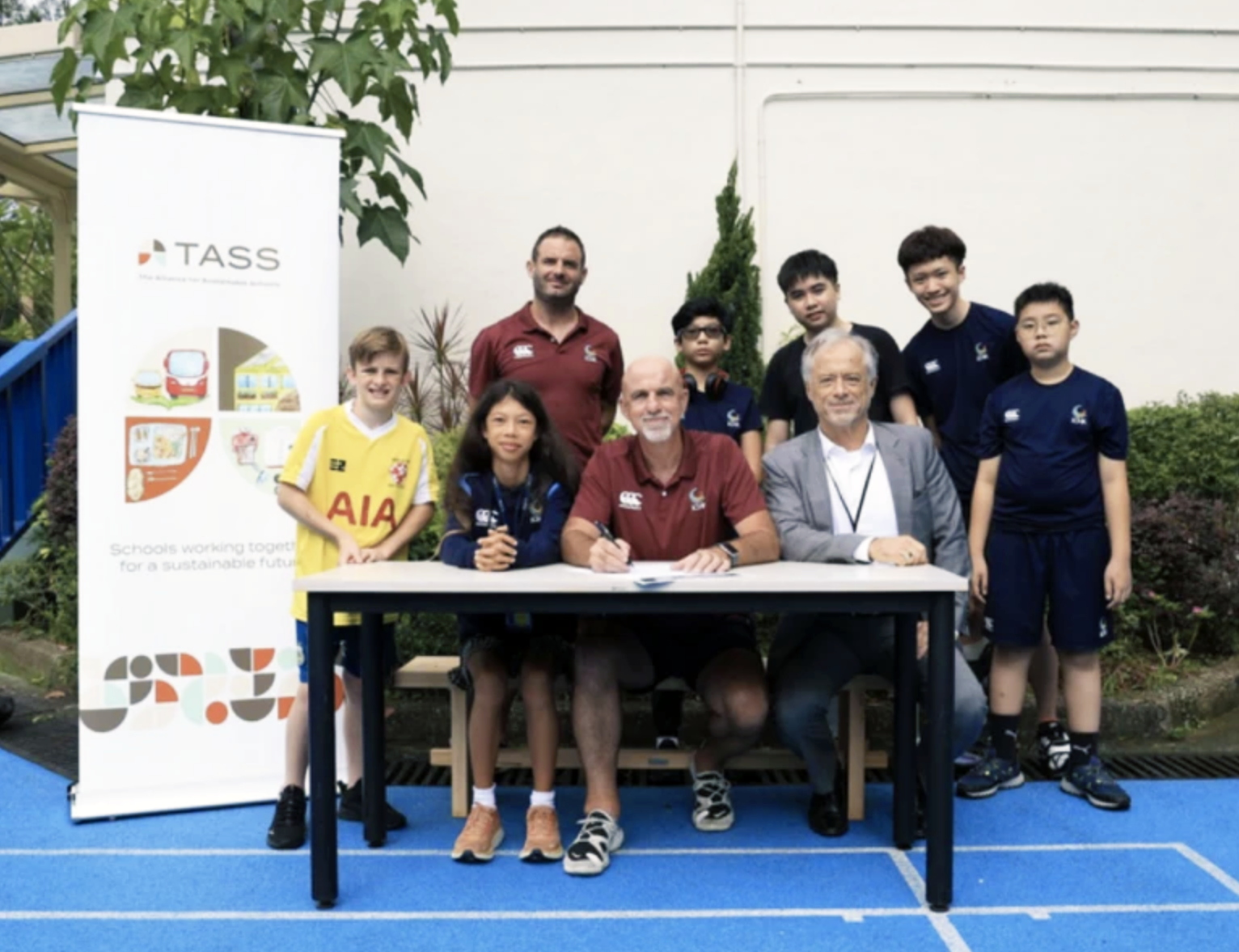
We are a member of The Alliance of Sustainable Schools, which is a network of schools within Hong Kong and globally, that seeks more sustainable solutions in how they operate.

As a member school, we recognise the seriousness of our ecological crises – including climate change, biodiversity loss, deforestation, pollution and water scarcity – and the challenges they pose for the health and wellbeing of our students and the global community.

In signing the TASS Charter in 2023, we pledged that ICHK would develop practices that enable students to develop the knowledge, skills and competencies required to become sustainability stewards.

Under the guidance of Sustainability Coordinator Jon Rees, a team of Eco Warriors is leading a number of initiatives to reduce our carbon footprint. Our two TASS ambassadors are part of this team, and they connect with our School Representative Council and School Media Team to promote key sustainability issues within ICHK. These include the reduction of food waste, increased recycling and the removal of single use plastics.

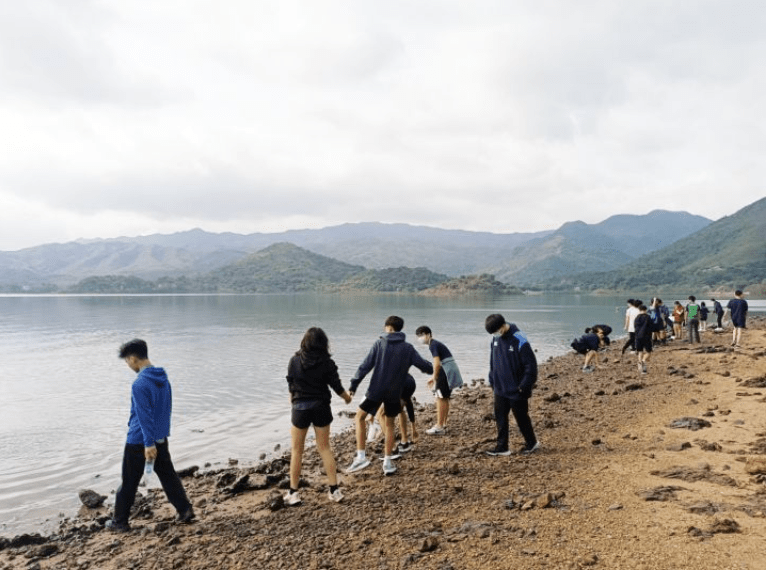
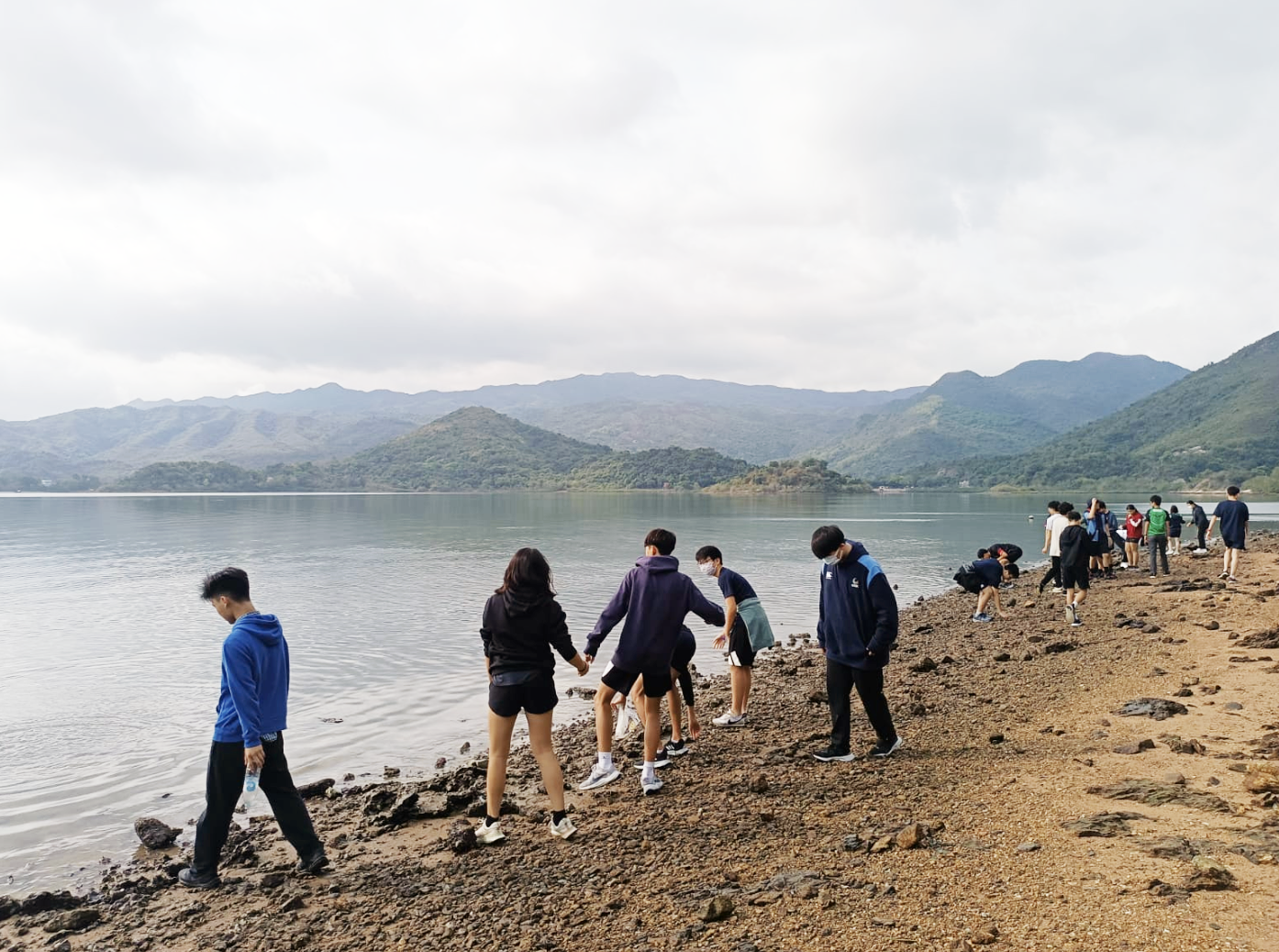
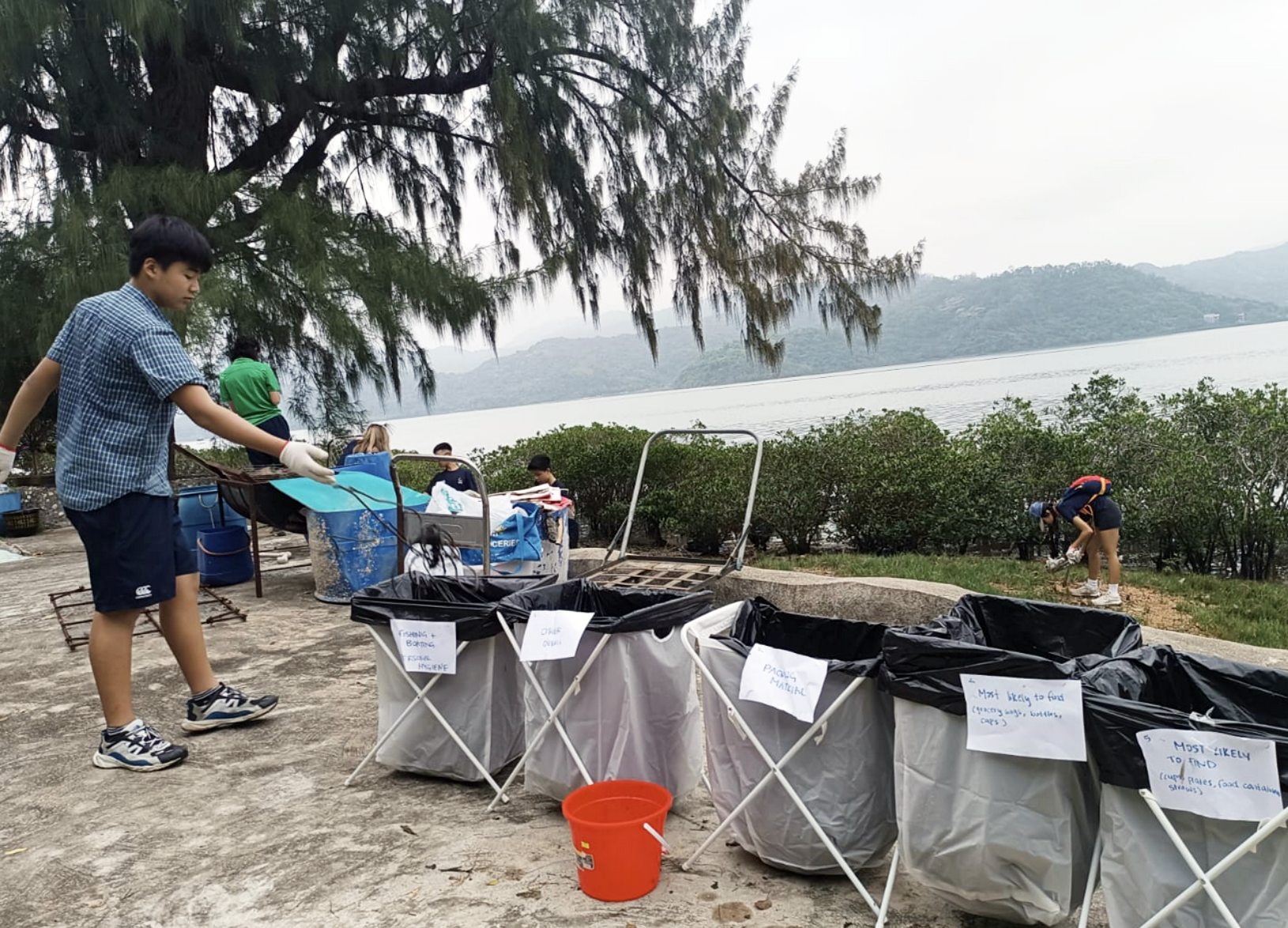
Students engage in regular clean-ups along our neighbouring shoreline, reminding them how important it is to care for their community and helping them to develop sustainability practices.

Connections are also made with ICHK’s flagship programmes including Deep Learning and Enrichment & Flow,  where students get out and explore the world around them and come face to face with environmental issues in an authentic manner.

Above all, we strive to develop caring, empathic students who understand that through their actions, they can make a difference, and sustain a positive impact upon the world.

Find out more about ICHK’s approaches to sustainability>>Learn More

ICHK EARTH WEEK

ICHK Earth Week, April 25th, 2024

Jon Rees is Sustainability Coordinator and a Teacher of English and Theory of Knowledge at ICHK

Monday, April 22nd saw ICHK kick off a week of celebrations to allow for a multidimensional exploration both to celebrate the beauty of our planet, as well as understand the scope and scale of the challenges ahead. 

To adapt, and hopefully to thrive, in a precarious future we must look to first be “Sustainable Humans”: by learning how to cultivate the energy, empathy and balance within ourselves, we can project more positively out into the wider world and effect greater change through the quality of our relationships and ability to work in collaboration others, regardless of whether their views accord with our own. 

You could make a strong argument that every day is Earth Day at ICHK. Certainly “the art and craft of being human” is a motto that is lived daily within the school and the regular explorations of the city through Deep Learning, the Outdoor Learning department, the pastoral programme, and extracurricular activities. 

For example, just the week before, Year 9 students were preparing for a Rite of Passage ceremony to mark their entry into the upper school, and showed their sense of responsibility for the planet by continuing a longitudinal science study of the health of our local mangroves. And our Drama department, led by Liam Greenall swept the boards at a school theatre awards. The performing arts, and the sports activities the school runs are just the most powerful means of cultivating “sustainable humans” equipped with the socio-emotional skills to thrive in the future. Building a shared commitment to these habits, dispositions and behaviours will be more formally recognised through the implementation of the new “ICHK Pin” initiative, launched by Head of School, Toby Newton this week.

On the Friday before Earth Week officially began, Marcus Lee led the Environmental Action Group to organise a very successful Toy & Stationery drive for Crossroads Foundation. Marcus was inspired to do so after hearing Crossroads’ founder, David Begbie, speak at an SDG event. Outdoor leader, Dave Addis, has opened up a permanent line of communication to Crossroads, ensuring that they have first refusal on furniture from renovations. 

Additionally, the week before, Carly Leung from the environmental start-up, VAIR, came in to speak with our Year 12s about sustainable careers and how to make effective choices to pursue positive academic and social futures. Carly Leung was one of the HK delegates at COP 28 in Dubai, so they were lucky to receive such useful advice from a dynamic young leader within the city.

Our SMT worked fantastically to turn a range of nature messages, including ancient Chinese wisdom about living in balance with our environment, (thank you Ms. Luk!), into posters for display around campus. The SMT also helped judge the winners of our hand drawn and digital Earth Week poster competition. 

The SRC helped us to launch a Kadoorie Farm: Sponsor a Tree project too. We are collaborating with Year 8 parent and Kadoorie plant specialist, Craig Williams, to acquire a range of native HK species to promote the regeneration of biodiversity atop the Nature Trail that runs behind school, in an area cleared by Dave Addis’ Bushcraft and Year 10 ENF students.

Christian Pilard, an ICHK parent, and founder of Eco-Systems Action Foundation came in and spoke to all of our Year 9s, Year 12s, as well as the +1 Centre students about the incredible range of projects which his organisation has made a positive contribution to across the last twenty years. His compassionate and proactive message seemed to work as a catalyst for some animated Year 12 SoCO planning later in the week which was wonderful to see. 

English classes had a special lesson devoted to inquiring into the issues that beset our species, captured through Carl Sagan’s compelling, A Pale Blue Dot, monologue. We looked at how the UN Sustainable Development Goals offered some solutions, but also pointed to very limited progress in many of the categories. HT classes listened to meditations, explored Earth Day songs, and took walks down to our local temple to immerse themselves in nature.

Across the week, a range of different links were posted for students to dip into courtesy of BBC Earth, and Ted Talks with prominent conservationists such as Jane Goodall and Al Gore. A range of documentaries played at lunch throughout the week, including Plastic Ocean, My Octopus Teacher (selected by the EAG’s Guy Traittel), Cowspiracy, Before the Flood and The Walk that Made Me. Additionally, an Earth Day 2024 playlist was compiled and linked here if you want to enjoy a range of songs connected to the themes mentioned.

Our Economics department ran a series of lessons on the circular economy. And this was fantastic groundwork for the visit of Tiffany Leung, from Redress, an organisation devoted to reducing our patterns of over-consumption. This event was ably put together by a group of Year 12 students, so congratulations to Ani, Caiden, Ariv, and Elkan for their positive actions for our community which benefited our Year 7 and Year 8 students. It also helped deepen the Year 7s’ understanding of reducing waste as they pioneered bringing in a reusable container for the canteen. The HK Government marked Earth Day by bringing in some very welcome legislation banning single-use plastics from the thousands of cafes and restaurants across the city. Our canteen largely replaced plastic cutlery long ago, but if we can also reduce unnecessary wooden forks and paper plates ending up in landfill too, all-the-better. 

Wednesday, saw a small but highly motivated group of Year 10 students accompany science teacher, Mr. Alex Yim, and Jon Rees down to PNEC Organic Farm. Look out for a further post about the excellent community work PNEC are engaged in, but great thanks to Kootyin and Pinewood for their usual generosity and kindness, and for gifting us with a copy of the newly published oral storytelling history of Nam Chung and Sha Tau Kok.

The work will surely carry on in classes, Deep Learning inquiries, extra-curricular activities, and the library, so thanks, then, to Ms. Palmer who has curated a series of books regarding Sustainability so that students can carry on their engagement with these topics. 

Written by: Jon Rees

In: Teacher Insights

When: 6 months ago