Psychosomatic HT Insights from my Summer Trip to Ladakh

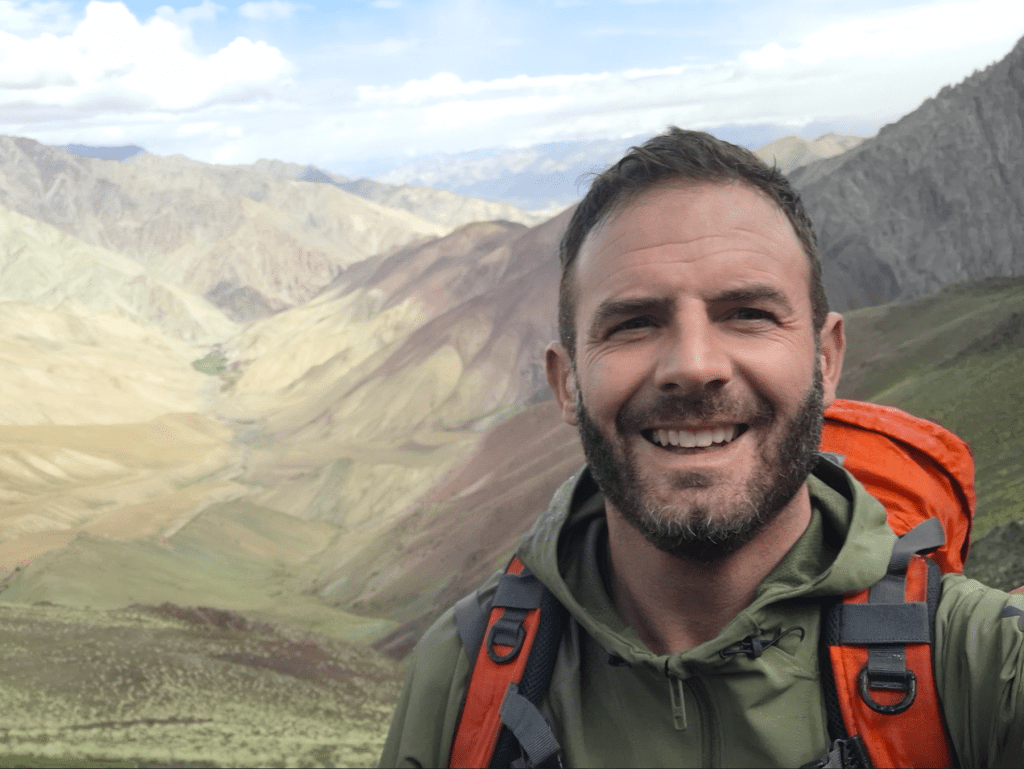
Across the summer holiday, HT teacher, Jon Rees, took an extended trip through Ladakh, in Northern India. As part of a series exploring Human Technologies, Jon relates his insights- focusing this week on the enveloping psychosomatic lens.
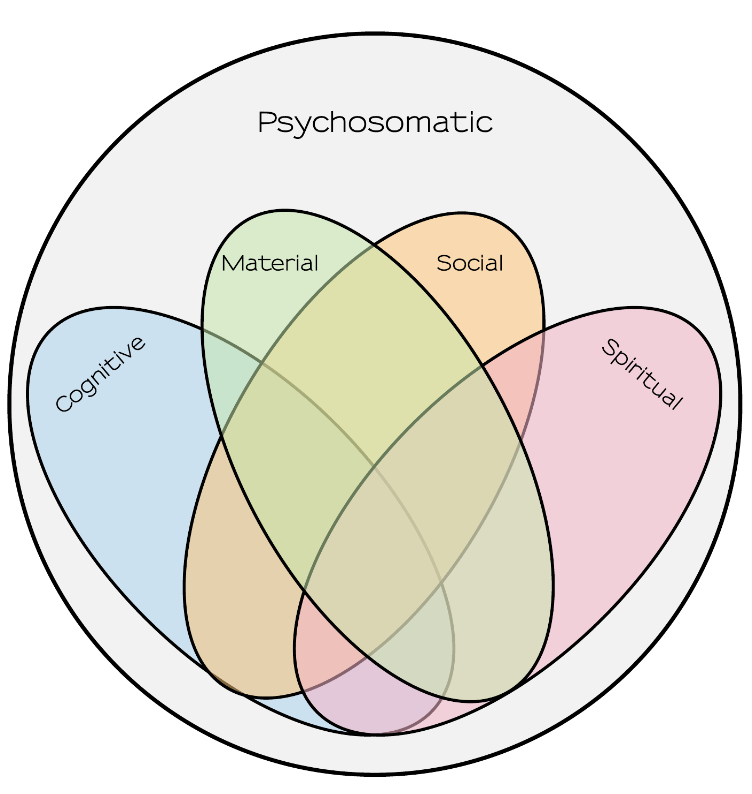
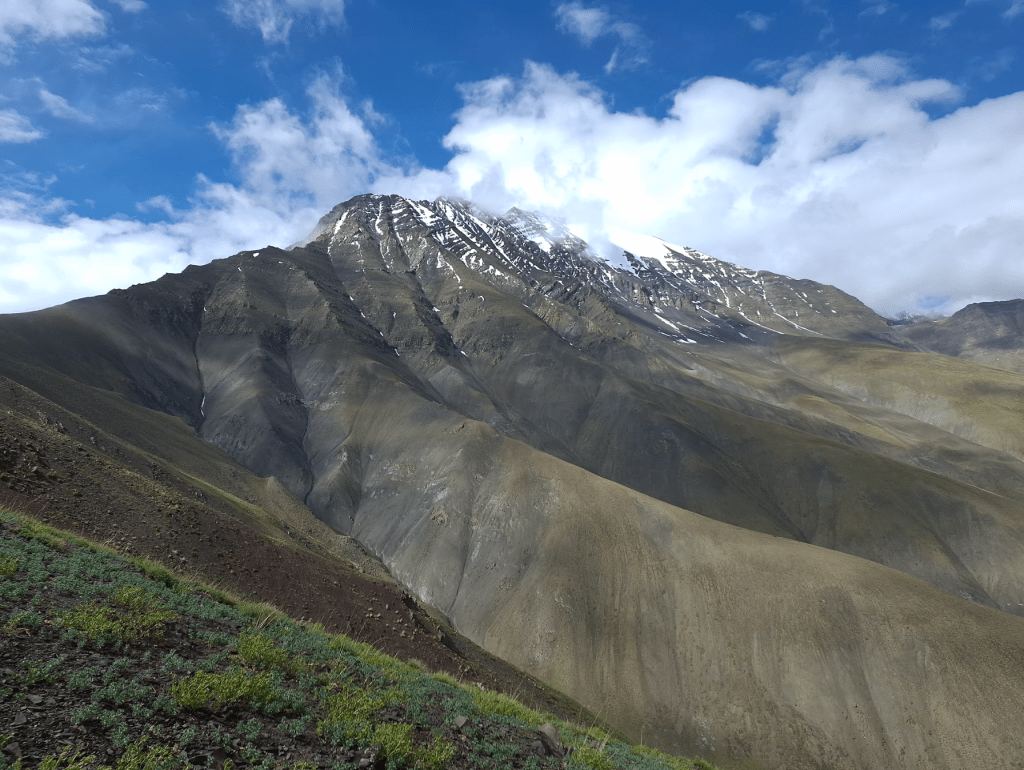
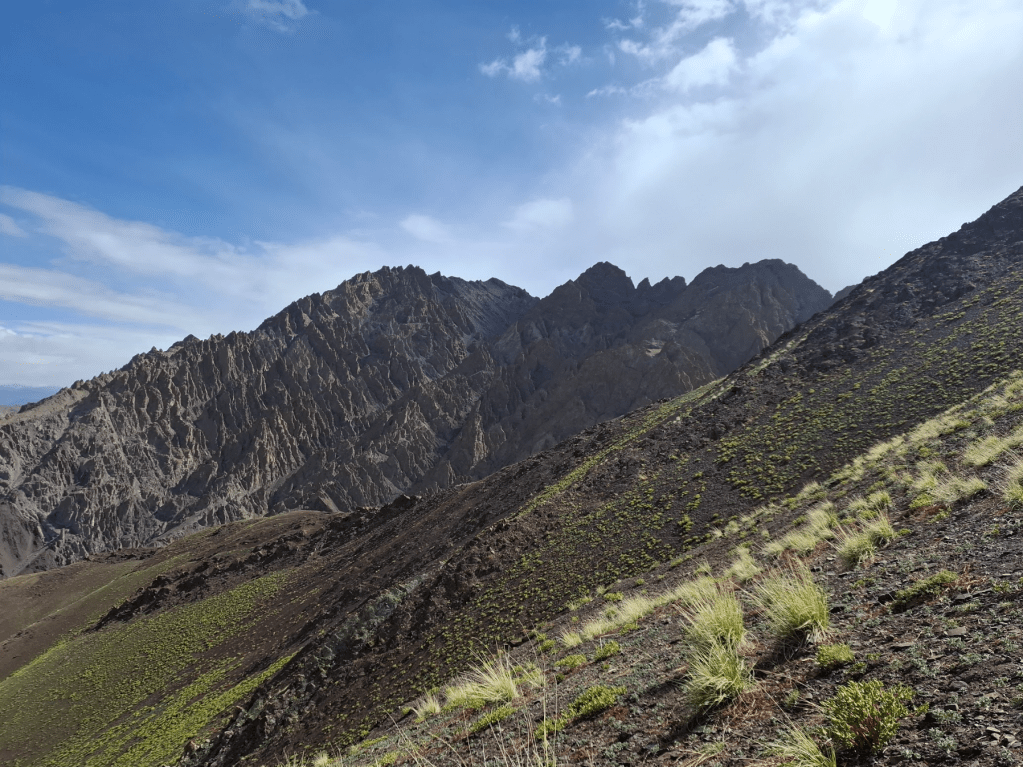
(l)The view from halfway up the valley to the Stok-La Pass from Rumbak, which can be located through the bright green splash of cultivated valley floor; (r) The HT Venn Diagram

I came to the realisation that I was stuck. Perched high above Rock-a-Nore Road, and clinging on to the Hastings Cliffs that rose up from the dark, wooden fishermen’s smoke shacks below, my legs had locked up and were quivering, my hands were clammy and I had a tight knot in my stomach as adrenaline coursed around my system. 

I was probably 7yrs old and my friend, Chris’ mum, had taken a group of us out for a day trip to Hastings, Kent. We had stopped for an ice cream after the cinema and then we had the freedom to go clambering up the rocky cliff face. Except, I realised, I had gone too far, probably showing off and now found myself trapped half way up towards Hastings Castle, staring at the road below and the faces of the pedestrians who all seemed to be mockingly gazing up, and none of whom were offering help. 
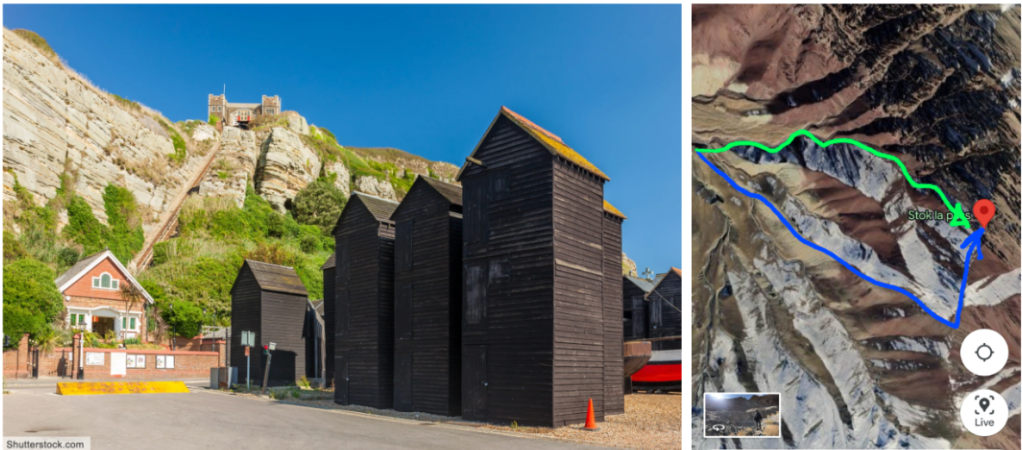
Places that I have been psychologically and physically stuck: (l) the Hastings Cliffs up to the Castle above the fishing huts when I was seven or eight;  (c) the path up from Rumbak towards Stok, via the Stok-La Pass (4900m). The path in blue which I took, and in green, where I should have gone. (r) Stok Kangri (6153,) can be seen rising up along the ridgeline connected to Stok-La Pass.

It was a memory of a moment of physical and psychological duress, a curious deja vu that I came back to almost 35yrs later as I clung onto the side of a bank of shale in Ladakh this summer. So close, just 70m or so, below the top of the 5,000m ridgeline adjoining the Stok-La Pass. Despite taking precautions like Googling and screenshotting the satellite contours, and after assessing what I thought to be the easiest route up the unmarked trail, I had opted for a dog-leg that seemed to follow an easier gradient and that would take me away from the formidable ridge-line ahead which appeared to me like the jagged silhouette of a giant bread knife.
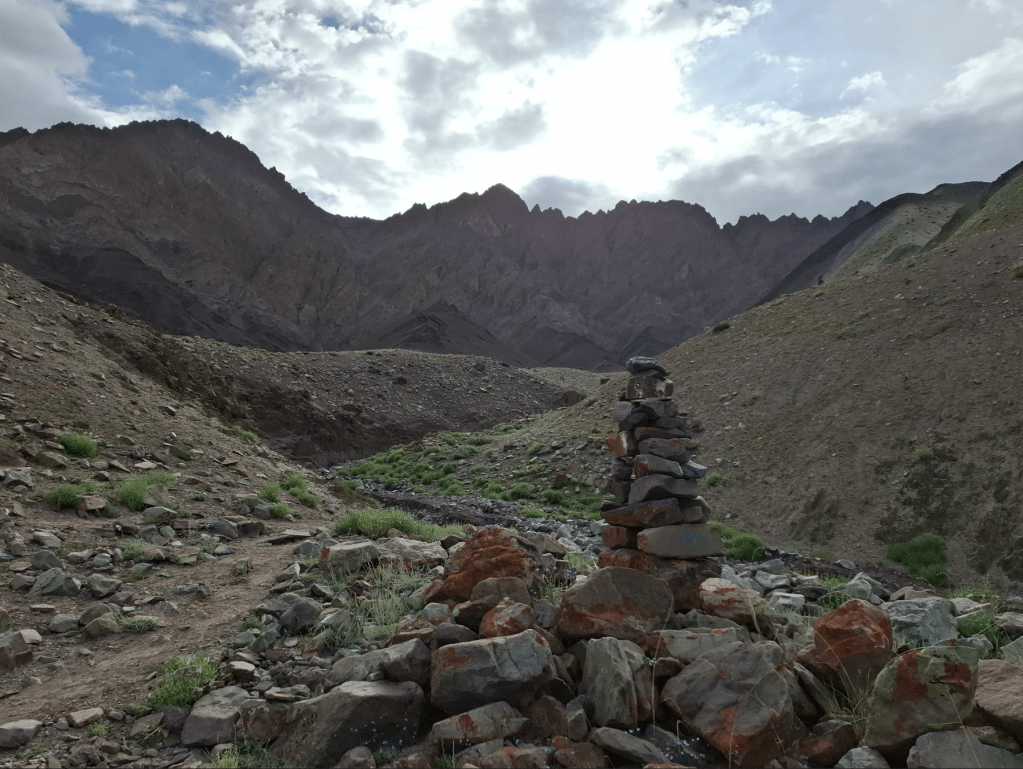
Not sure the photo does this justice, but staring up from the valley floor, I didn’t fancy the route that lay ahead at all. My inclination towards the gentler looking dog-leg off to the right I spied on the Google Satellite image was reinforced through coming-upon rock cairns signifying a used trail ahead.

The purpose of HT, and this article, is to get students to think about the way in which they can regulate their lives through adopting some physical and mental technologies to lead more purposeful, fulfilled lives. I hope to share through some of the lessons I learned along my trip, how I was able to reflect upon one particularly vivid experience that led to a significant shift in my perspective on life. So, as I read this article together with my Y11 group, I will ask them a series of questions so that their own reflections on life can emerge…

Eagle-eyed HT fans might have noticed the updated HT Venn Diagram to include the overarching lens re-labelled from “Somatic” to “Psychosomatic”; what prompted Toby Newton to initiate this change was the clear awareness that not only do we experience and interpret the rest of the other HT circles: Material-Spiritual-Social-Cognitive through our bodies, but also our minds. We are born with our DNA, biograms, genetic dispositions, but for the most part we can’t (yet?) augment our physical and psychological selves. 

Back to Ladakh: other precautions I took were researching the route through conversation with a local tour guide, as well as purchasing a Trek Ladakh book with maps of the area, but not, alas, of this exact route. The tour guide confidently suggested that as this was a well-used path, populated by herders driving their flocks, as well as hikers, I could just ask for directions. Actually, there were very few hikers, as I set out for the top early at around 5:30 am, and unlike previous preparatory hikes in the Balkans, and along some of Hong Kong’s 4 main trails across the previous year, there were no handy signposts along the way. 

I had followed what appeared to be a used trail from a distance, and, indeed it was; yet, as I put my full weight gingerly down on the loose top rocks and found my foot slide back down the mountain, I quickly ascertained that this was a path for the surefooted blue sheep and mountain goats that could nimbly traverse the slightest edges with their incredible agility and uncanny sense of balance, and not one for an 80kg+ human being. And, as luck would have it, it also started to hail, so, I dug on to the mountainside with my fingernails and spent some time regretting my choices.
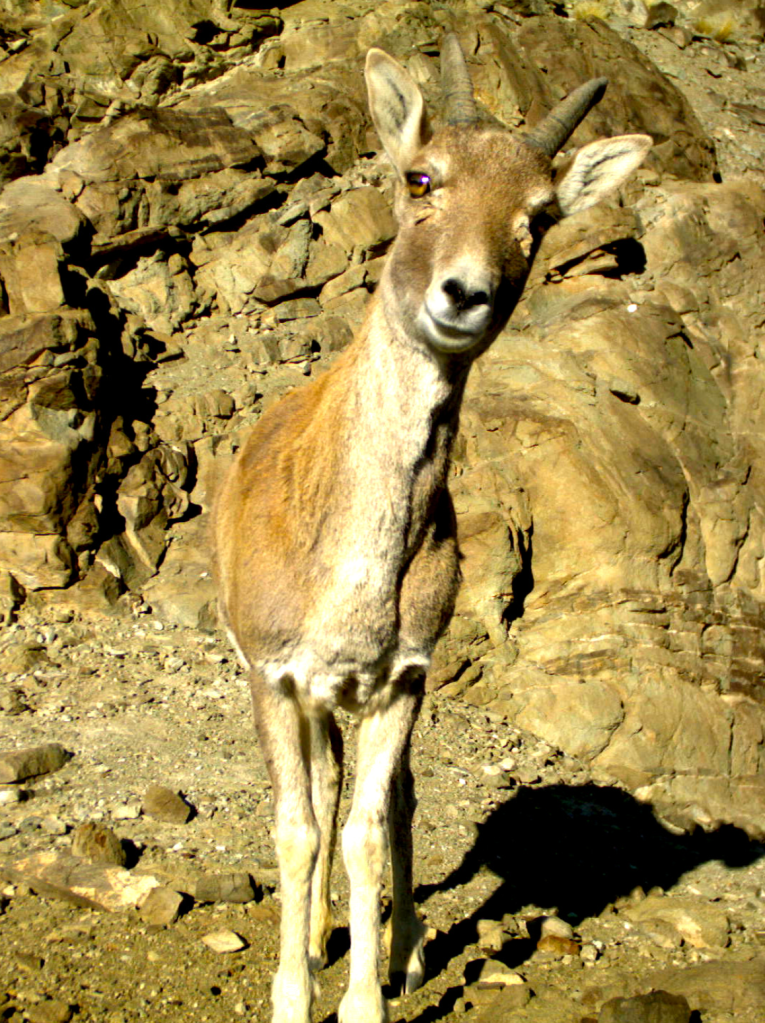
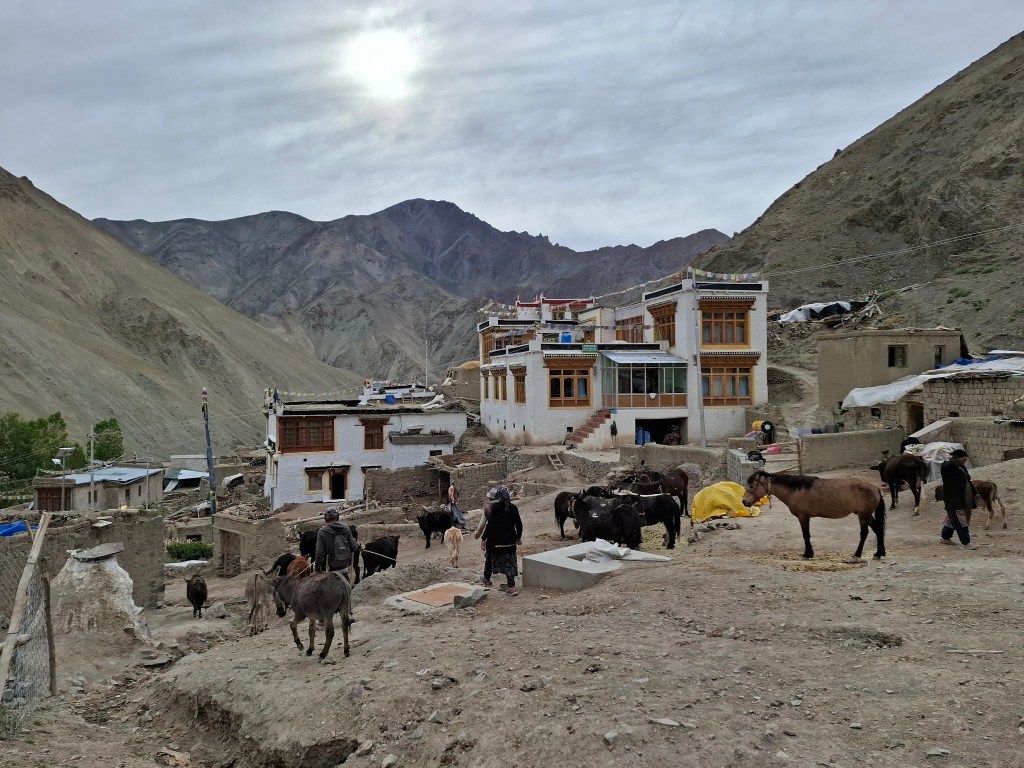
(l) Photo c/o The Snow Leopard Conservancy: The Stok-La Pass presents no problems for this urial, or his blue sheep brethren; (r) a tranquil pastoral scene as the villagers of Rumbak brought their animals down off the hills to the shelter of their pens

In short, the main advice here is not to hike on your own, especially in an area in which you are not familiar. I’m an experienced hiker, and all the way up to the top of the Pass, I could see human habitation back down the valley to Rumbak where I set out. Therefore, I reassured myself that I could be “sure” I was going to get back down if needed. But a twisted ankle, or broken limb could have been really bad that many hours away from help. 

I wondered, too, what had caused the decision to embark upon this physical challenge anyhow? What compels us as human beings to pursue these physical goals? I think it is to “know thyself” as the universal maxim across religions speaks to. We want to know our limits, and show a “growth mindset”, as psychologist Carol Dweck would say, as referred to by Natalie Bailey in her Weekly Bulletin article last week.

Perhaps there are also certain psychological underpinnings that compel us to the need to achieve, to be commended, some remnant of childhood, that is, intractably, not simply a legacy of who we were, but who we are today. The Russian Dolls HT metaphor is a simple, but effective way to think about our continued psychological development. 
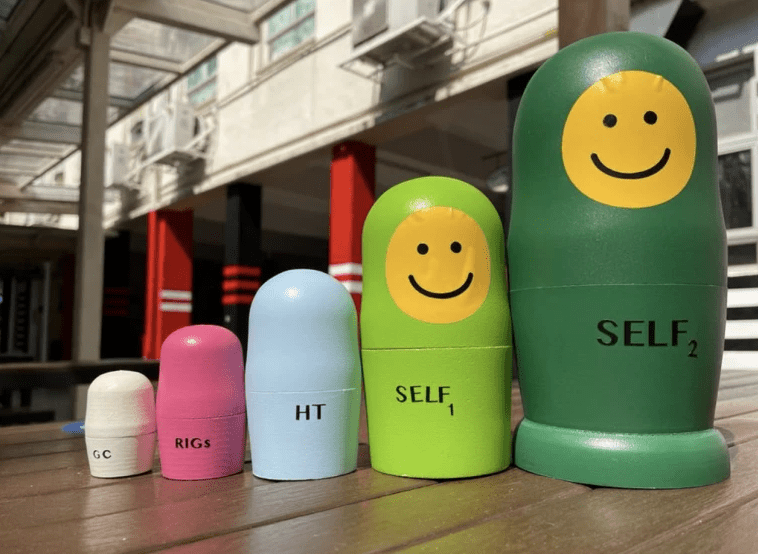
The HT Russian Dolls

As I soon turn 43yrs, and am aghast to find myself in middle-age, I have come to hear more frequently my body’s signs as my metabolism slows down and I notice, for example, my speed diminished in football (not that I had much to begin with). 

Yet, my stamina remains strong, and I believe it was the foundation of cross country runs and football undertaken in my youth that have allowed me the platform for enjoying plenty of physical exercise now. Knowing this, I want to engage in physical challenges today while my body still says, “Yes,” rather than wait too long and regret the chances that might have slipped by…

One message for the young students reading this is to really treat your body with respect. You only get one, and, so the adage goes, if your body was a Ferrari you’d garage it, and polish and tune it regularly so that you could enjoy the maximum performance. 


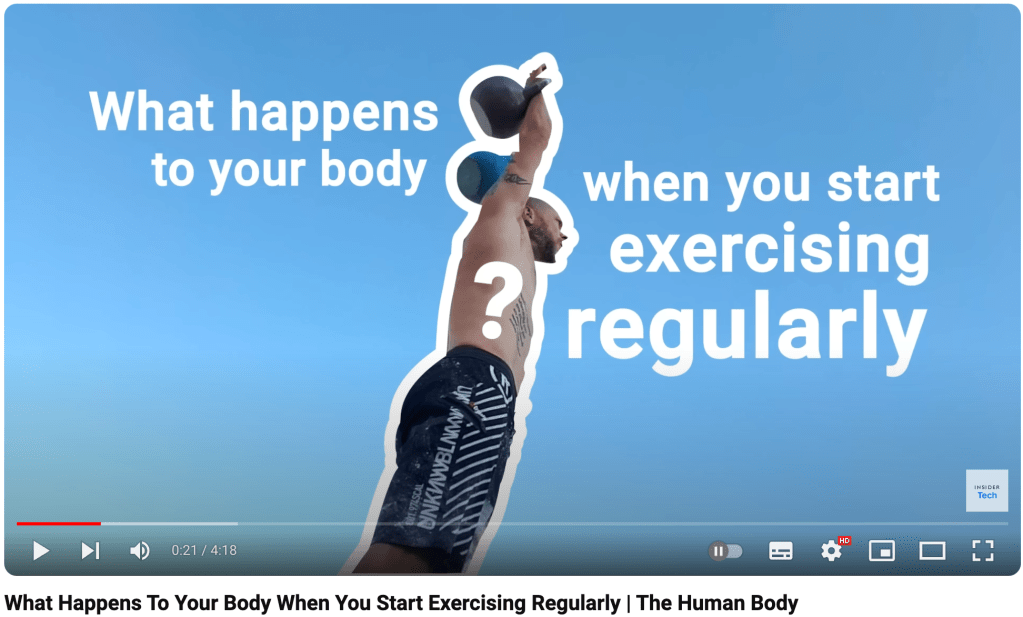
And time spent doing physical exercise unlocks many positive benefits for our bodies and mental wellbeing. Check out this short video from Insider Tech

Back on the mountainsideFrom this vantage point, with my cheek pressed against the rock, I took some deep breaths to calm my nerves and assessed my options., I turned my head to the left to see the harder rock surface so temptingly close, just another 20m away, and shuffled my foot forward to gauge the resistance. Bad move. Any time I adjusted my body more front-on to the mountainside and attempted to manoeuvre across, the loose rock would abruptly shift beneath my foot and send me jolting another few centimetres down, watching small rocks and pebbles cascade to the bottom of the sharp climb. 

So, I gripped the shale and spread myself out starfish-style to try to spread my body weight over a large enough area to prevent me sliding all the way back down to the bottom of the section- about 60 feet below- and thought about what to do next.I had a decision to make: to struggle upwards was impossible, so I could either a) gamble on edging further forward and risk sliding down the bank; b) have a little cry (I really did give this some consideration), or, c) head back the way I had clambered, and evaluate from a safer position. 

The rocks around me were so small, the consequence of hundreds of thousands of years of erosion caused by exposure to the fierce winds and freezing winters, so, I felt no great worry about sliding back and creating an avalanche where big boulders would be dislodged following me down, but I did feel that the mental and physical defeat of that moment could just spell the end of the hike and a sorry return to my homestay at Rumbak. 

I took some more deep breaths, breathing in through my nose and then slowly out through my mouth as I had used this 4-1-7 breathing technique learned from cognitive neuroscientist, Andrew Hubermans, before to calm myself before an important football match, or whenever I might have to speak in public, or suchlike. You breathe in through your nose, slowly and deeply for 4 seconds, then take a final top-up extra breath so your lungs are replete with oxygen, and then breathe slowly out through your mouth for a count of 7. If you do just a few of these repeatedly, you can really feel the tension leave your body and your heart rate slows.
I also knew that I needed oxygen in my system as the air at nearly 5,000m is very thin, at just 11.2% that is half the oxygen available at sea level. My lungs were really burning and I could only move a short distance before stopping and sucking up more air. I learned through reading the hiking companion, Trek Ladakh, that you should only really look to ascend 500m or so each day, ideally sleeping above your destination point the next day, to allow your body time to acclimatise. What I was trying to do was go from 3,900m to 4,900m in one day, and my body was not happy with me.

Previously while hiking, I’ve noticed the effects of thin air at around 2,500m, and this was the highest I’d ever been and my lungs were burning with the sensation of climbing upwards at this height, but also on a surface that felt like trying to run in soft sand on the beach.
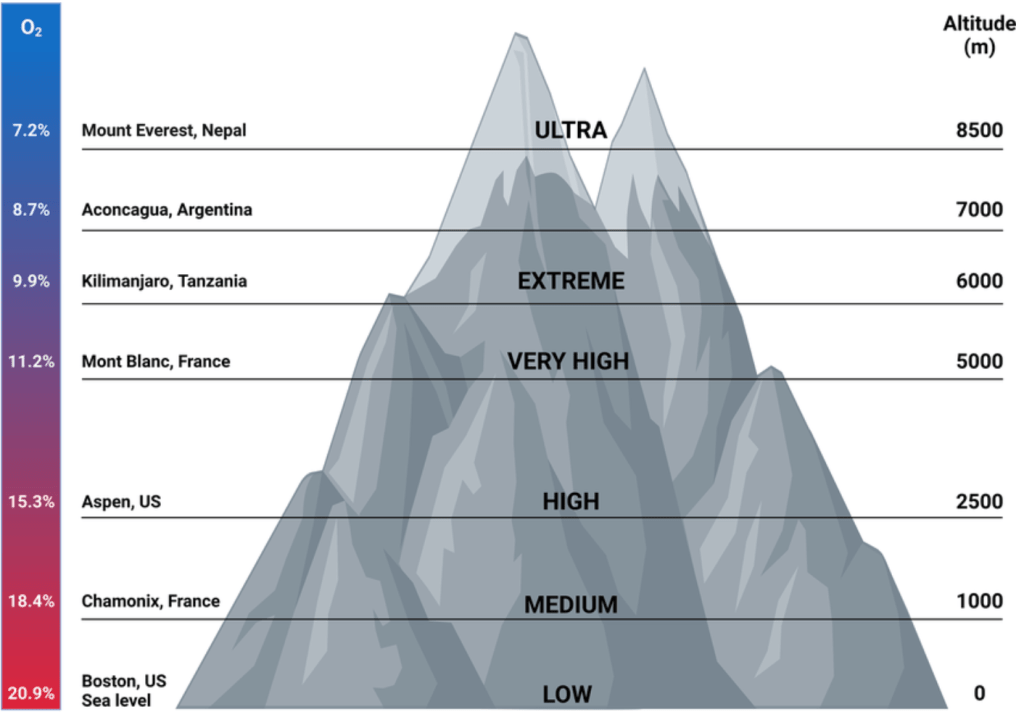
Researchgate.net: Graph showing correlation between altitude and oxygen concentration. Millions of people live at high altitudes and their bodies have adapted physiologically to their environment

And, so, the physical effects of the altitude were also impairing my thinking. Through the recentering that took place with a series of deep breaths I reminded myself of one of the reasons why I was taking the hike in the first place. 

Before the end of the summer term, I felt a “knot” in my stomach and because of my father’s/grandfather’s history of colon cancer, I recently went for an endoscopy and colonoscopy. It was with a slight sense of dread, as, to borrow from the realm of medical jargon, they perform this mildly invasive operation by sticking a camera up your arse. 

One thought which struck me quite profoundly was the idea that were the diagnosis severe, this might be the last time I climb this mountain. Or, regardless of that, at 43yrs, at middle age, given my hopes and ambitions to travel to many other places, then, it was more than reasonably likely, that no matter how beautiful this scenery was, that I would never climb this mountain again. It really gave me pause to slow down and appreciate the moment, as well as compel me to carry on.

Writing in The Body Keeps the Score, by Besser van der Kolk, and in Gabor Mate’s book, The Myth of Normal: Illness, Health and Healing in a Toxic Culture, both authors affirm that we are impacted by our psychological profiles in profound ways. Mate criticises Western medicine’s tendency to administer pharmaceuticals to treat the symptoms of our unrest; yet, Mate and van der Kolk both make the case that in this modern world there can often be psychological factors causing physical symptoms.

Luckily, upon my return, I got the all clear, aside from gastritis which could be linked to diet and to stress, though the summer trip  to India was highly restorative from a mental and physical viewpoint. And, of course, once you have received some positive news, that also ameliorates the stress that was exacerbating the gut spasm, and so a healthy mental-physical feedback loop is created. 

So, eventually, I can let you know that I was able to reroute my path, get to the ridgeline, and then descend down to Stok-La Pass, where I was rewarded with the most sublime view of mountains, valleys and rocky desert that I have ever seen. 

Life has a funny way of throwing things in your path, and you need to try to maintain a clear head to make progress through the various obstacles and tests that come your way. 

As HT students you have the potential to start to think today about the ways in which you can technologise your body and mind for a healthier and more positive tomorrow.

======================================================================

Follow-up questions for students to write their own personal psychosomatic reflections

  • Can you describe a moment when you were “stuck”? This could be a psychological moment, or related to where you’d reached the limits of your physical strength. It need only be a vivid moment, and please make sure it is one you are comfortable sharing. No expectation to share anything too personal.
  • What’s an early childhood memory that comes to mind based upon what’s been described? I’d like you to stop to think about it for a moment or two, and see if you can examine how you were thinking and feeling at the time, and why that memory might have been retained by you for so long…
  • As you think back to that one particular moment in time, what thoughts were going through your head? Perhaps you only retain the emotional imprint of the moment, rather than vivid details. But try to think back as clearly as you can and see if you can unlock some associations through sensory memory.
  • What do you think about this claim: that we experience the world through our minds and bodies? At school we spend so much time focused on developing our cognitive technologies, but those are moments prescribed by the timetable and whatever homework you might have. Much of the world that we experience is through tacit knowledge, that is, time spent as sensory creatures establishing our meaning and position in the world. 
  • Do you agree? How so if you do? Can you think of moments where your body has given you a message to respond intuitively to a situation? When have you stopped deep cognitive thinking, and embraced being immersed in your own tactile experience of the world?
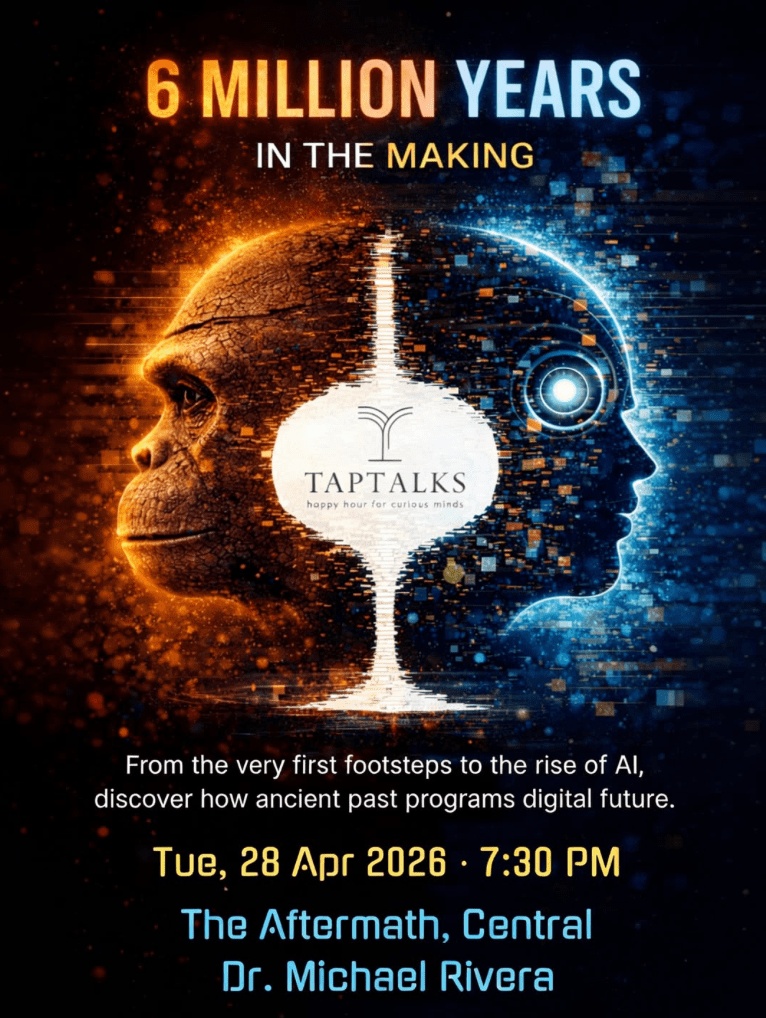
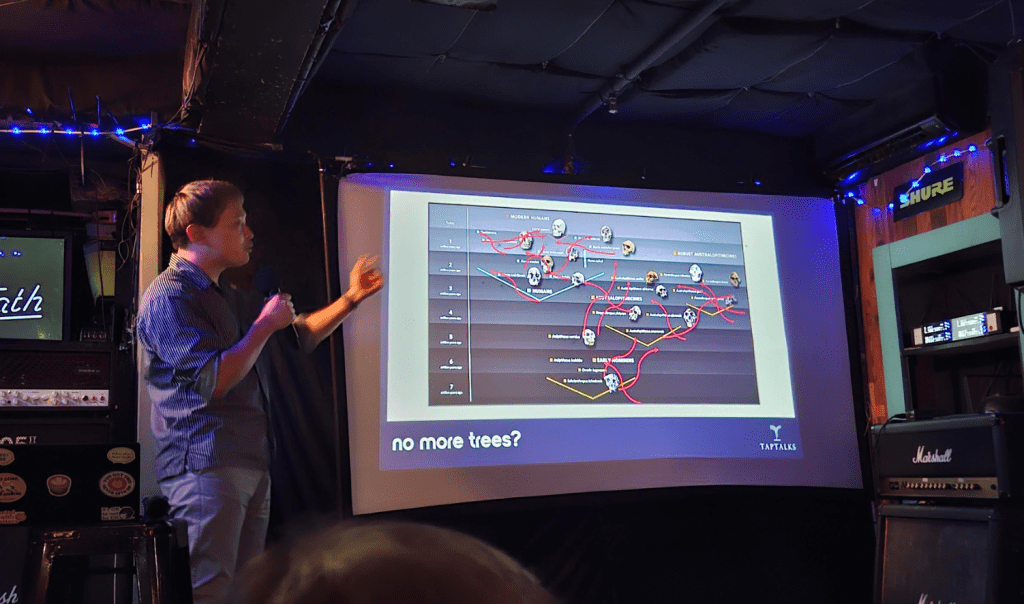
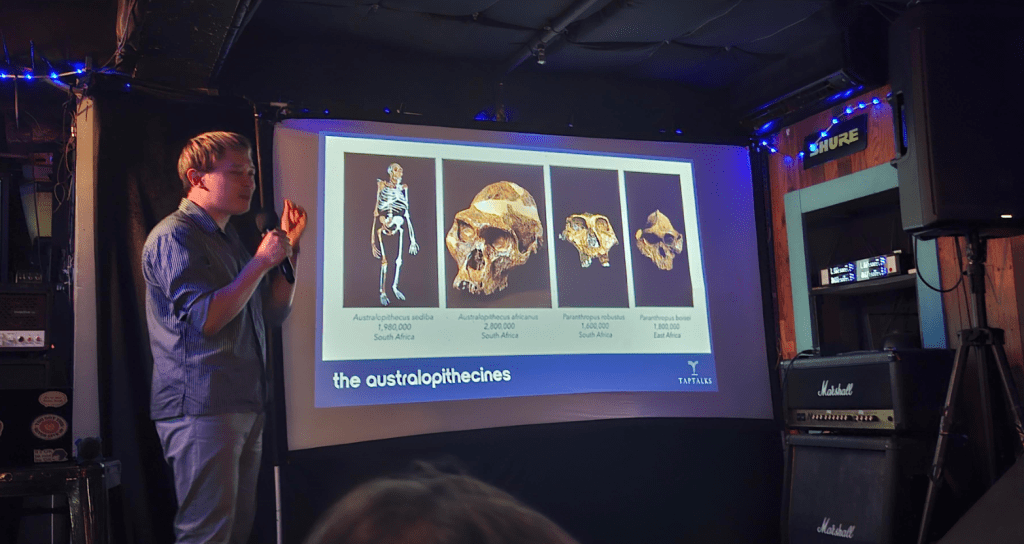
6 Million Years of Human Evolution…and the Implications of the Advent of AI.

  • “Humans are adaptable, not optimised,”- Dr. Michael Rivera
  • AI can be defined as augmenting productive efficiency

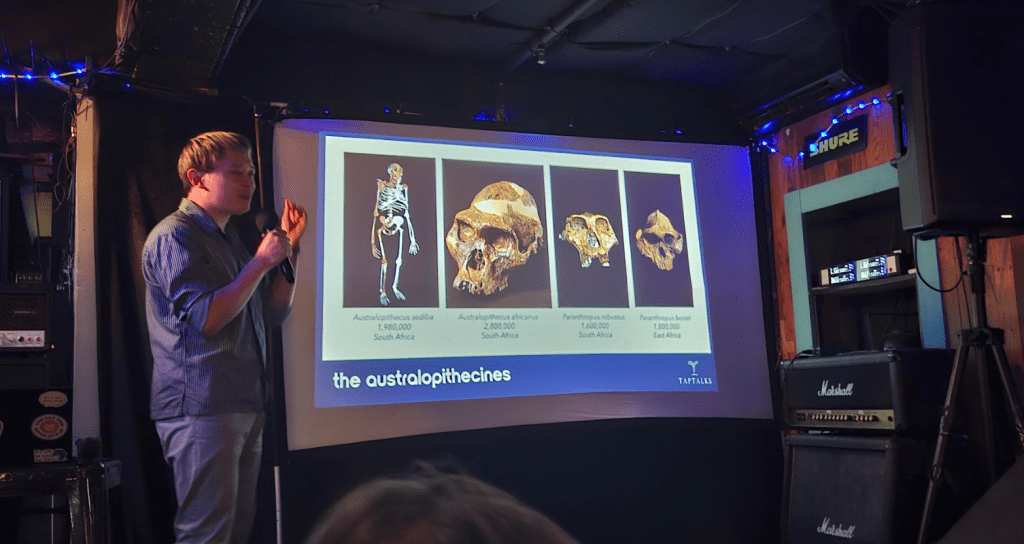
Dr. Michael Rivera, presenter at a Tap Talk event. You can find their events online through their website and social media

As artificial intelligence transforms how we work, think, create, and relate to one another, one question feels more urgent than ever: what exactly does it mean to be human now?

Public conversations about AI often center on fear — fear of replacement, obsolescence, and the erosion of what makes us distinct. But perhaps one of the best ways to think about this moment is not only to look forward, but to look far back.

His goal was to speak passionately and romantically about being human

  • Homosapiens are approximately 300,000yrs old, yet we began our human story 6,000,000yrs ago when we stood on two legs for the first time. 
  • Rivera is a biological and forensic anthropologist 
  • He has conducted “beach evolution” studies focused on 4,000 ancient skeletal records here in HK in an attempt to trace our unique evolutionary story. Did the impact of what was available in the food chain have an impact upon our physiology 
  • One commonality amongst our predecessors is that “they have all become extinct.” That’s quite a cautionary tale, as we now play with godlike technology in the form of AI. 
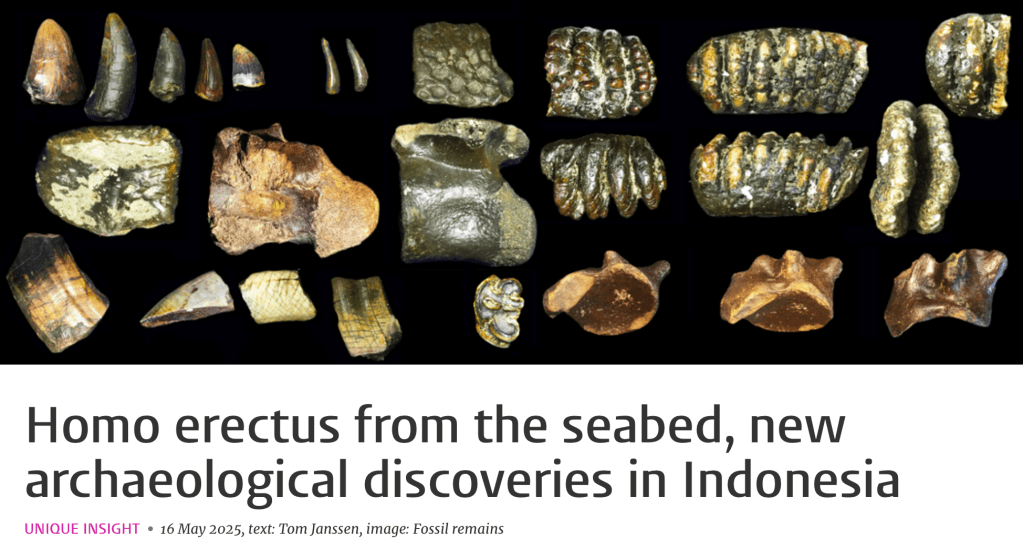
  • Homo floresiensis, a hobbit-like precursor to human beings. They only stood about three feet tall and their fossil remains were found in the Liang Bua Cave, on Flores Island, Indonesia. They must have had to learn to adapt to using some impressive strategic hunting and defence strategies given the presence of marauding Komodo dragons! 
  • https://humanorigins.si.edu/research/asian-research-projects/hobbits-flores-indonesia
  • https://time.com/4126011/lucy-australopithecus-discovery/
  • Homo habilis: tool use attributed to this species from over 2,000,000yrs ago. https://www.science.org/content/article/earliest-homo-species-did-not-look-human-partial-skeleton-shows
  • https://humanorigins.si.edu/evidence/human-fossils/species/homo-naledi– a massive fossil record from Dinaledi Chamber of the Rising Star Cave system in South Africa during an expedition led by Lee Berger beginning October 2013.
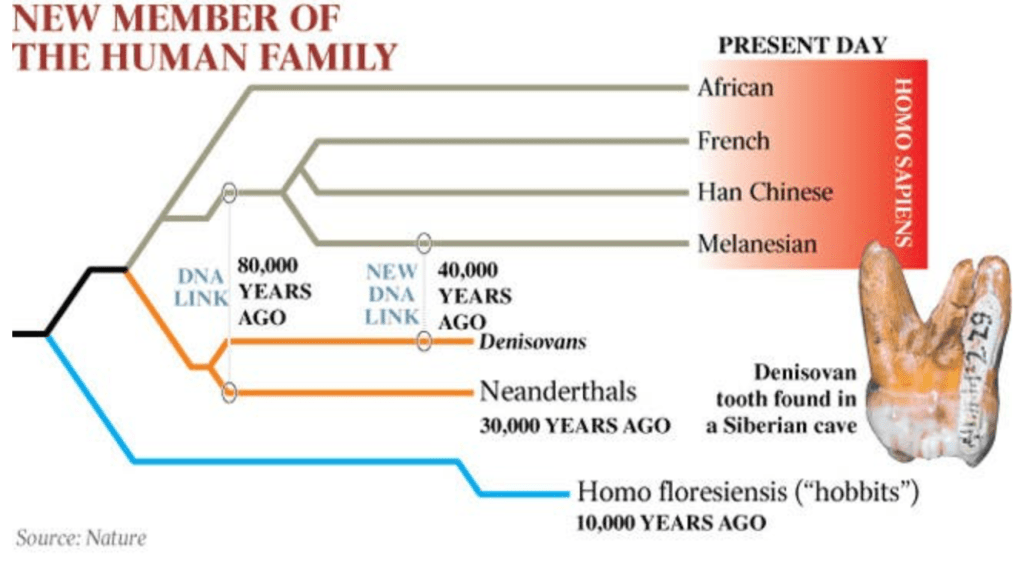
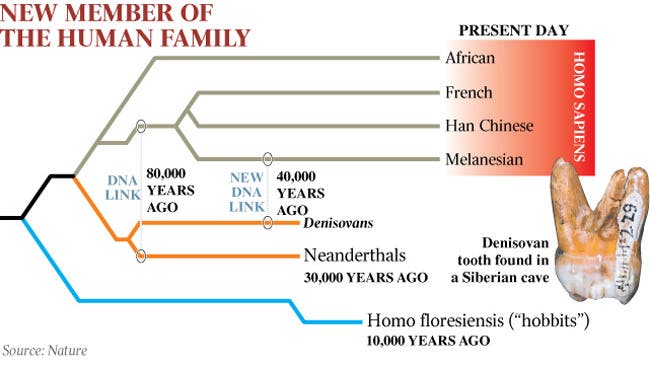
  • https://www.arch.ox.ac.uk/denisova-cave– Denisovans bring us much closer to the present day- well, along a timeline composed of millions of years!- as these Siberian ancestors roamed around 300,000 years ago. They ‘had a good innings,’ so to speak as Oxford University researchers traced their bone record to as recently as 49,000 years ago. 
  • Now, that is a kind of timeline that places them at the same time as Neanderthals! https://www.nhm.ac.uk/discover/who-were-the-neanderthals.html
  • You may or may not have heard much about Neanderthals, growing up in this part of the world, as they roamed Western Europe across a timespan that included numerous ice ages. Given the colder climes they occupied, Rivera hypothesised that the reason they were much larger than humans and actually had bigger brains than homosapiens was so that they could adapt to survive these colder conditions. 
  • And also us! We homospapiens are 300,000yrs old: https://www.nhm.ac.uk/discover/modern-humans-homo-sapiens-when-where-how-did-we-evolve.html
  • Modern-day palaeontologists who have mapped the human genome through analysing wide samples of DNA conclude actually have 1-4% of our DNA is Neanderthal!

https://cdn.zmescience.com/wp-content/uploads/2012/02/325457-denisovans2.jpg

  • And, so, Dr. Rivera concludes that this is one of the limitations of the narrow parameters of our current scientific knowledge paradigm. The Scientific Method is one in which we reduce down and control our variables for experiments so that we can be more accurate in our interpretation of data. It is a rigorous, left-hemisphere, logical, rational, reductive means of classifying and putting objects, species etc. into taxonomies for classification. 
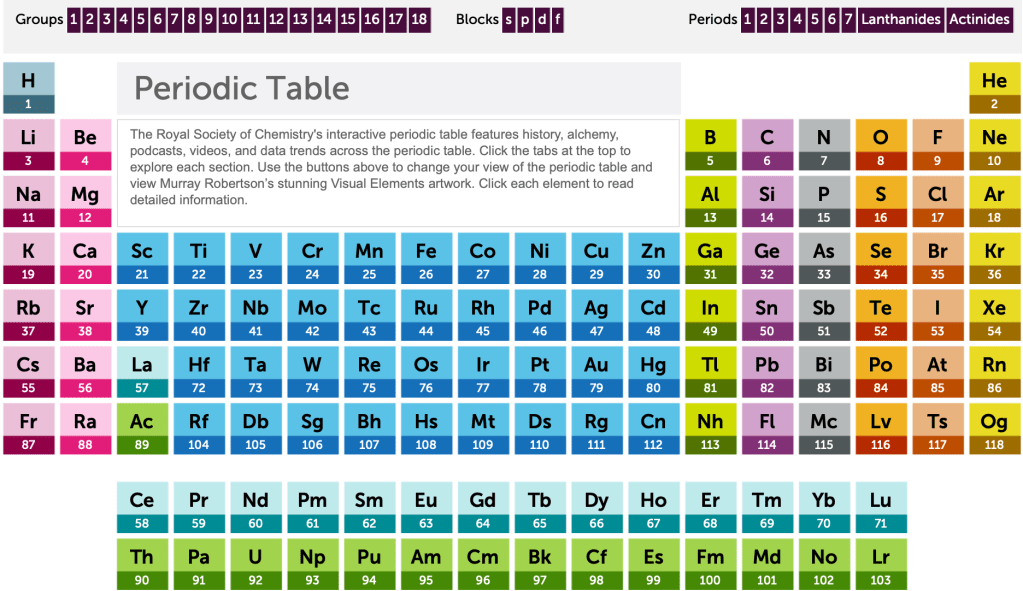
  • A simple way to show this is the Periodic Table where we have all of our elements organised into solids, gases and liquids. 
  • “Finding that good media story”
  • Cooking and symbolic behaviour
  • 140,000yrs ago beads, etchings, shells, signs of cultural communities with artistic sensibilities
  • Migration, technology, culture, connection
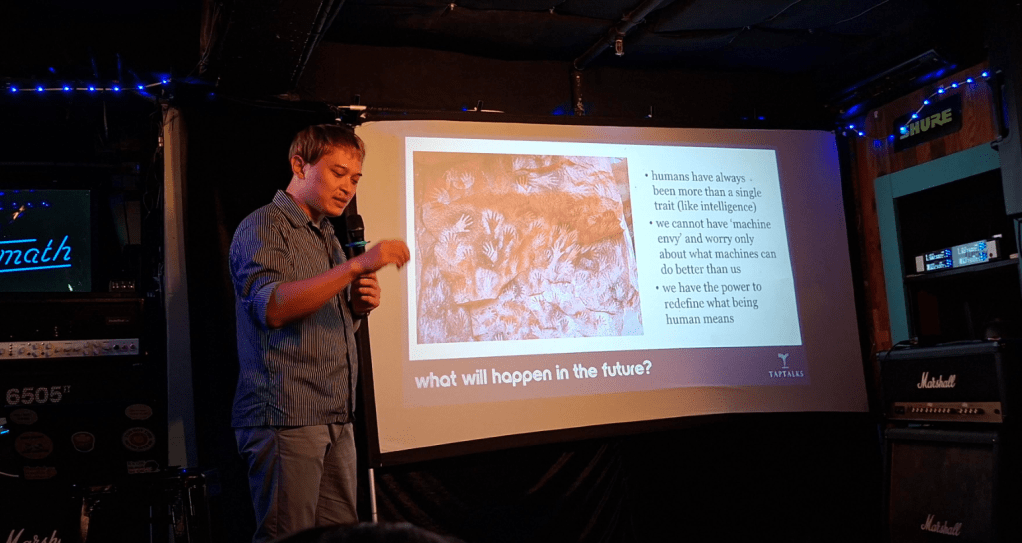
  • “Humans are adaptable, not optimised.”
  • “Intelligence is more than thinking”
  • Embodied experience, sensory intelligence
  • Storytelling and meaning making
  • Our life experience is non-repeatable
  • Cooperation, care, teaching, sharing

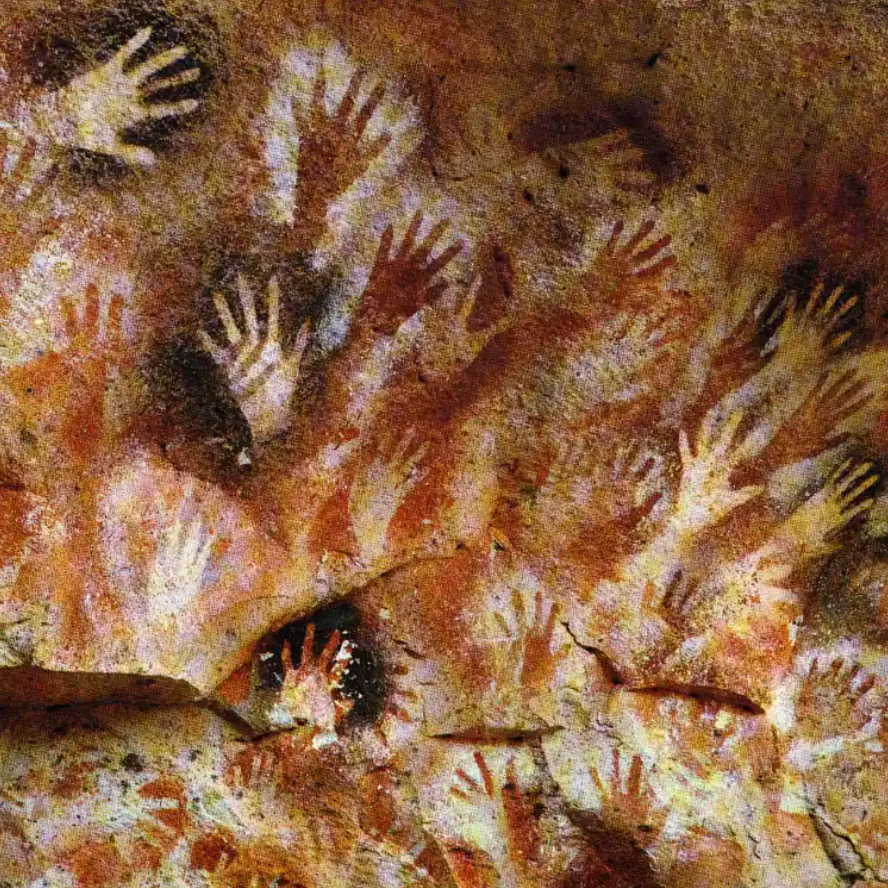
Art: Cave of Hands, Spain, c.13,000-9,500 years ago. Cueva de las Manos, Río Pinturas

The Cueva de las Manos, Río Pinturas, contains an exceptional assemblage of cave art, executed between 13,000 and 9,500 years ago. It takes its name (Cave of the Hands) from the stencilled outlines of human hands in the cave, but there are also many depictions of animals, such as guanacos (Lama guanicoe ), still commonly found in the region, as well as hunting scenes. The people responsible for the paintings may have been the ancestors of the historic hunter-gatherer communities of Patagonia found by European settlers in the 19th century. https://whc.unesco.org/en/list/936/

  • Digital rewiring of the brain
  • Many advantages of the internet on learning
  • Essay writing is teaching resilience 
  • Short cuts means they are too reliant on tech.
  • He predicts that we will emerge into a new future where half of society will align to adapting AI; half will turn away and look to cultural connectedness with one another (Romantic mindset)
  • We can already see that neurological changes are happening in the brains of our younger generation, and, of course, ourselves. 
  • Art vs AI: AI’s art is clever and fairly interesting. Rivera describes it as belonging in the “uncanny valley.” Art and artists, though, tell stories of lived experience. Art, experiential learning, drama, music etc. are all the more critical to develop all of our other ways of knowing beyond the quick factfinding and summarising facilities of AI. 
  • Our human memories, individual and cultural, our traditions and cultures, our capacity for critical thinking, psychological development, creativity are in danger. 
  • And on top of that there is the environmental depletion that is incurred through the invention and ubiquitous spread of this powerful technology
  • To my question, what would you recommend schools do in the face of this AI-age, social atomisation, digital media addiction, “Anxious Generation”? Rivera stated schools should respond with lessons in socialisation and care. 
  • He is a MindHK advocate who visits 30+ schools and will, depending on what is required, simply teach students “how to have a coffee chat” to develop their social skills. 
  • “We need each other.”
  • Interesting, also, in what he had to say about his skepticism of western-centric nature of knowledge production. He’s also Filipino-Chinese, so, offers them that role model. We assume we are delineated from neanderthals, right? Well, that is true if you are European, but the regional record here in Asia appears to show an intermingling of species that could tell a very different story. He is also skeptical of recent attempts to provide a more ‘international’ (his air quotes!) survey of “100,000 genomes around the world”, from the Human Genome Project; yet there are thousands from Germany, but only 2 samples from Ghana, for example. He is following the work of the Asian Genome Project closely, as they look at address some of the western-centric biases built-into the body of scientific knowledge.

http://www.taptalks.hk/

Attenborough, the Romantically-minded Naturalist

Happy 100th Birthday, Sir David Attenborough!

  • Friday, May 8th is the centennial celebration of the renowned naturalist and broadcaster
  • Attenborough’s passion for communicating his wonder for nature emblemises the Romantic Mindset of ICHK’s +1 thinker, Kieran Egan
  • A Gorilla Story is the latest chapter in Attenborough’s vast canon of nature documentaries. It was released this week and is highly recommended for firing all imaginative, romantic hearts and minds! 

By Jon Rees, Sustainability Coordinator

May 8th, 2026

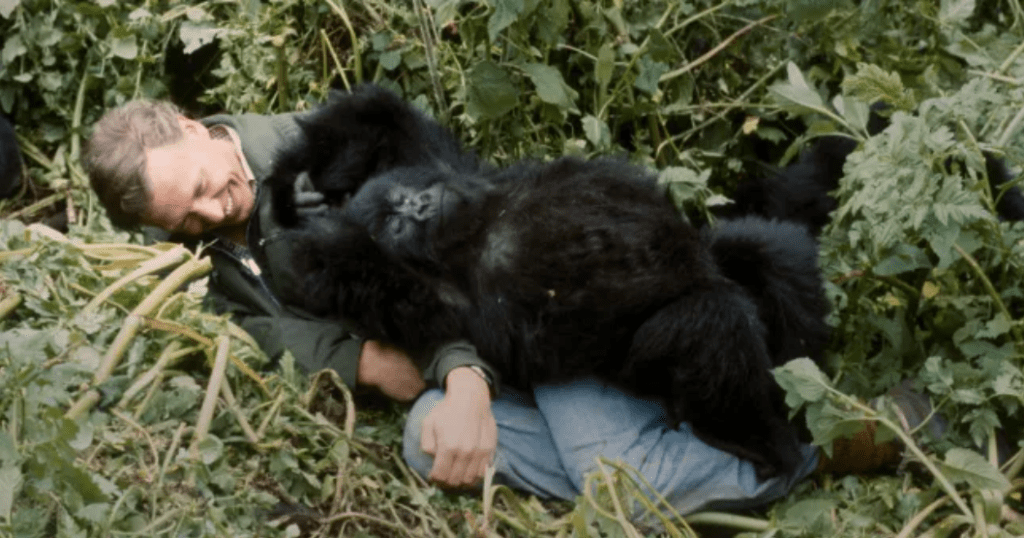
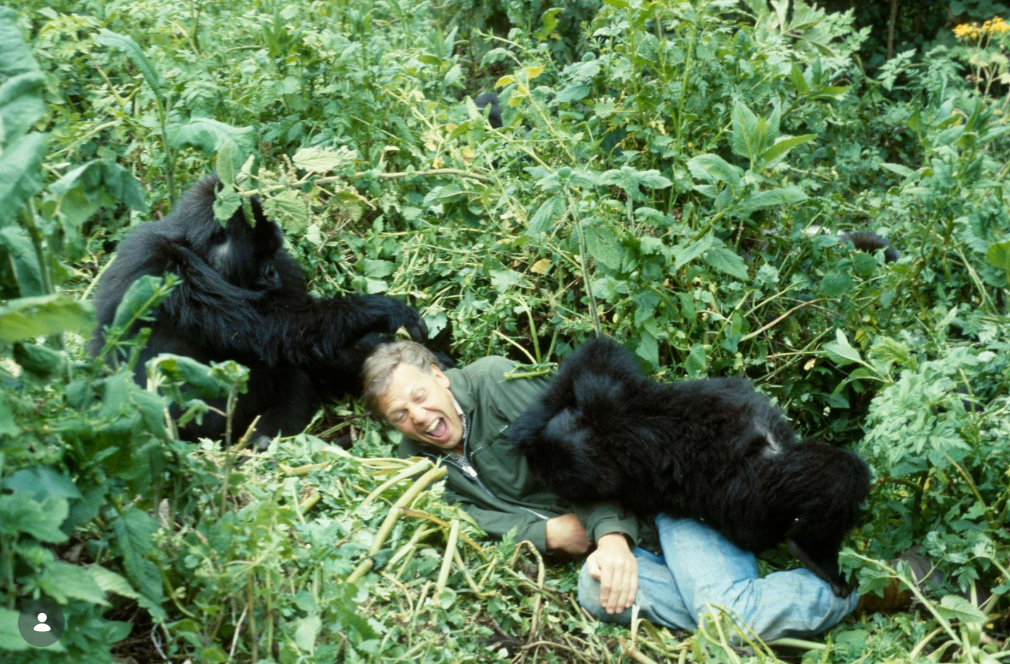
Sheer bliss, you just wanted to hug him”- David Attenborough’s encounter with gorillas nearly 50 years-ago is perhaps the most iconic of his remarkable career as a naturalist and broadcaster. 

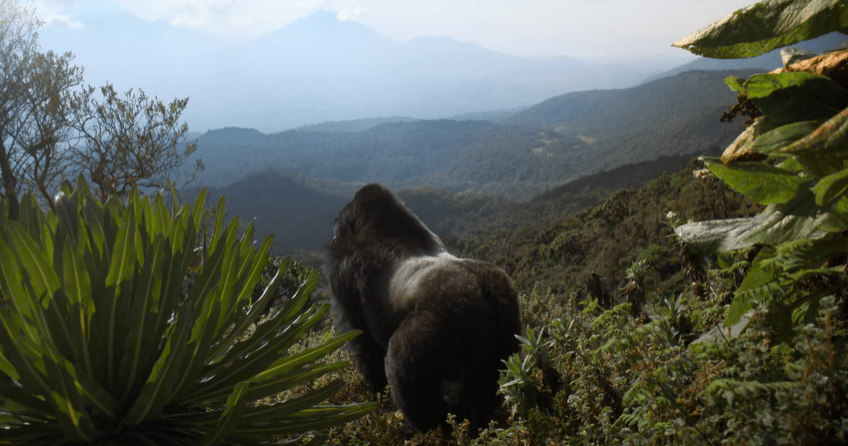
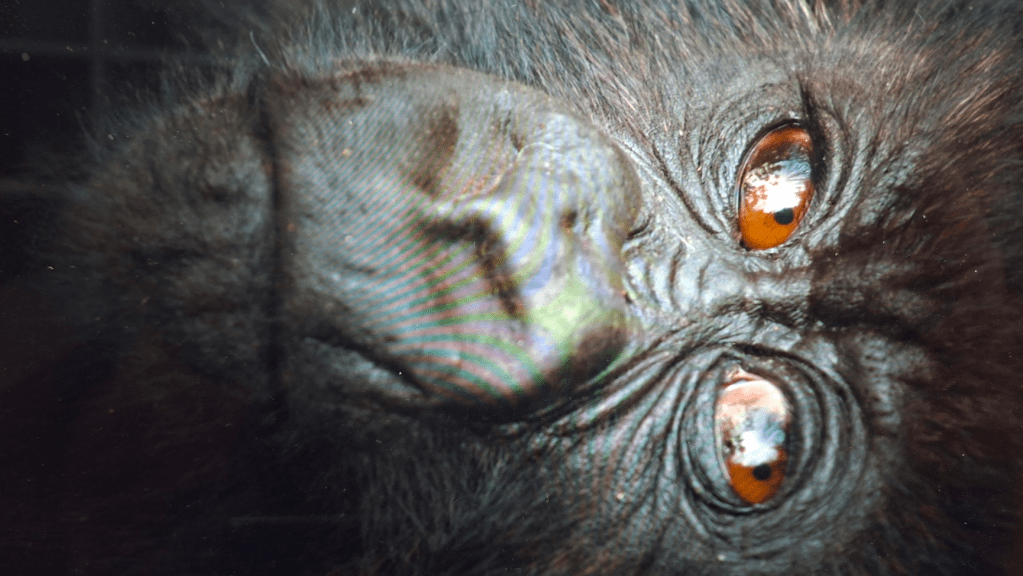
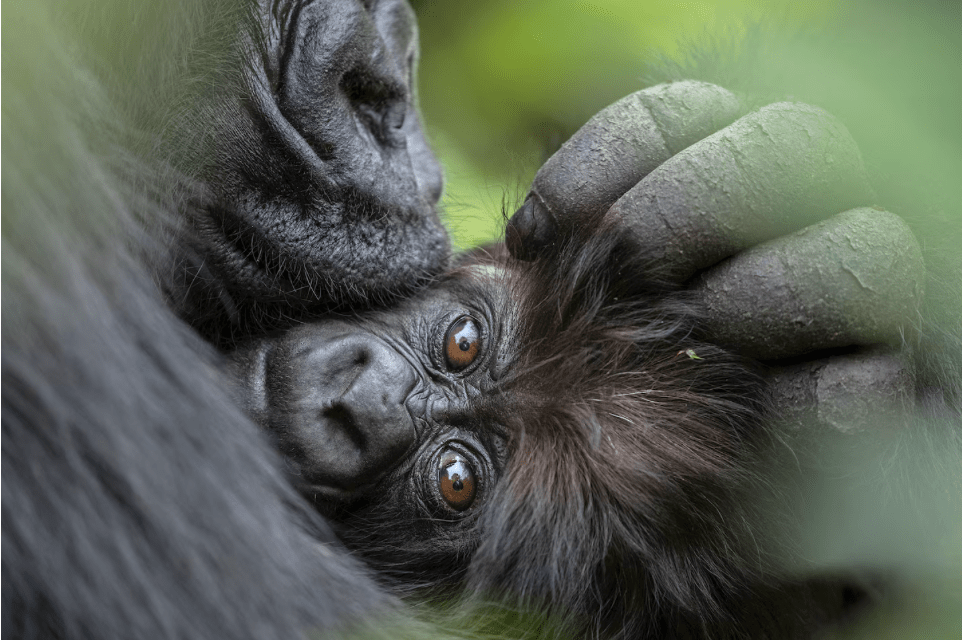
(L) David Attenborough with baby Pablo, all the way back in 1978; (R) Pablo’s grandson, the mighty Gicurasi, stares out across his kingdom in the Virunga Mountains, Rwanda.

*In general, we should admire wildlife at a respectful distance, but here playful Pablo chose to clamber upon the conservationist. Trying to hug Gicurasi is certainly not advised.

Zoom into Attenborough’s face on that photo above- it is one of absolute joy. In the Netflix release of Gorilla Story, Attenborough traces the legacy of Pablo, the little baby who sits upon his chest, and his descendants down to the current large social group that are still roaming the Virunga Mountains of Rwanda. The inter-generational nature of the story reflects many families’ experiences while watching Attenborough with their parents and grandparents, enthralled around the television; it is his voice that has accompanied generations on a Sunday evening in the comfort of your home surrounded by loved ones.

“There is more meaning and mutual understanding in exchanging a glance with a gorilla than any other animal I know”

  • Sir David Attenborough

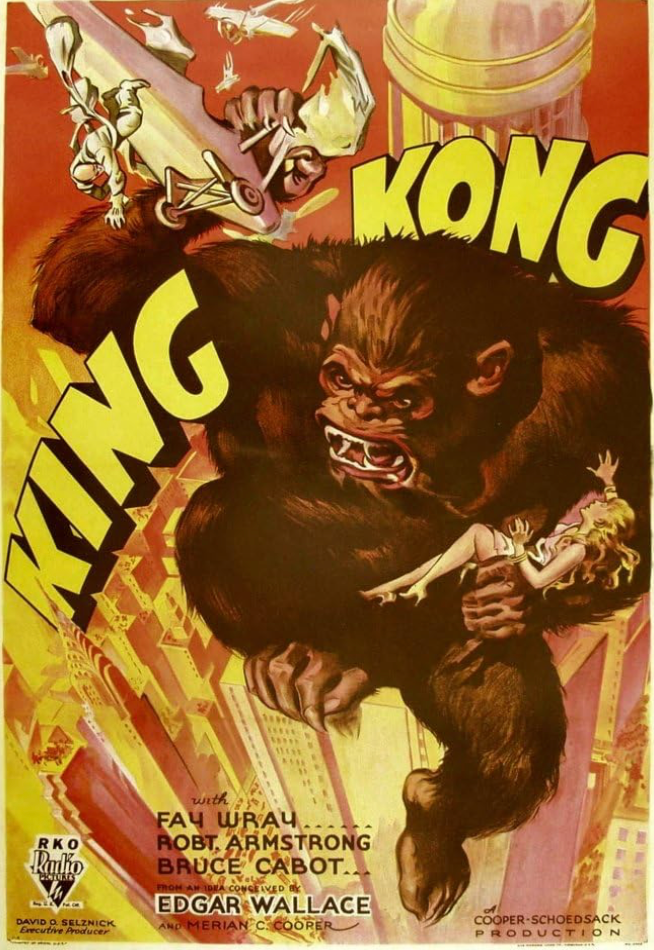
This famous magical encounter was the first time that many people watching on their TV screens had ever seen a gorilla in its natural habitat outside of the confines of a zoo (and these places were far more spartan and unstimulating for animals back then, too.) The BBC team’s footage was responsible for helping to shift cultural attitudes towards these powerful creatures. People’s perceptions had been tainted in part through Hollywood’s depictions of a rampant gorilla tearing New York apart, as in the 1933’s King Kong. 

It was a joy to share this with some of our Gardening and Bushcraft students when we found our usual outdoor pursuits had been curtailed by heavy rain on Tuesday afternoon. Our faces lit up with joy and I must commend all students for particularly impressive chest thumping gorilla impressions as well! 

Capable of immense power, yes, but capable of such gentle care and affection. 

The work of Attenborough helped to communicate the truly pioneering scientific research of female biologists operating, often alone, out in the literal fields (and jungle mountains) of primate research. Dian Fossey and Jane Goodall, helped to shatter cultural ignorance and false Hollywood myths. They revealed for the first time to the wider world the highly complex, deeply social nature of life within gorilla and chimpanzee troops. Jane Goodall passed at a golden age last year. Fossey’s end is very tragic- she was murdered by unknown assailants, but very possibly connected to the trade in wild species- and her life and work is worthy of further research. It was Fossey, I learned, through watching A Gorilla Story, that first brought Attenborough to the gorilla colony as they had become habituated to her presence across months.

In general, before the Environmental movement of the 1960s-  brought about in no small part due to the incredible image of “Earth Rise,” taken by the cameras of Apollo 11-  attitudes towards wildlife in Western Europe and America had often been based on attitudes of conquest and domination. Caution advised: To get a sense of how attitudes have shifted, take a look at this historical Time magazine link to a gorilla hunt from the 1950s– where powerful animals like gorillas were seen as brutal, savage beasts to be hunted for trophies.

Gorilla Story- Trailer: In this intimate documentary, David Attenborough tells the remarkable story of his first encounter with the baby gorilla Pablo, how that gorilla grew up to be a top Silverback and how Pablo’s direct descendants are doing today. Packed with extraordinary gorilla behavior never filmed before, this is a story of hope and joy.

Unfortunately, many of the issues around animal population collapses and the continued lucrative global trade in endangered animals for pets, trophies and traditional medicine- along with the myriad problems that comprise the polycrisis that include overpopulation, high resource consumption, high carbon emissions, and the manmade effects of global warming- are still prevalent, and indeed rising. Kadoorie Farm, located close to ICHK in the New Territories, is at the frontline of coordinated national and regional efforts in this area. https://www.kfbg.org/en/departments/Kadoorie-conservation-China-department

Some, such as author, journalist and environmental activist, George Monbiot, have warned that David Attenborough has fallen short in his duty to inform the wider public earlier about the calamity facing the wildlife he so warmly portrayed on screen. As students continue their academic journey with us, we have examined Monbiot’s articles in IGCSE First Language classes as students in later years begin to adopt what Kieran Egan calls a more questioning Philosophic and even Ironic mind, critiquing the assumed knowledge in the world around them. You can get a sense of this in his scathing piece for The Guardian: https://www.theguardian.com/commentisfree/2018/nov/07/david-attenborough-world-environment-bbc-films

It is not my wish to denigrate Attenborough’s achievements here, though. But just point to the dynamic and open-minded approach that is taken at ICHK to help students develop both empathy and a critical understanding of the world around them. 

**Images redacted**

Our mission is to educate all our students, unlock their potential and offer an experience that best prepares them for life beyond school.

Our vision is Learning together, thoughtfully

Look, too, at the expressions on the faces of our Outdoor leaders taking Y5 students to explore the Bridespool waterfall and streams, Human Technologies students learning about the structure of DNA, or intrepid students abseiling in Pat Sing Leng Country Park and you can see similar expressions of joy and exhilaration to those of Attenborough in the first photos of this article. 

This is what school can be when it is at its best, and the Deep Learning programme- which will begin its fourth iteration of the year in June- offers students many diverse opportunities to explore their passions and share unique bonding experiences together. Deep Learning is just one of the many programmes, along with the engaging mainstream curricular experiences, that typify ICHK’s pursuit of providing a Romantic approach to education. 

=====================================================================

This piece was informed through reading Kieran Egan’s article, “Teaching the Romantic Mind.” Egan is one of ICHK’s 5+1 thinkers. The intention writing this piece was to help raise awareness of one of our key thinkers, who along with Carol Dweck’s “Growth Mindset,” Vygotsky’s Zone of Proximal Development, Ericsson’s Psychosocial Development and Eric Berne’s Transactional Analysis, are, along with recognising the “+1” uniqueness of the individual learner are foundational to the ICHK pedagogical philosophy.

Kieran Egan’s The Educated Mind is also a good further reading for those wanting to dive deeper into Egan’s ideas. 

The Blue Book of Nebo: a Teaching Primer

BBC: The Blue Book of Nebo: serialised narrative reworking

Spoiler alert. Contains plot references!

These are a few personal notes and, of course, not prescriptively how to do it, but things that could be worthwhile thinking about when approaching a text like The Blue Book of Nebo. 

I think that because the work is slim, their attention is the key thing. Actually, with Y8, developing better focus and attention is a key thing. This slim text offers them the chance to do so. Contemplation. Reflection. Wonder. Creativity are the soft skills that are developed alongside critical textual analysis.

The themes of this book are things such as love, loss, reflections on community, growing older, growing apart. I’d really impress upon them that this novel is a tool for developing empathy, and that empathy and understanding the human condition is the most important thing about why we read books.

I’ve been insisting with my Y8s that they tune in better. This is because this book is a work of literature, and, as such it focuses on the human condition. If you aren’t paying attention, you won’t get it. The book can be considered like a slim volume of poetry. 

Listening to Mannon Steffan Ros’ own folk music, as well as enjoying listening to songs about Wales and Welsh culture can be very enjoyable. And just get them to listen to one song really closely. The language might be Welsh/(Gaelic) but that shouldn’t matter too much. What’s the emotional resonance of the piece etc.?

Because this book is slim, you can use it as a catalyst for creative, artistic, meditative reflections. You might want to think that there are 26 or so “chapters”, but some of these are just a page or two long. Many are about 3 or 4 pages. Mona, Dylan’s sister dies. And that is really sad! If they aren’t listening this will be totally lost.

The lessons on Welsh culture are very good. Rees is a Welsh name, so I, of course, lean into this. And Swansea, where my great great grandparents are from is quite close to where Nebo, Anglesey and other geographical places named in the first chapters take place. They should find these on a map and take a walk in the landscape.

Welsh mythology: this is central to the Welsh identity (DRAGON on flag!!) More of this when you meet Dave. But the Welsh have been oppressed by the English through the ages so are fiercely independent, warrior spirited, (see the 6 Nations, although choose your Youtube clips wisely as they just got pumped by the French!)

A whole lesson can be done deconstructing the book jacket and blurbs. You can find some art materials and get them to make their own front covers, as per the guidance in the opening lessons. But if they are to do this really well, it could take the whole lesson. There are some amazing artists in that year group. Think pencil crayons, as well as water colours. See if you can get in the art room but there are English sets of materials around.

With a novel this size, I wouldn’t worry about doing it in a hurry, nor doing it to death. The Y8s really enjoy being read to. Only later in the novel, once you’ve established how to read character’s voices, intonation etc, should they have a go. 

I’ll share a few resources I have used to prime them for listening closely. Some of these you will insist they write down, others will come out in conversation, others you want to be aware of and not share with them to try not to kill the text. It’s a case of reading the room and seeing what they might be up for, and insisting some things are done well, but giving opportunities where you can take your foot off the gas. 

Music is a very good way of setting the mood. The book is a diary. They could keep a diary. 10 minutes at the start of each class to set the mood. They have all got memories of the Covid pandemic.

Here are a few activities that I have done to prime the idea of looking and listening really closely…

Front and back covers. Read the back cover with blurb and certain details are given about the plot, character, situation.Images: what is depicted, what are the connotations?
The Moon: large, bright, immense, mystical, dominant, lights the way, magical, fantastical.
The starry night: no light pollution, stars light the way, mythology, cosmos, gods, navigation, point the way
Colour connotation: Blue, melancholy, night time, peaceful, like the oceans, dark, vast, no light pollution, dark, lost, wilderness
The hills and the sea: Welsh landscape, rolling hills, natural, small village, isolated house, no other lights, far from habitation
The house: small, neat, isolated, cosy, lean-to, countryside, cottage, Welsh slate
The radio tower: dark silhouette. No lights. No electricity. Darkness. Communication broken. Isolation. Dystopian.
The orange figure: Dylan. Small boy. Bright orange, energy, hope in darkness. He is alone, looking up. Hope? Lost? Alone. 
The orange ladder: ladder leading up, symbolic, connects to the boy, we can imagine a narrative, something about transformation, elevation, looking out, perspective. Future? Past?
The medal: Carnegie winning author. Young adult. So, take it seriously.
The quotes: Glowing praise from serious critics. Superlative language.

BRYNEGLWYS | Manon Steffan Ros

The author’s own folk song. Language does not matter. The film is its own language. It’s a given that the Welsh film producers speak Welsh, or communicated with the author of the meaning. But without, you could draw their attention to: hills, nature, journey, loneliness, sadness, tenderness, lost communities, mining, weather, (presumably she is walking along the Brecon Beacons), Welsh slate, rugged, rough, windswept. Musical cues: rhythm, tone, tempo, emotional range, pace, feeling.

Manon Steffan Ros – Empathy Walk 2022 (English)

Empathy Walk: this is a very easy to adapt creative writing resource. In this 5 minute walk around town, we can see a Welsh town that would look very much like the fictional (I am guessing) Nebo. We can get a sense of who the author is, and after hearing her lovely song, they might care more about what she has to say. She looks about the same age as Rowenna and that could be important. I wonder if she is a mother? 

We can notice the author is very attentive. She zooms-in on key details like a broken seagull egg and reflects on the loss of life. She reflects on her own thoughts and feelings, and displays compassion for others. A walk to the temple to try and model this would be very useful and bring calm on a busy teaching day (each of their days are busy and they love a fresh walk..)

One thing to be aware of is that the Y8s all feel very strongly about their mothers. When they stop being a bit annoying and chatty, they are like babies to some degree, still! I would not make this explicit or talk about it. But where there are moments of conflict between the mother and son, when you are reading the text, and you can see they are engaged with the reading, sometimes just a pause is enough to let them think about that moment that they called their mum a name and regret it. When they read about the characters, they are reading about themselves, to some degree. They have been in similar situations, relationship arguments etc.

It would be worth checking with Nelly just in case any of your class have lost a sibling or close relative yet, as this book will cut raw for them.

The comprehension activities are all well worth it. Write in full sentences. Show your best handwriting. They can write about what they learned from the last lesson while a song is playing. You can model this. You will write more than they can, for the most part. For those with attention issues, they should then copy what you wrote on the board so they have something. You can play another song and go again. There is a lot revealed within the first couple of chapters and these first couple of chapters are where the most attention should be placed. 

If this is the only novel they will read in Year 8, and I think given how often many of mine constantly circle back to just The Diary of a Wimpy kid, then, this novel is really important. The Blue Book of Nebo is what Dylan calls this book, and he is setting against other of the great Welsh mythological texts, so, you can try to impress upon them that this is a “sacred” text. You could think that for each lesson you might focus on just one thing, and maybe that is the life lesson that you want to teach them. It won’t be in a teaching guide- it will be what you think is important about life itself! Being kind to others, being at peace with yourself etc. etc. 

They can produce art of any creative writing while songs are playing. There’s a great bank of Welsh folk songs out there to explore, but any music that is soft, “folksy” works. 

Here are some songs that we have played and they have enjoyed. 

SPINE-TINGLING! 🏴󠁧󠁢󠁷󠁬󠁳󠁿 Dafydd Iwan belts out Yma o Hyd before Wales vs Austria!

From the last World Cup. This guy absolutely belts it out! Doesn’t matter what the words are- but they can be looked up. Look at the joy. The singer is in tears at the end of it. Why is the old man crying when singing you might ask? Tears of joy, belonging to a community. Honour and pride. This is perhaps the greatest moment of his life. Fathers and sons are hugging and singing together. 

Welsh National Anthem just before Wales beat England 30 – 3.Saturday 16th march 2013

Again, really powerful, stirring stuff. At least one of the Welsh players is in tears. This is what they/we all missed during Covid. Have they ever been to a live concert? A live match? The atmosphere here is electric. Youtube can’t really do it justice. Point this out to them, just how important human connections are in the smartphone age. But quiet private moments can be just as intense too, and meaningful. The novel is full of the latter.

SENSATIONAL Welsh Male Choir Has Judges In TEARS In Britain’s Got Talent Audition 2023

Modern, contemporary. The Y8s chose this as they like X Factor etc. One of the judges says she knew she would cry as soon as she heard Welsh choir. Why is that? How do they react to the performance? Why is it so powerful? 

Other songs and videos

A Church of England club-banger! 

Male Voice Choir Flashmob – Wales vs England RBS 6 Nations 2015

Fleet Foxes – White Winter Hymnal (OFFICIAL VIDEO)

Think the Fleet Foxes are American, but anyway, folksy, soft, nature, harmony…

Is Full album

Chapter One: Dylan

I think that you can lean into their relationship with their mothers a bit. Just be aware of it, at least. When your Y8 reads, “Because (mum) can’t be bothered to teach me”, I wonder how many of them think about their mums. Those that did and what that meant. Those that didn’t and let the helper, or school, do it. There will probably be many like that. And I would keep all that to myself. But that’s a good way to start to think about how to read the book to them.

They often have younger brothers and sisters, or are one. You could talk about attention. They could write about their sibling or friend relationships later on.

“Sometimes I think it’s impossible for someone to be as beautiful and as ugly as my mother.” 

  • They react to this line. They have all probably said something mean to their mum, or are ashamed to recognise that they have thought something like this. Just catch their eye. If they drop your gaze, you know the meaning has landed and they are listening to the story. They want to know more about how people like them feel about their mums…

Make sure they pick up on all the cues about the dystopian world. No biros? Hmmm. No people. Find where they are on a map. Draw the map out. The lost names. Their primary school. 

Sunnydale: important later. Look through the windows. Why don’t they take stuff from their neighbours? 

How Dylan is adaptive, resilient. Kills rabbit. This is important later.

Chapter Two: Rowenna

Details of “The End”. What happened? Rowenna’s struggle to write. 

Here, I wonder if they ever empathise with the fact that their mother is/was before them an actual person? I think some of them will feel quite acutely the sense of loss or indifference, or not enough time, or really their relationship might not be that good. 

I would avoid dwelling on their own relationship with their mothers. You don’t know what demons lurk there and it could be very dangerous to bring to the surface very painful and personal feelings. But the quiet chance for some of them to reflect about these ideas is kind of what this novel/novels are all about. When they are writing as Dylan about his mother, they are, kind of, writing about their own feelings about their own parental relationships…

Gaynor: a quiet character but I find her hugely affecting. There is the human decency or her protection of Rowenna, kindliness to Dylan, the role she plays as a central figure within the community. 

P. 17: “You can come and live with us if you like.” What does that mean? It means that Rowenna, and Gaynor, who has let her leave early, realise that the world that they are living in is collapsing. It also reveals that Gaynor, herself, doesn’t have anyone. Gaynor realises the importance of the gesture and can’t reply as she would cry. She carries on cleaning and says nothing. They will miss this. There’s a bit later on when Rowenna talks about the ladies that visit her and it’s a place of ritual and community. She is essentially a counsellor within the community. There’s something that Mannon Steffan Ros has to say here about the quiet people, who are pillars of the community, that are working class, maybe not so empowered, but actually are pivotal to society. And those relationships and close-knit communities are becoming lost in the modern world.

The Black Book of Carmarthen, The Red Book of Hergest- Welsh tales and legends. The Legend of Brave Gelert is a really good short story about a brave dog! 

Dylan Thomas has a beautiful Welsh voice. They could do worse than write out his poem in their books. 

Interstellar – Do Not Go Gentle Into That Good Night Scene 1080p HD

Great modern interpretation. In a similar kind of way, Interstellar is also about love and loss, a breakdown of human connection.

======================================================================

Lesson Plan: Dylan Kills the Mutant Hare. Around p. 22.

Paying attention through drawing, listening and an empathy walk

Neil Young – Heart of Gold (Live)

Activity One: Come in and listen to Heart of Gold by Neil Young. 

  • Reflection: what is it about a performance where a singer performs live with just an instrument and a spotlight that can be so powerful? 

Activity Two: Read chapter. Dylan Kills the Mutant Hare. Around p. 22. Chapter is just a couple of pages. Read to the class and tell them that they will be drawing what Dylan kills.

Activity Three: 5-8 minute drawing activity. They depict the two-faced hare, and other mutant creatures in their books. There’s an appropriately unsettling soundtrack to accompany this:

Steve Roden – Airria (hanging garden) second version

Activity Four: Go for a walk to the Temple. They can chat a bit on the way down, but do point out the flowers coming into bloom. Silent walk when by water to the Temple (impossible, but a good target!)

Activity Five: Look at the mangy cats. Admire view.

Activity Six: Read another couple of chapters from Dylan’s perspective. Return to class, leaving 10 minutes at least to get back. 

Teacher Sketch

Jon Rees

Teacher of English, Theory of Knowledge, Human Technologies and Sustainability Coordinator

Why did you want to become a teacher?

I had completed a post-graduate degree in journalism, yet faced with the prospect of covering the grind of daily news for a local paper, “Rabbit Escapes From Hutch” and all of that, I knew I wanted to live and travel overseas. So, off to the university job centre I went. I applied for a teaching assistant for a school in Uganda…and ended up working as Head of PE. I loved the challenge, the collegiality, the responsibility, so went back to get a formal qualification.

What is your first memory from school?

I wrote an adaptation of The Sleeping Giant, a beautiful, sad nursery story. Mrs. Wenbourne, a fantastic primary teacher, went to the trouble of having other students illustrate it then turn it into a real book! Which Tim Dean was sick on. But another was produced and my mum still has it.

What makes a ‘good day’ at school?

The student editors of Insight magazine amaze me with their time management, commitment and professionalism. It’s incredibly rewarding to have students create brilliant pieces of work for their formal assessments, it’s another feeling to have students working with a sense of purpose towards a creative end goal of their volition.

If I walked into your classroom on a typical afternoon, what would I see going on?

You’d see sofas, rugs and cushions scattered around, thanks to the creative re-design that Liam Greenall and Natalie Bailey worked on it. I would hope that you would see engaged students working collaboratively/individually with purpose. You would see a bit of a mess on my desk.

What’s the funniest thing a child has ever said to you?

Can’t narrow this down, but the funniest, most spontaneous, enthusiastic and engaging student I’ve travelled with was Kyle Chu on the Cambodia Service trip. He was a tour de force whose good nature broke down language barriers and got everyone laughing while working hard constructing bamboo houses.

What are your “trapped on a desert island” books or movies?

Wade Davis: The Wayfinders- Why Ancient Wisdom in the Modern World Matters (Hopefully I could use it to plan my exit!) I would gamble on some sort of collected Buddhist teachings as they seem to be the best belief system to focus your mind and are the foundation of the Mindfulness movement. I’m afraid I don’t know which though as I’m only getting into this! You would have plenty of time to mediate anyway. 

Moby Dick: “The Great American Novel” and of enormous length with so much depth to read and re-read.

The Star Wars Trilogy(original!)

What is the hardest thing about being a teacher?

Regardless of the relative freedom that we are provided for innovation with Deep Learning, we are constrained to a timetable. It would be great to find a system that allowed more freedom and flexibility. 

What inspires you?

Sport and travel. I am constantly thrilled, absorbed, and astounded by sporting documentaries or the theatre of a live match. Whether it’s understanding the  context of social-political forces surrounding an event, or just trying to  comprehend the level of dedication and focus of people like free soloist climber Alex Honnold, or historical figures in places I travel.

What is your greatest accomplishment?

Probably my Masters in Educational Development as it has most profoundly changed my world view. I didn’t approach it in the right way at the beginning, but stuck with it and I completed it across living in three countries. That’s not ideal, but I learned about work-life balance, dedicating myself to a goal and conducted research in Spanish when investigating my action-research on the impact of an educational NGO in a poor district of Lima.

What would students be surprised to find out about you?

I’ve run 7 marathons.

In: Staff Sketch

When: 1 year ago

Racism in America and why Black Lives Matter

Black Lives Matter advocate, Jayne Jeje, came in to speak with Y12 students about the BLM movement in America, and her experiences as a member of an ethnic minority here in Hong Kong. 

Jayne opened with this question: ”What three things do you all have in common from the day you were born?” 

Initially perplexed, a number of responses started to come back from the Y12s… As explained though, whereas people’s culture, nation, race, economic circumstances, religious backgrounds, gender etc. are different, all of us are united in that, in being born, we all have parents, we might have a name already, and we were all born somewhere. 

The thing is, what also unites us is all of these aspects are totally out of our control. 

There’s a parallel here to the work of Eric Eriksson, and his notion of The Seven Stages of Psychosocial Development, which is a foundation stone of the 5 +1 learning model and Human Technologies curriculum at ICHK. As we begin life, our fates and futures are very much dictated to us by more powerful agents and social forces. It’s only as you start to develop a sense of identity, as a teenager, that you start to exercise some elements of control, although this Stage 5 period of development can often be fraught with confusion. 

Yet, the experience of many black people living in America, or other places where they are a minority group, is that they are immediately judged according to the colour of their skin, and this can lead to verbal altercations, “microaggressions” in social situations, as well as physical, and all-too-often, deadly violence.  

Jayne Jeje speaks with Y12 students about her experiences as a black woman in the States.

Jayne’s goal was to share some teachable moments based on her personal experiences growing up as a black woman in the United States. She is an advocate for the Black Lives Matter movement, whose message has gained very recent prominence with the case of George Floyd, whose desperate last words- “I can’t breathe”- resonated with people around the globe. 

Statistically, black Americans make up about 13% of the United States population. Yet they still face major economic and social barriers. For example, Pew Research Centre states that, “Black households have only 10 cents in wealth for every dollar held by white households.”  Alarmingly high percentages of America’s prison populations are comprised of black Americans and given these barriers it is far more difficult for a young black person to be able to have the opportunity to enrol at university. 

In a previous Theory of Knowledge class, students looked at a range of readings prepared by a range of their teachers at ICHK, to examine this historical implications of racism in the United States, from when the first enslaved people were sold in America as far back as 1619, to the Declaration of Independence in 1776, that contains the paradoxical line that still divides Americans today: 

“It is a truth we hold to be self-evident that all men are created equal.” 

The Founding Fathers signed off on this document at-the-same-time as a significant number of them owned slaves. 

While dates on a historical timeline: Emancipation Proclamation- Jim Crow-era of Segregation in the South- Harlem Renaissance- Civil Rights Movement of the 1950s/1960s- LA Riots- election of President Obama as first black American President of the United States, gives us a somewhat useful timeline and historical perspective, what Jayne was able to share was the personal insight and testimony of the cultural reality of living in a country where attitudes to race are still so deeply divided. Of course, it is a sad fact of life that racism is a facet of daily life almost everywhere in the world, including here in Hong Kong, where South East Asians and Domestic Helpers are two such groups that often face discrimination. 

A key difference between Hong Kong and the U.S., as Jayne pointed out, though, is that people here in Hong Kong don’t own guns. 

However, it is not just the overt acts of police brutality, increasingly caught on camera phones in the last decade or so, but what Jayne called the “weaponisation of stereotypes” that can lead to terrible consequences for a minority figure caught in an exchange. In one clip, Jayne showed us an encounter between a white woman walking her dog off the leash in Central Park, New York. The black gentleman, who was out bird watching, asked her to leash her dog and immediately the situation escalated with the woman threatening to call the police and tell them that he was attempting to kill her.  She knew that the 911 operator receiving that call, or the officers dispatched to the incident would likely share her negative stereotype that all black males are dangerous. 

“I’m going to (call the police) and tell them there’s an African American man threatening my life.” 

In her talk, Jayne played a series of other videos posted on social media that have since gone viral which show the varying outcomes that happen in very similar confrontations involving white, then, black Americans. 

We got to see the nervous, law-abiding man pulled over by a traffic cop and issued a warning- without explanation- for obeying the law and driving 65mph in a 70mph zone. We also got to see a counter-example where the police had a vehicle surrounded and guns drawn as the suspect had attacked a shop owner (after being asked to put on a mask), then attempted to drive off, assaulting arresting officers with a hammer, and driving off with a policeman clinging onto his vehicle, and not one shot was fired. In this instance, he was a white man. Jayne speculated how differently that encounter would have gone had the driver been black.  

Racism in America and why  Black Lives Matter: Click for presentation link

Jayne pointed to the unconscious biases that fuel our behaviour. Either they are culturally formed across many years and affect our speech and general demeanour and attitudes. Yet in emotional encounters, these biases can have deadly consequences, such as the murder of 17-yr-old Travyon Martin, in 2012. His killer saw a young black man wearing a hooded top– racially profiled him as dangerous– and pulled the trigger. That event was the catalyst to the BLM movement that we see today. 

“When I saw the Travyon Martin story on the news, I am back in America. And I am afraid. That could be my nephew. That could be my son.”

Nearly 10 years since the death of Trayvon Martin, there have been far too many examples of black Americans being killed when in police custody, or, in incidents where, simply because of their race, tensions quickly escalate. An example of how cultural prejudices are so deeply entrenched can be seen with the very recent prosecution of the white police officer who kneeled on George Floyd’s neck for 9 minutes. This was a rare anomaly and a landmark moment in American legal history. Many observers were not sure that a conviction of a white officer would arise, despite the utterly transparent evidence of the footage captured on phones by multiple bystanders. 

Jayne told students that she also faced issues of prejudice/ignorance here in Hong Kong. She has been approached by people and asked, “Are you one of those starving African people? Where are you from? You look like you’re from Africa.” 

She is quick to dispel these interpretations and reveal their implicit biases. In response, she might ask her interrogator the same question and reply: “You told me you’re from here, and I believe you. Why don’t you act the same way?”

Ultimately, though, Jayne is optimistic about the future ahead. She recognises that significant change has occurred and sees the prominence and progress of the BLM as evidence of a more mainstream engagement with marginalised groups. She uses a blend of passion and rationality to build relationships, and does not think the best way to operate is to castigate someone for their cultural ignorance, but to educate people on these topics. She says, “We can accomplish more if we work together.”

There are things that we can do to shape the cultural climate that we want to see here at school, and in the wider world. Be it in face-to-face relationships, or online communities, Jayne’s view is that students can make a difference if they choose to. She urges people to call people out. Let them know that– even if they believe they are just joking– they may be causing offence. 

So, what can you do? 

Check your facts. Talk to people. There are ways of getting to know more about those around you. Question the things you have heard/learnt and through personal experience in the world and a rational, inquiring mindset, be prepared to confront some of your own assumptions about the world, as well as those of others. 

As the conversations advanced with the Y12 group, some of the students present were able to transfer the moral perspective from BLM to their own world: if your family has a domestic helper, what can you do to help make them feel more comfortable and connected? Recognise your own privilege and be prepared to listen to others to understand more about their world. Oftentimes, helpers here have left families behind in their quest to provide financial support and are thoroughly deserving of our sympathy and support.

As Jayne concluded her talk she stated that she hoped students were left with a number of takeaways of the challenges faced by both black people living in America, but also minority groups everywhere. She is proud of her heritage and proud to be a black woman. 

“Racism…” she states, “…is learned behaviour.” And if it can be learned, it can be unlearned and we are all responsible for setting the cultural conditions in which we want to exist, and in which all students, regardless of race, can thrive.

Related Resources/Sources

BLM America: Groups & Readings

Racism in America and why  Black Lives Matter

Watership Down: Language & Tacit Knowledge

Watership Down: Language & Tacit Knowledge

Dandelion, Hazel, Bigwig, Fiver & Friends contemplate their expanding World H.

The animated version of Watership Down was released in 1978. You might ask your parents about having watched Christmas reruns- it likely gave some of them nightmares when they were your age! Richard Adams wrote the full story in the 1950s at the insistence of his granddaughters who he read a variety of short invented tales to in car journeys as they were growing up. 

It follows the tale of a group of rabbits, led by Hazel, with Bigwig, Fiver, Dandelion the storyteller, and their friends. The rabbits must overcome their present circumstances and venture out into the world, expanding their World h to ensure the foundation of a new warren at Watership Down. They seek a new home with plenty for all and where the group of young rabbits can fulfil their primary physiological needs of food, shelter, safety and family. A bunny bildungsroman, if you will. 

And so, they leave their stifled existence in the comparative shelter of Sandleford Warren. In doing so, they find much more than they might have expected in a wider world that is full of promising possibilities, but also danger, with nature at her most cruelly unsentimental. What they achieve eventually are unshakeable social relationships in their new drove, warren, bevy.*

Our human hierarchy of needs (Maslow tells us) are more complex than actual rabbits, of course. But Adams is using the storytelling device of anthropomorphism to give the reader an allegory with deeper layers of meaning and significance. 

Actually, an interesting note on Maslow, who gave us the instantly familiar hierarchy of physiological & psychological needs below: his initial hypothesis speculated that men needed to be dominated to feel that they were in an ordered, structured environment they could make sense of. It was only after spending two months with the Blackfoot First Nations people in the Montana/Calgary area of North America that he witnessed a people with a much more balanced and harmonious social order than the “western” model that was imposing itself across their lands. The grounds for people to feel accepted, loved, and self-actualised was possible within a community in harmony with nature, rather than a capitalist society whose goals were set towards perpetual economic growth. (The Blackfoot has Long, Epic History- TOK research notes)

All you need is love. And food, shelter, and the hope of self-actualisation

How does Adams convey his characters, themes and ideas? Through language of course. A gift not bestowed on the rabbits by the Almighty, or evolutionary design. They may have a code of signals: a thumping foot for danger, a mewing call to identify themselves to an individual or group, pheromones that announce their presence in the world. 

Your average rabbit cannot express itself through a sophisticated symbolic code in such a way that they can coordinate plans and achieve goals beyond the sum of all their parts. They rely on their instincts to eat, dig burrows, fight, form alliances and, hopefully, reproduce.

But the rabbits of Watership Down can, of course. We suspend our disbelief and are transported into the rural idyll with Adams’ genius for storytelling**.  

It would be worth me introducing the cast of main characters who will form the main thrust of the rest of this piece. And, so, please make the acquaintance of…

Hazel is the leader of the rabbits. He is not the smartest, but knows who is and leans on their wisdom and counsel when needed. He is not the strongest, but he is certainly brave and leads by example. His intelligent decision making skills, democratically canvassing opinion from his retinue of advisers, before synthesising their ideas into decisive action points wins him the respect and loyalty of all the warren. His instinctive knack for making the right calls when the pressure is on lead to unwavering support from the rest of the drove.

Fiver is a savant– a rabbit who sees visions and is very connected to nature, and the realm of myths. He is able to use a “sixth sense” to warn the rabbits of future dangers. But this comes at a great cost. He is emotionally fragile, and his ability to see a reality that is beyond the realm of his friends is an exhausting burden. His nerves are often on edge as his restless mind crackles and pops with ideas and interpreting signs and symbols. He needs time to himself, and Hazel and the others offer him this space unquestioningly.

Bigwig is the courageous fighter. He refuses to back down when the odds are stacked against him, and even relishes scraps with traditional enemies of rabbits such as cats and weasels. He isn’t the sharpest carrot in the vegetable patch, but he is unshakeably loyal and honest. At times, his impetuous nature must be kept in check by the other rabbits as he can be brave to the point of recklessness. But when the going gets tough, there’s no one else you’d want beside you, or, more likely, leading from the front, than brave Bigwig.

With all the characters mentioned above, I’ve included the hand-drawn frames, care of the animators that reimagined them from the pages of the novel. I think there’s an artistic craft in capturing the characters’ personalities and emotions with a pen and paintbrush that the new BBC animation rather lacks. But, in the interest of parity, and in the hope it keeps a few more readers engaged who have stayed with me to this point, you can be your own judge…

BBC Watership Down Trailer: https://www.youtube.com/watch?v=w3gQ117IKkM

So, how does this relate to language and HT? 

In the exposition of the novel, the rabbits are confronted with a strange man-made wooden structure at the top of their field. Its sudden appearance disturbs their conception of the world they know. It is, patently to the reader, a sign from the forbidding world of men, who are a source of constant threat to the rabbits. We can use our reading for inference skills to work out from the rabbits’ discussions, and other clues such as the trackmarks of heavy machinery etc. that it is bringing news of a construction site that represents an existential threat to their warren. 

Rabbits, of course, operate without the sophisticated prefrontal cortex with which we humans are equipped. We are able to use this unique-of-all species, super cognitive capacity to cooperate, plan, imagine futures, communicate, and expand our habitat…regardless of whether any bunnies dwell within. 

The words on the sign are, to the rabbits, nothing but indecipherable squiggles. Richard Adams keeps the sense of their “rabbitness” very much to mind throughout. The rabbits rabbit. They lollop along on their back legs, dig holes, forget quite a lot of things, and perpetually nibble grass in the shade or sunshine.

The world of men represents nothing but threat to the rabbits. Hazel must encourage his troop to live their lives warily conscious of the voracious apex predators who live next door. The men’s guns, their loud voices, the germs of their chemical pesticides and steel machines are all signifiers of a dangerous and formidable enemy. 

How to survive amidst this territorial aberration?

The rabbits have one significant advantage over the world of men. They have a sense of togetherness and comradery that is beyond language. 

They have a tacit experience of the world and an intuitive sensory apparatus that keeps them utterly in tune with the seasons and each other. The move and operate within the rhythms of nature and the cycle of the seasons. For most of the rabbits, save the more intellectually-gifted of the afore-mentioned heroes, they don’t dwell in states of over-anxiety about the future, fretting over their own mortality. 

Men blunder around and apart from the natural world of the rabbits. They clomp through muddy puddles in a state of ignorance of how the rabbits manage to evade their traps; the only impressions we have of the humans are the impressions we receive from the rabbits’ perspective. We feel the thump and splash of their heavy Wellington boots; we understand the terrible power of the strange metal contraptions carried under the arms of men; the white sticks of their cigarettes that the men leave littered around the landscape. 

They are farmers, though. They do have some understanding of the land and the seasons. But, like our forebears descended from those first tribes that learnt to settle, to cultivate the land, to impose order on nature, they exploit it. 

The psychologist and philosopher, Ian McGilchrist, would affirm the efficiency of their left hemisphere brains which conceive of the world in a logical, ordered way. It is that of the rigid, organised, bureaucratic, reductionist, materialist manner of thinking. And this definition extends to language too. 

Just a rabbit? 

Once we give something a name, we have given ourselves the chance to place it into a framework of understanding so that we can communicate our experience to ourselves and others. A rabbit is a rabbit, right? But also a rabbit is a four-legged mammal, it might be floppy or straight-eared, it might be a pet, and it might be lunch! And, that’s just a rabbit. How about concepts such as love? Trust? Friendship? Empathy? How are we to define those complex ideas? And how much must be left out? 

Our language will always have limits in its capacity to describe precisely the scope of our lived experience. 

This is opposed to the right hemisphere world of dreaming, myths, poetry, and wonder. McGilchrist actually states the brain is asymmetrical- our right-sided dream factory is larger than the logical left. It seems evolution has stacked this side, but we operate in a world of exams and economical goals, such that a scientifically minded rabbit might hypothesise that our left-sided rational side would be more pronounced. 

Adams’ writing is an appeal to reject a reductionist world of pure order and rationality. The world went down this route to totalitarian order in the decade before Adams wrote Watership Down. The spectre of a brutal leader who rules by fear is symbolised in the novel by the fearsome General Woundwort who rules his warren with an iron fist.  

Instead, Adams writes to preserve the sense of the sacred. Through evoking such a rich landscape of rabbits- complete with complex systems of spiritual beliefs- he has revered nature, and also allegorically given us humans the chance to see the best versions of ourselves when we spirit together, share stories, build friendships, develop the courage to commit to bold new futures…

This world of Watership Down in this age of AI can appear as a nostalgic postcard from another era. Yet, these values are not so far away from us now if we choose to engage with them. There are trace legacies of the contact and reverence of the natural world throughout Hong Kong, with the Tin Hau temples that dot the landscape. I am writing this at the foot of the Eight Immortals range at Pat Sin Leng. At one stage in our time, respect and reverence for nature were universally shared ideas, as Y12 TOK students found out in their exploration of Viking, Maori, Bajau, and Asmat cultures this week. 

And if you choose to write a poem, sing a song, watch a concert, walk in nature, participate at a Lion Dance, you are exercising that right-side of your brain which is the wellspring of generosity, courage, empathy, compassion. 

There is no better time to do this than across the forthcoming week of celebrations for Chinese New Year. So, get out there, and enjoy your time however you choose to celebrate. 

Kung Hei Fat Choi everyone! 

*Apparently, there are a wide range of collective nouns for rabbits. So, for variety, I will employ the range of terms including warren, colony, herd, drove and bevy https://thecollectivenouns.com/animals/collective-noun-for-rabbits/

** Richard Adams’ classic story from the 1950s is often listed in the Top 100 novels ever written. Modern readers in a revisionist approach would have questions about the role of female rabbits (there are some very brave ones later on such as Hyzenthlay & Thethuthinnang, but the plot hinges around a fact of life observed by a natural scientist friend and collaborator of Adams, who studied rabbits across the course of a lifetime and observed the phenomena in nature that groups of young bucks would schism from the main herd and seek their fortunes and reproductive rights away from their original warren). There are other (fortunately rare) moments where the colonial-era attitudes of the author arise. But, given the depths of humanism within the story, I am prepared to give R.A. the benefit of the doubt and feel, were he living today, he might be rather embarrassed about some of these moments.

Works Cited: 

Adams, Richard. Watership Down. Macmillan Children’s Books, 2019. 

“Our Divided Nature & Reasons for Hope: A Conversation with Dr Iain McGilchrist.” YouTube, YouTube, 3 Nov. 2022, http://www.youtube.com/watch?v=xgT6qbzYtw8. 

Eco Warriors Collaborations

You can watch the video here.

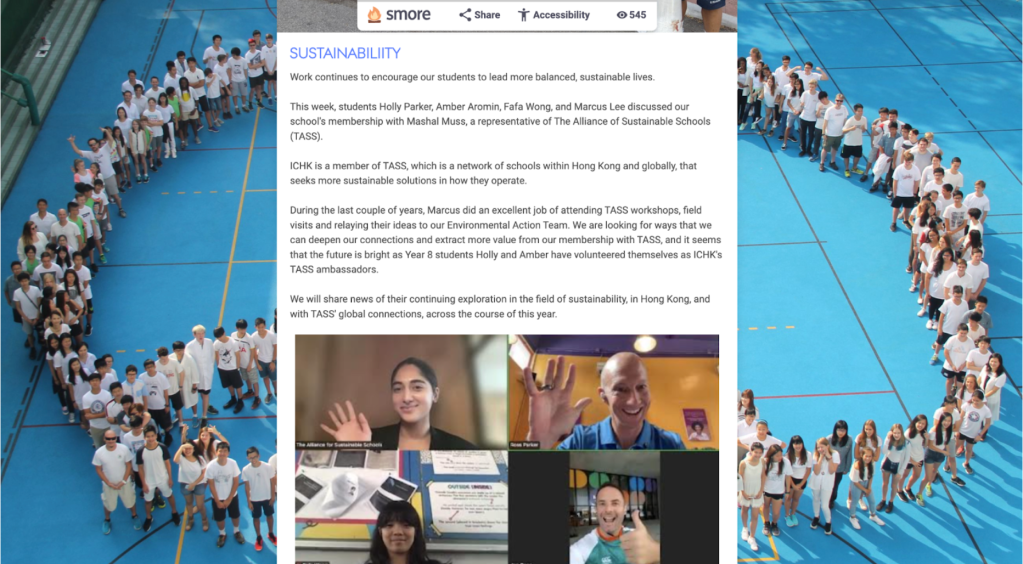
Work continues apace to encourage our students to lead more balanced, sustainable lives. 

The Eco Warriors met with Dr Christine Yu from the Zero Plastic League this week.

In an online meeting, she shared details of a plastic eating enzyme research project undertaken with students at GT Ellen Yeung College, Sai Kung. 

The two groups of students have now made contact and hope to collaborate in person soon.

The meeting was part of an ongoing drive by our students, who are showing full commitment to their work in promoting sustainability.

Also this week, Eco Warrior Kelvin Lee has committed to service as Air-Con Officer at school this year. An awareness raising initiative to turn down air conditioning units is underway.

The Eco Warriors have put together a video which is being shared with the ICHK community, containing valuable advice and tips on how to be more sustainable. At its heart is the message to ‘reduce, reuse, recycle’.

You can watch the video here.

Podcast: HOW IMPORTANT ARE MATERIAL TOOLS IN THE PRODUCTION OR ACQUISITION OF KNOWLEDGE?

A TOK podcast interview with Emily Osann on one of Exhibition IA prompts

https://www.toktalk.org/tok-talk-podcast/prompt-23-how-important-are-material-tools-in-the-production-or-acquisition-of-knowledge

0 Comments

https://www.toktalk.org/tok-talk-podcast/prompt-23-how-important-are-material-tools-in-the-production-or-acquisition-of-knowledge

TOK Talk · How important are Material Tools?

I met with Jon Rees, another TOK Teacher (as well as teacher of Human Technologies and IB English) ​here in Hong Kong, and we discussed TOK Exhibition Prompt 23: How important are material tools in the production or acquisition of knowledge? It was a fascinating discussion! Students, you need to be careful in this question about the difference between producing knowledge and producing things. While there is a connection (knowledge is needed to produce things), it is not an obvious connection so an exploration of the knowledge being produced (not just the thing) is required here. I think it would be very hard to argue that material tools (and conceptual tools by extension?) are not essential – and yet there’s room for exploration as you can hear from our conversation. I hope to talk with Mr. Rees again soon, as it was a very interesting and thought provoking conversation. 

Books & Resources that we referenced and discussed in relation to this talk:

  • ‘Sapiens’ by Yuval Noah Harari – this book is essentially an exploration of the role of material tools in the development of humankind, but is especially interesting when he talks about “fictional realities”.  For a quicker insight, watch this: Why humans run the world TED talk with Yuval Noah Harari 
  • Techno Feudalism’ by Yanis Varoufakis – he does a great job from a Marxist perspective explaining how his father taught him the concept of historical materialism, how technological development creates the tools/conditions for the advancement of the socio-cultural context. Then who controls the means of production, power/authority. 
  • How to Understand E= MC2’ by Christophe Galfard
  • The Sane Society’ by Eric Fromm – criticism of our focus on consumption in a nuclear age where we can annihilate ourselves 
  • Song of the Cell’ by Siddhartha Mukherjee – deep exploration of our understanding of biology – the first chapters are specifically focused on development of the microscope and its influence on the entire field of microbiology and beyond
  • Guns Germs Steel’ by Jared Diamond outlines the theory of geographic determinism, and thus the access to materials and the tools we can therefore make are everything in the development of humankind
  • Knowledge Illusion’ by Steven Sloman and Philip Fernbach – the illusion of explanatory depth, mistaking shared knowledge for our own
  • Justice with Michael Sandel 
  • Little Museum of the World in Chai Wan – A time machine for building peace
  • The Vanishing Face of Gaia’, by James Lovelock – essential wake-up call for humankind
  • Donut Economics’ by Kate Raworth – a hopeful perspective! Nibbling away what we need (not beyond our planetary boundaries)

Guest: Jon Rees
Music from the ISF Student Brass Band playing outside the school gate one morning in December 2023

Thank you to Waffling Beans for letting us use your space to record!