A Human Technologies Insight into U14 Girls Football
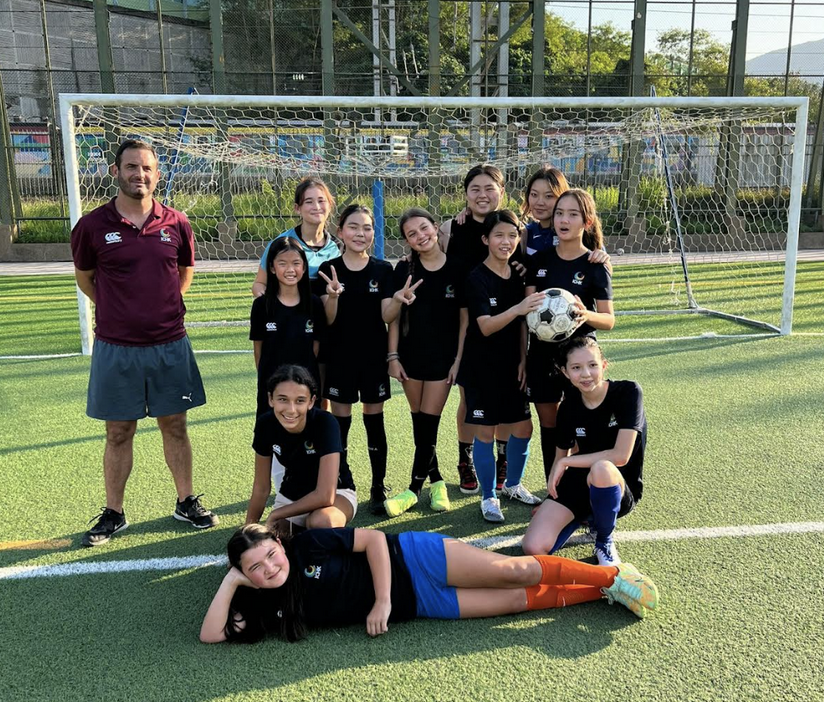
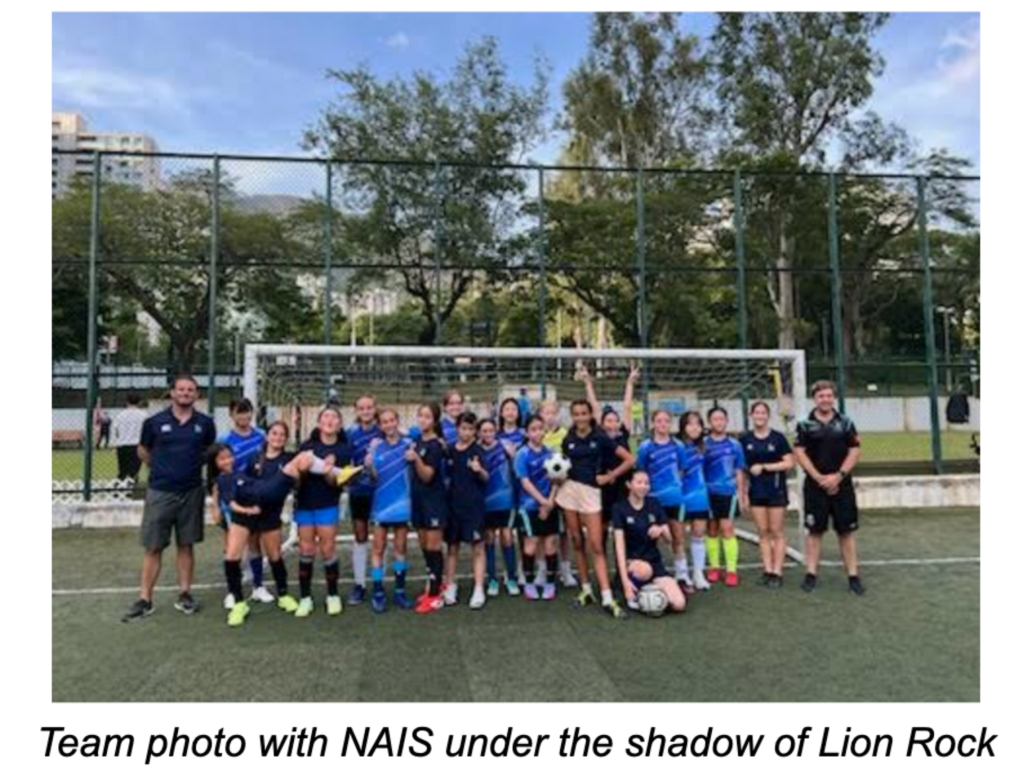
Our U14 Girls Football team have just come to the end of their season. It’s been wonderful playing against other schools again, and applying the skills and strategies of training to competitive fixtures. Human Technologies allows us to look more closely at some of other crucial aspects of socialisation, fitness, and mental fortitude that allow students to be successful in sport, and beyond to so many walks of life…
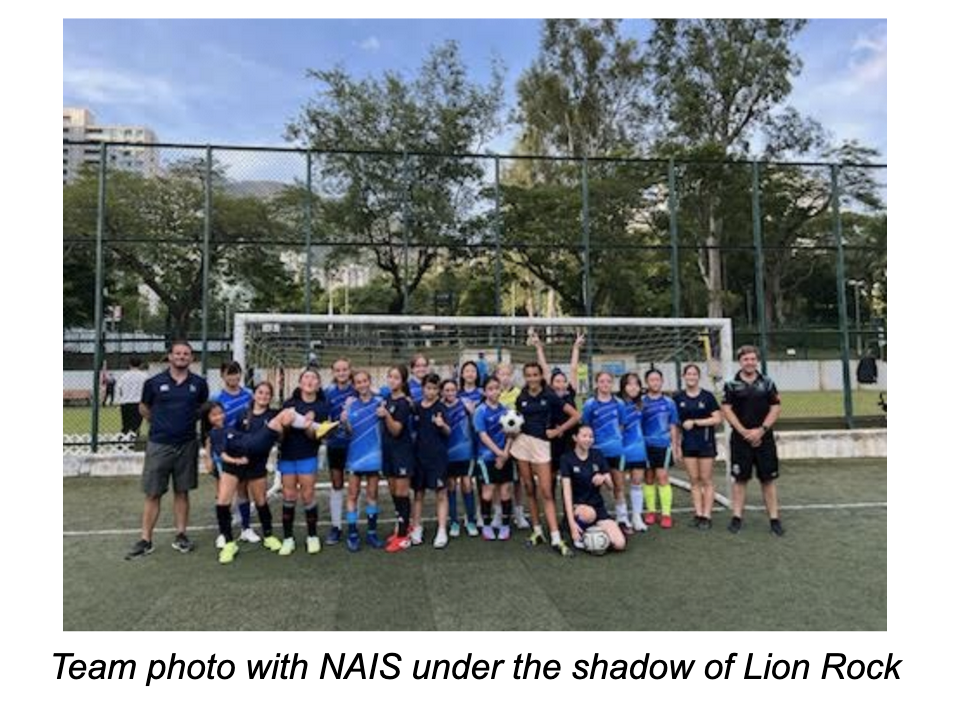
“Look at the size of them..!” said Agatha, staring across as the DBIS team got off the bus and entered our pitch at Kwong Fuk Park. Almost half of our U14 team are Y7s and Agatha, Sara, Jessie and Perlie most intensely experienced that peculiar feeling of worry about being ready to take on another team after a short pre-season training period.
It is always the case that as we kick off in Term One ahead of all the other sports, and compete against schools often twice our population, that our football students battle those feelings of nerves as adrenaline spills over into apprehension. Not only that, but these are the first set of competitive football fixtures many will have played at all for the last few years owing to the impact of Covid on organised sports in Hong Kong.
In Human Technologies, we have been learning about the structure of homo sapiens Triune Brain- a three part brain system of reptile, mammalian and prefrontal cortex formed through the process of evolution across millions of years.
This sophisticated supercomputer set equips us with all the instincts of survival- fight, flight, flop and freeze- that can be found in less advanced species such as lizards; this operates together with the limbic system which helps regulate our emotions, embed our memories and build social relations amongst mammalian species (hence why elephants, chimpanzees and whales have such complex societal systems); It is between these two where the amygdala and hippocampus can be found. As we prepare for competition, the amygdala pumps out cortisol and adrenaline preparing us to perform and our increased breathing pumps the oxygenated blood to our muscles so that we can perform whichever action is needed.
These essential functions have ensured the survival of our species across approximately 200,000yrs or more- yet, if we don’t engage that unique supercomputer of the prefrontal cortex to regulate our emotional state and allow us to rationalise whichever tough situation we might find ourselves in, it can all appear too much for a Y7 footballer…we might wonder whether we can get through the next 90 minutes! We need to feel safe, secure, and connected to a cause if we are to thrive.
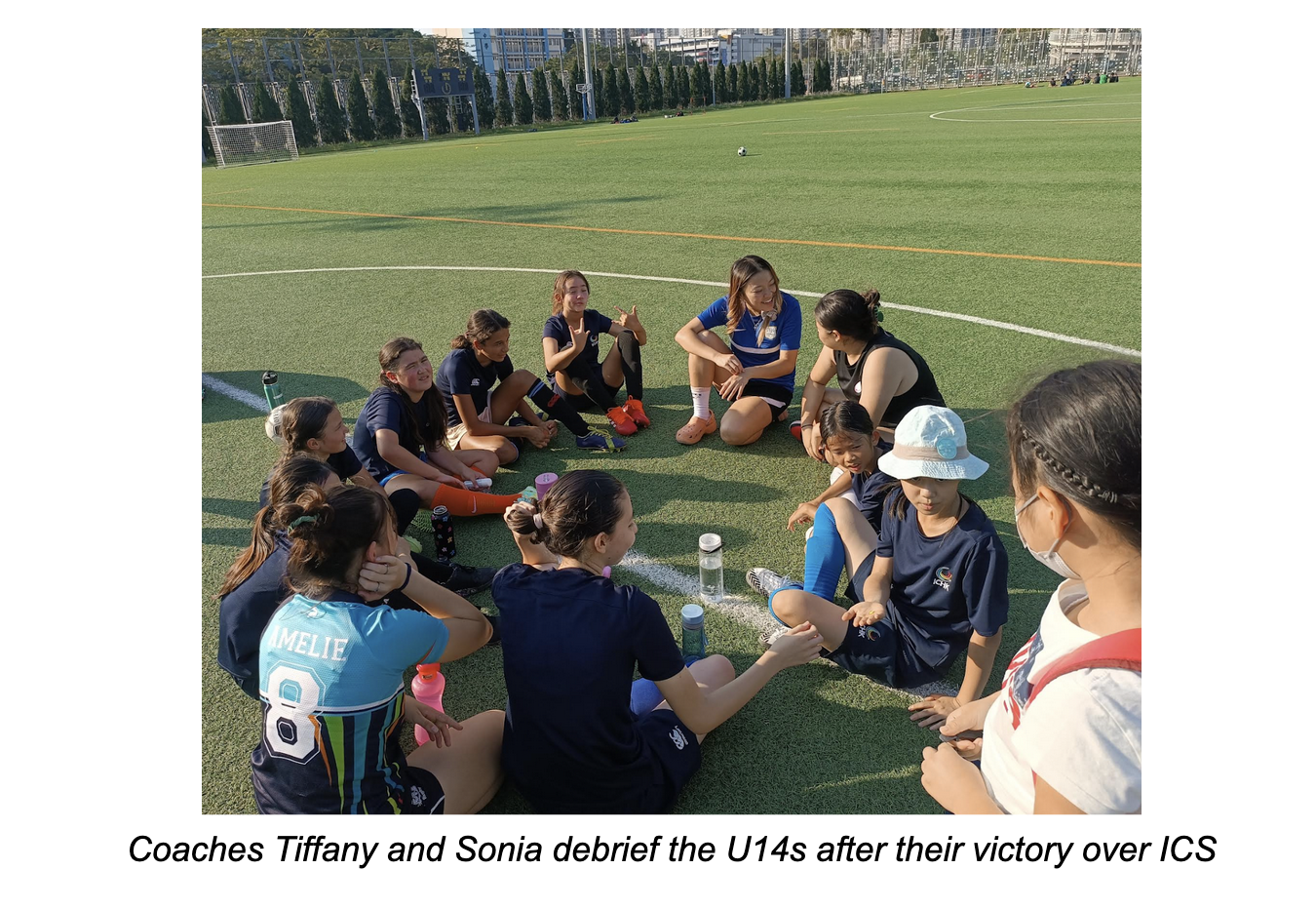
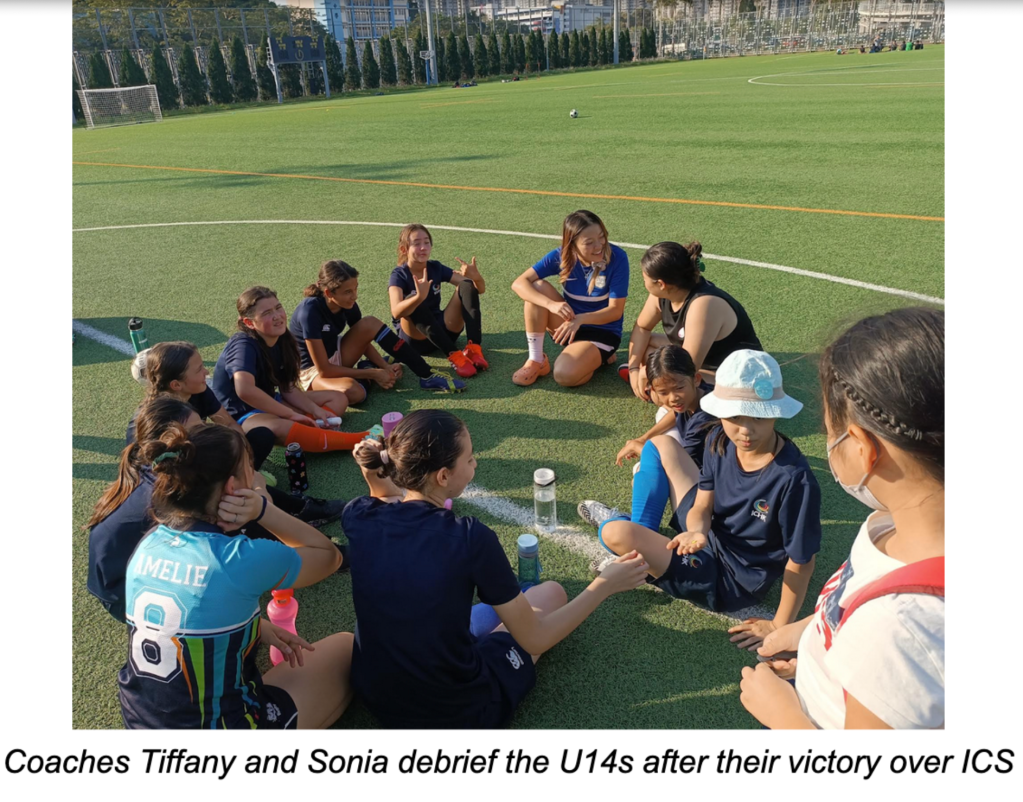
Across this season, our U14 Girls evolved together as a team. They were excellently led by Coach Tiffany and Coach Sonia, two Y13 students who devoted their time and experience of playing both football and rugby to a high level. They formed wonderful role models for the girls, inspiring confidence and sharing tips from training sessions and life lessons along the way.
This was a crucial part for the cohesion of our side, and with smiles on their faces, the girls got better at their shooting and passing drills, and even adapted rapidly to understanding how to play together effectively in a system where in defence we compacted our shape- like a hedgehog rolling into a ball- and attacked together moving forward to make our lines compact and increase the pressure we could put then upon the opposition.
Lucy Burton operated as Captain throughout the season and she quickly learned to give support and direction to others on the pitch so that Kenza could apply her knowledge of defence and capacity for running from the rugby field to the football pitch. Amelie was great in goal and gave us solidity at the back, and could turn defence into attack with her excellent distribution. As she graduates from U14 football she is another student with certain capabilities to coach and play at a higher level in the future.
Vicky White worked hard up front- often outnumbered but never outgunned- and her look of disbelief to delight when she scored her first goal was a season highlight.
Our midfield were run predominantly by the Y7s of Perlie, Jessie, Agatha and Sara with Jazzy supporting with her tireless running. Jazzy totally eclipsed her beep test result from a HT lesson early this term, as she channelled her focus, adrenaline and desire to track back and support her teammates with a look of grim determination on her face. Positionally, all of our players showed great improvement and Agatha, Perlie and Jessie were all rewarded with goals as a result. Perlie has such a magnificent touch and could turn on a sixpence. She will be a vital member in years to come.
One final mention goes to Jessie in our penultimate game: she received a couple of kicks, nothing nasty, just what you expect in a well-contested match. When it seemed things might get too much, she picked herself back up, received some supportive words of advice and touchline warm up from Coach Sonia… then came back and scored for us within 30 seconds!
It was a wonderful example of how Jessie rationalised the situation, using her prefrontal cortex to regulate the flow of adrenaline to once again gain control of her mind. Because she knew she could rely on the strong social bonds of her team- who needed her skills in turn on the pitch- Jessie was able to be present in “The Now”, and recognise that, while her injury was painful, the situation was not insurmountable. It was an excellent example of someone who didn’t give up and that is exactly the attitude that will serve her well in future tests of mental fortitude, be it sporting, academic, social relationships or otherwise.
All the girls are to be congratulated on their humility and good spirits throughout the season. Year 7s made friends with Y13s, and so on, and they can all look out for each other across the year in and out of school. That is what football can do, but it is what any chosen sport can do as if you are prepared to give it a go and stick through the hard times. If you commit to a team or activity the rewards are enormous and the playing, coaching, and supporting of any team will set you up for a lifetime of fulfilment.
SRC’s November Reading and Writing Theme: Banned Books!
SRC November Challenge: Every member of our community to read a book in November!
It’s strange to think that the book you hold in your hand could be deemed so explosive that both the writer and the reader could be thrown into jail for its possession. Some of the most famous books we can read today, that are revered as “classics”, so shocked the societies in which they were produced that they were banned. This includes the current GCSE/IB DP text students are studying, A Doll’s House, by Henrick Ibsen. The protagonist, Nora, is one of theatre’s great female heros; but her actions of leaving her family and children in a bid for personal freedom were deemed deplorable and corruptible by the traditional, moralising mindset of the age.
On the Y7 camp I read Madame Bovary, by Gustav Flaubert. It is widely considered to be one of the greatest novels ever written, owing to Flaubert’s incredible attention to crafting each sentence, and finding the mot juste (perfect word) to capture the events and sensations his characters undergo. Yet, Madame Bovary’s adulterous behaviour- and the attacks upon the class structure and religion – were deemed scandalous by French society and it was initially banned in 1856. Yet, Flaubert was able to argue that he was simply documenting society as it was- with all its foibles and hypocrisies governing the different standards of “acceptable behaviour” that were applied to males and females within society. Of course, the notoriety his text had gathered by that stage only helped sell more copies when it was finally released!
The most powerful banned book I have read is Aleksandr Solzhenitsyn’s, On Day in the Life of Ivan Denisovich. It is only just over 100 pages long, a factor necessitated by the conditions of its production. Solzhenitsyn wrote this fictionalised account of one man enduring 24 hours in the freezing conditions of a Siberian gulag (prison camp), based on his own experiences as a prisoner. He was sentenced to exile in Siberia for 8 years as he was an outspoken critic of the Soviet Union. One Day in the Life… is a harrowing account of an individual’s struggle for survival and dignity while being crushed by the dark powers of a totalitarian system. The system of writing is an act of rebellion and an act of liberation. For prisoners, “writing letters now was like throwing stones into a bottomless pool. They sank without a trace.” Any attempt at expressing your own opinions was subject to additional punishments such as beatings, reduced rations, isolation. Yet, Solzhenitsyn did write this account as he so desired for the world to know of his, and others’ plights. He wrote the entire novel on toilet paper, but this was discovered and destroyed by guards. Yet, as this was an account of real, lived experience, and he had committed the text to memory, he was able to re-write the text in full and publish upon his release.
The right to think for ourselves, express our opinions and listen to the words of others is integral to a fulfilling life. The right to free speech was deemed so important to the foundation of the United States, separate and distinct from the Old World colonial monarchies, that they enshrined it as the First Amendment of the Constitution.
If you have not yet began your reading challenge for November perhaps you would like to celebrate your freedom and the individuality of your spirit, by starting with a banned book!
Tim Clissold shows how the unchanging nature of the Chinese written word connects the past to the present in ways that do not exist in the West. This connection helped a Chinese scientist to win the 2015 Nobel Prize for medicine. It is also used in present day economics.
But Tim argues that the greatest lessons for many come from poems written more than 1,000 years ago, that deal with problems that are all too familiar in modern times. These include the plight of refugees, social inequality, homelessness, tax evasion, substance abuse and even the perils of excessive logging.
What, he asks, can mankind learn from these lines as they echo down the centuries?
The ideas in this feature article are often taken directly from a Royal Geographic Society talk I attended in November, entitled, “Ancient Words for the Modern Age” by the author Tim Clissold who has lived and worked in China for over thirty years. He’s written a number of books about his experiences, including Mr. China, Chinese Rules, and his most recent work, Cloud Chamber. I’ve tried to give credit as clearly as I can to where an idea was introduced by the presenter.
The talk was inspired by what Tim Clissold identified as the Chinese written language’s capacity to pass down wisdom in the fields of engineering, medicine, poetry and philosophy across millennia due to the comparative constancy of its characters (as opposed to, say, the English language).
He discussed how he fell in love with Chinese culture and language when he first arrived in Hong Kong and was fascinated by its beautiful stylised calligraphic form; but how, he wondered, could he ever penetrate the complexity of a language that featured, for example, the 26-stroke character that is the first of the two character word for “Wan Chai”?
Wan Chai MTR Station: the emotive flourishes of Chinese calligraphy first captured Clissold’s interest
I’m also extremely grateful to our Chinese language teachers, Vincent Wang and Jessy Tu, who were very generous with their ideas and time to help me support my classes with a range of clear examples. They were able to add colour and depth with some excellent insights into the challenges/methods that a language learner faces and utilises when translating Chinese into English in fun and exciting ways. These dual themes of the propensity for the Chinese language to communicate wisdom, and the challenges of “taking the language out of its original context” (to refer to a May 2024 TOK Essay Title), were the dual themes of Clissold’s talk and this article.
I hope this article may provide some motivation for those, like me, who have struggled to learn Cantonese or Mandarin by approaching it from a more visual and poetic standpoint, as well as providing some interesting cultural and historical perspectives on the language.
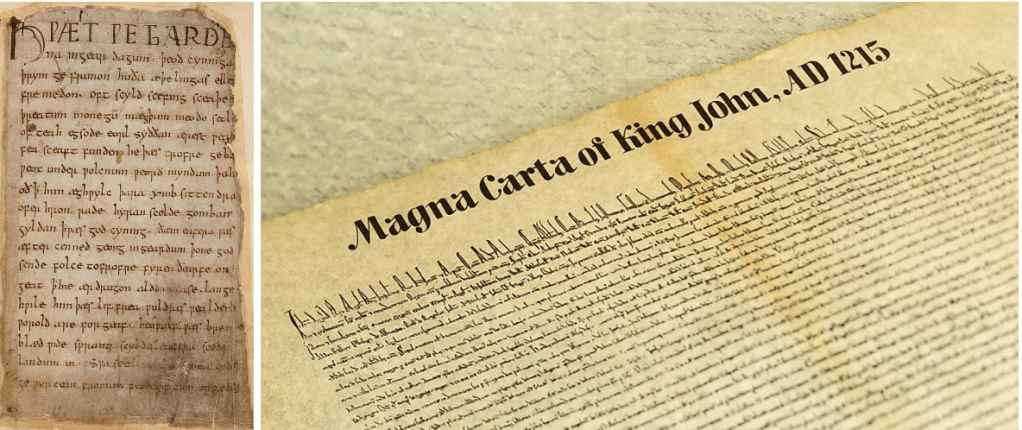
Beowulf, c. 800-1000 AD; The Magna Carta, 1215 AD.
Clissold made the point that while Shakespearean English from 500yrs ago is largely comprehensible to a secondary student, the epic poem, Beowulf, written in the West Saxon (Germanic) dialect of Olde English approximately 1,000 yrs ago is not. Following the Norman Invasion of 1066, Latin became the language of the courts and the nobility. Both these texts would be incomprehensible to a modern reader of English. https://www.britannica.com/topic/Middle-English-language
However, take this beautiful line from the Tang Dynasty poet, Li Bai.
“Without a word from the Sky, the four seasons rotate (and thus all things continue to change), and without utterance from the Earth, all life continues to be born, grow and flourish.”
Li Bai, c. 750 AD
The wonder and eternity of nature are communicated with an immediacy that is hard to believe given the poet wrote these lines over 1,200yrs ago. And there is a tradition for Chinese politicians to use lines of ancient wisdom within their speeches to connect their thinking to the past. President Xi Jinping used Li Bai’s words in his speech at the December 2020 Climate Ambition Summit. And this can, Clissord attests, be read directly from the original text. https://www.thechinastory.org/the-underappreciation-of-classical-chinese-idioms-xis-climate-speech-1/
When faced with a similar task of translating a line from perhaps the most famous ancient Chinese poet of them all, Du Fu, Y12 TOK students, Tuscany, Henry and Oliver were able to make some meaning and offered a lovely interpretation of a line from an excerpt of Du Fu’s,“On Visiting the Temple of Laozi”, written approx. 750 AD. They explained how the poet observes, “the stitching of the Sun and the Moon on the windows..”
The opening to Du Fu’s, “Spring Gaze” was read out by Tim Clissord, and it contains such an evocative opening line as the poet or speaker walks around the ruins of the city after an uprising in Chang’an :
You can see the work the translator has undertaken to represent the literal meaning of the original, while ensuring both the vocabulary and truncated rhythm of the line capture the starkness of the dramatic situation, and nature’s power to endure.
Yet, as you can see with this academic website, many translators have tried to emulate Du Fu’s timeless words, but they all interpret the lines subjectively, sometimes with some quite marked differences that can really change the overarching effect of the line. You’ll be able to pick your own favourite interpretation by viewing the selection via the link: https://homepages.ecs.vuw.ac.nz/~ray/ChineseEssays/ChunWang.htm
Yet, it’s not just a matter of choosing the right word to capture the best impression. In the following short video, ICHK Chinese teacher, Jessy Tu, delivers an interpretation of a Chinese nature poem, while making clear the problems of pronunciation in Chinese translation. As we shall see, a change in pronunciation can alter the meaning significantly!
The plum blossoms are so beautiful I see the fallen leaves lying on the ground with sorrow I hear from afar the sound of a running stream The whole area is full of the green of springtime The riverbank reveals the green-like jade
I have no culture, I have low IQ,If you ask who I am,A fat stupid donkey,I am a donkey,I am a donkey,I am a stupid donkey
Translation on right hand column by Y12 Henry Wang
Ms. Tu preceded her engaging reading with a few core lessons that explain some of the hurdles a new Chinese language learner must face.
Firstly, like English words, one character can have very different meanings, such as the examples below, depending on the context in which they are used in the sentence:
There’s also the issue faced with an artistic interpretation of an original text by a calligrapher. An excellent actor or artist will add a certain element of colour and distinction to a script or their interpretation of a certain theme or idea. You can visit the Hong Kong Museum of Art to find out more with their current exhibition, “The Melodious Notes of Chinese Calligraphy”, from which the image on the left below is taken:
As with artists such as pianists, painters, singers and poets, calligraphers themselves can interpret the meaning of a text by the creative flourishes of their brush.
This idea can be explored further when applied to understanding Chinese classical art. The video below is a quick 3-minute masterclass to uncover the craft, uniqueness and value of landscapes by Bruce Maclaren, Global Head of Chinese paintings and calligraphy at Bonhams, who describes the close study of art as an “enlightening” experience.
To return to the fundamentals of language, though, Jessy recommended the Chinese language website, The Silk Story, which provides a good bank of resources that focus on the etymology of the Chinese language and its characters. Take this example for “mouth”- the shape clearly resembles in basic form an open mouth, so the simplistic symbolic depiction of rice paddies, the human form etc within the language makes for an accessible means of unpacking simple words.
Many mouths together can indicate a plural but also more to do with tasting as well as quality.
The same variability exists, too, with the character for a person. You can imagine how the first writer in Chinese to decide upon this character saw the figure of a human walking and simplified it to this elegant two-stroke form, before using a stick or flint to etch it into the earliest writing tablets of clay or ox bone.
Yet, you can also derive the words: people, person, human and human being from the same character. This translation business can get really tricky if you’re trying to just state the obvious, let alone communicate artistic nuance…
So, how can you unlock all this knowledge of ancient languages to win a Nobel Prize?
Well, that’s exactly what the Chinese scientist Tu Youyou did when she was awarded her prize for research into a cure for malaria in 2015. Her work was actually carried out much earlier, back in the 1970s at the time of the Vietnam War when both the American and Vietnamese militaries were desperate for a cure for malaria. At the time, Clissord stated, American soldiers were dying more from malarial infections than wounds inflicted in the battlefield at a rate as high as 5:1.
Youyou Tu with Prof Lou Zhicen in the 1950s. She has been working in the China Academy of Chinese Medical Sciences in Beijing for decades, and is now Chief Scientist. Photo: Xinhua
The Americans went all-in on the scientific method and pursued the cure in their laboratories…to no avail. Ho Chi Minh asked the government of Mao Zedong if they could help, and they too used the latest scientific methods, as well as turning their attention back to the hundreds of regional medicine books that had survived across the centuries. Clissord reported a rather stomach-churning cure for leprosy involving eating the scab of a leper. Sounds gross, right? But that process is what we recognise today as vaccination….documented hundreds of years before the “discovery” was accredited by Western scientists to Dr. Edward Jenner for his treatment for smallpox in 1796. https://www.who.int/news-room/spotlight/history-of-vaccination/a-brief-history-of-vaccination
The books of folkloric knowledge studied by Tu Youyou eventually revealed the answer, and she then applied the scientific method to examining the veracity of these ancient traditional herbal remedies.
And the examples go on… solutions for burst dams that have helped engineers in modern times, as well as naturalistic poetry inspired by the Tao Te Ching which was itself written as early as 200BCE (and which provided many central ideas for my Deep Learning unit: Zen and Sustainability).
I am very grateful to another of our excellent Chinese teachers at ICHK, Vincent Wang, who replied in a very detailed manner to explain the translation technique which he learned at university and which forms the pedagogical approach for his teaching. The full email reply can be found in the notes at the end of this article, but he writes:
“During my graduate studies, I took a course called “Translation Studies,” which discussed a Chinese translator from the modern era named Yan Fu. Yan Fu developed a translation theoretical framework known as the “Faithfulness(信), Expressiveness(達), and Elegance(雅)” translation system. “信” refers to faithfully conveying the meaning and information of the original text, ensuring that the translation corresponds to the content of the original.”
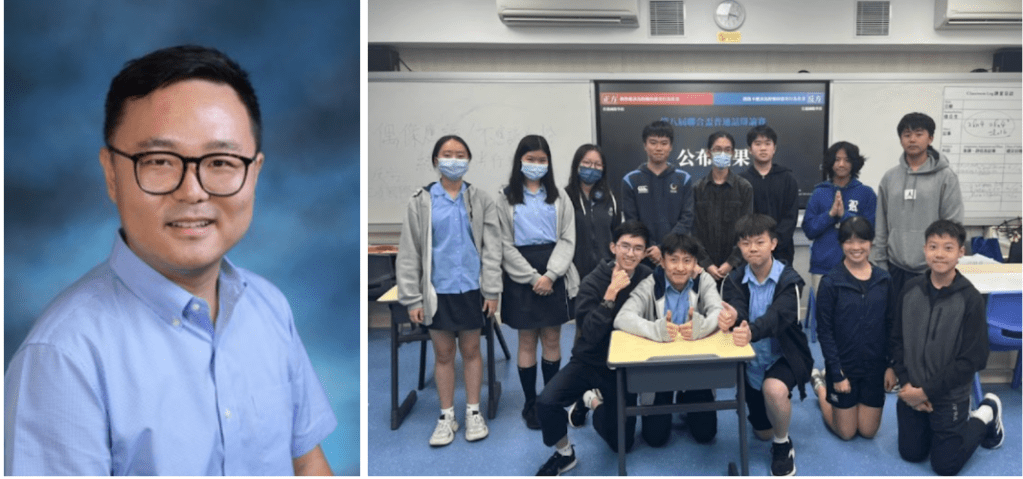
It seems that students in both Ms. Tu’s and Mr Wang’s classrooms are in very good hands indeed- no wonder they’ve performed so well at the recent Debate Competition!
Vincent Wang, and members of his excellent Debate Team
So, will Tim Clissord’s talk propel this “ying guo ren” to buckle down and eventually break through Chapter One of my Chinese language books at home? We shall see, but it was a really enjoyable talk that has made me really want to open my eyes and pay more attention to the world around me for the lessons of culture and history that can be revealed through paying closer attention.
Other implications for translating Chinese to English
Chinese characters can have many meanings, sometimes they are paradoxically contradictory (certainly the English language also shares this problem). There are 7 symbols in lines of Chinese classical poetry, and let’s say there are (at least) three potential meanings for each character, then you have a problem in translating the meaning of this successfully which could be mathematically represented as 3*3*3*3*3*3*3= 2,187 minimum potential interpretations of just one line.
The Chinese language, unlike English, is a null-subject language. This means that it is not possible to determine the subject based on the verb alone, e.g.
There are no changes in the tenses, e.g.: Today, I eat vegetables and drink green tea; Yesterday, I eat vegetables and drink green tea; Tomorrow, I eat vegetables and drink green tea etc.
“The Lion-Eating Poet in the Stone Den“: The famous example given by Tim Clissold was a nonsense poem written by Yuen Ren Chao featuring tonal variations of the same shi sound…repeated 96 times!
Thank you for your email. I regret that I won’t be able to attend the lesson, but I have some ideas regarding Chinese translation.
During my graduate studies, I took a course called “Translation Studies,” which discussed a Chinese translator from the modern era named Yan Fu. Yan Fu developed a translation theoretical framework known as the “Faithfulness(信), Expressiveness(達), and Elegance(雅)” translation system. “信” refers to faithfully conveying the meaning and information of the original text, ensuring that the translation corresponds to the content of the original.
“達” refers to the translation’s ability to make the reader understand and resonate with it. In addition to conveying the information from the original text, translation should also adapt to the target language and cultural background.
“雅” refers to the translation’s need for artistic and aesthetic qualities. Translation should strive for linguistic elegance and fluency while maintaining accuracy and clarity. This requirement is of the highest level and is also the most challenging goal to achieve.
It is interesting to note that there are similarities and overlaps between these perspectives and the theory proposed by a German translation scholar, Reiss, regarding text types. Reiss introduced the theory of text types, which emphasizes the importance of considering the specific characteristics and requirements of different types of texts during the translation process. Later criticisms have emerged suggesting that this translation theory may face challenges due to the inherent difficulty of fully categorizing texts based on their types.
When I teach the Y9 Kingston Chinese class, I will simply introduce the overlapping aspects of these two theories to help them better understand modern translations of ancient poetry. Reiss proposed that texts can be classified into two main categories: informative texts and expressive texts. When it comes to understanding ancient texts, I usually employ the informative type for teaching purposes. This is because my goal is to quickly convey the meaning of the text to students. Let me provide an example of translation in both Mandarin Chinese and English. For instance, if I want you to understand the term “春節” (chūn jié in Mandarin), I would translate it as “Chinese New Year.” This way, you would grasp the content of the text. This process can be seen as me, acting as a “translator,” building a bridge for students and guiding them across. However, when I teach using the expressive type, I would directly translate it as “Chunjie” and provide subtitles. When I employ the expressive type as the primary method of translation, my intention is to sacrifice the literal content of information transmission and allow students to appreciate the cultural, auditory, and formatting elements behind the text.
Therefore, when it comes to poetry or certain ancient literary texts, if our aim is to help students understand cultural phenomena, I would focus on teaching the format and encourage students to explore the underlying meanings. However, when dealing with non-literary texts, I no longer emphasize cultural elements. That’s why you may see that I allow students to freely express themselves, whether it’s in terms of format or symbols, with the goal of helping them grasp the content.
I saw the translation you provided in the link about the poem translation in Chinese. https://homepages.ecs.vuw.ac.nz/~ray/ChineseEssays/ChunWang.htmYou can see that these translation types are not used independently. The expressive and informative types I mentioned earlier are combined in their usage. In some cases, the focus on conveying meaning may result in the loss of the format and rhythm of ancient Chinese poetry. On the other hand, in some instances, prioritizing the preservation of rhythm may lead to the loss of certain aspects of the content and require readers to explore the underlying meaning of the text.
The above are some interesting translation theories and ideas that I find useful, especially when teaching ancient Chinese works. I hope you find them helpful as well.
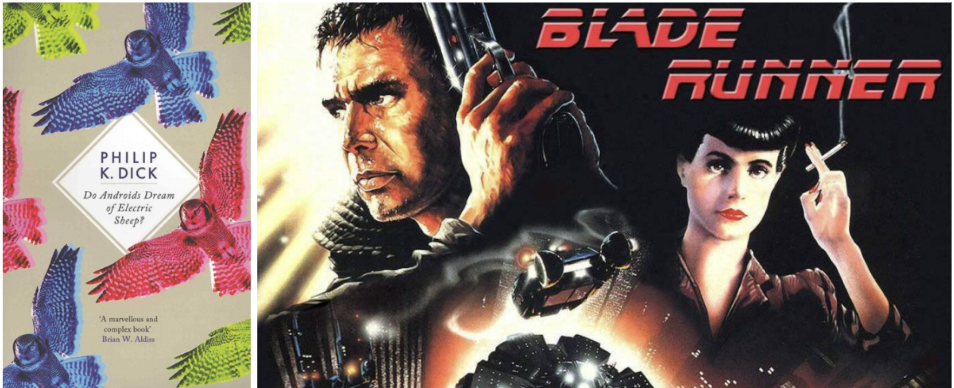
The front cover of the Weidenfeld & Nicholson version; the original Blade Runner film poster.
In the 1960s, the prodigious Science-Fi writer, Philip K. Dick, produced his far-sighted masterpiece, Do Androids Dream of Electric Sheep? This dystopia would become the template for Ridley Scott’s iconic 1980s film adaptation, Blade Runner, starring Harrison Ford.
It is rather a prescient read with the explosion of AI into the mainstream, as PKD imagined a human world threatened by rogue androids, whose intelligence had become so sophisticated they had learned to reject the servile, exploitative role foisted upon them by their human masters. A set of bounty hunters within the San Francisco Police Department, including the protagonist, Rick Deckard, are tasked with eliminating this threat.
Like many Sci-Fi worlds, the future San Francisco that PKD depicts is a bleak wasteland, choking with the “dust” following the fallout of a nuclear World War. The division between the haves-and-have-nots of this world is Stark (AKA Tony Stark, AKA Elon Musk, who would have all-of-us-who-can-afford-it blast off to live on Mars.)
In the novel, there has been a mass exodus from Earth and those who have the financial means to do so have escaped to live in the far reaches of the Solar System; those that remain, include the misfits and mercenaries who can make a quick buck in the black market economy, or others such as the downtrodden JR Isidore, a victim of the War, whose mental faculties have been diminished by the choking environment: fail the intelligence tests, and you are condemned to remain on the blighted Earth, performing the sorts of menial tasks which the robots are destined to take over.
(So, ICHK students, focus on developing the range of technologies that make you uniquely human, reliable, able to work in a team, empathic, creative, and an indispensable problem solver…as well as pass your IGCSEs/IB exams. No pressure…)
In such a barren landscape, nature has been largely destroyed. The very few animals that remain command exorbitant prices from the animal traders who peddle them in exclusive shops with eye-watering price tags. They have become the ultimate commodity, replacing some elements of our society’s desire for shiny new objects such as Tag Heuer watches, Gucci handbags, and the various other talismans with which we humans adorn ourselves- perhaps as protection against the inevitability of the human condition?
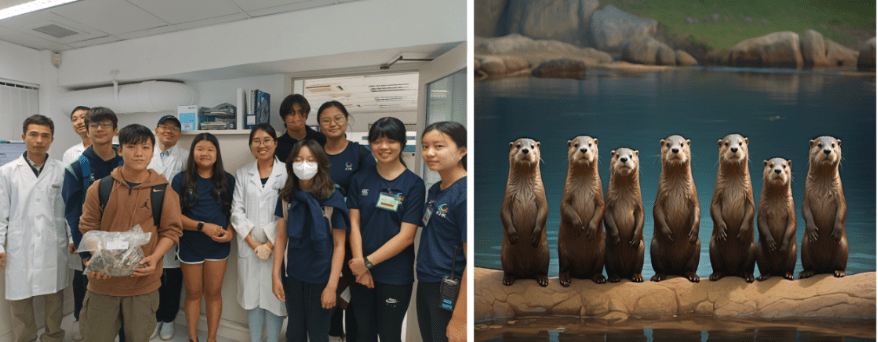
There are estimated to be fewer otters in Hong Kong- seven- than the number of ICHK students in the photo on the left with Kadoorie Farm scientists.
Last term, we were lucky to be invited to Kadoorie Farm to hear about the plight of pangolins. We met with researchers such as Aiko Leong, the female scientist in the centre of the picture who was engaged with analysing traces of otter DNA found in stools, and other scant samples to try to establish patterns of movement and population numbers etc. Work conducted by students at HK University led the researchers to conclude there are an estimated seven otters left in Hong Kong. Yes, I thought I misheard too. Not seventeen. Seven. You can read more about that in this excellent feature article: https://www.kfbg.org/en/KFBG-blog/post/In-search-of-the-last-otters-of-Hong-Kong
The electric sheep that grazes on the rooftop of Rick Deckard’s flat is his prized possession, but he longs for the day where he might be able to not just gaze at the real rabbits, goats and giraffes for sale beyond the shiny glass shopfronts and purchase his very own status symbol to show off to his neighbours.
Global biodiversity loss as a bi-product of human activity has been documented by groups such the World Wildlife Fund, who state that we are now living in an age known as the Sixth Mass Extinction; within Hong Kong we have creatures such as pangolins, pink dolphins and otters who are hanging on by a thread. In a follow up to this piece, I will reflect further on the precarious systems in balance and the strategies and technologies that have been proposed if we are to be successful in- hopefully- ensuring that these species survive, as well as ensuring the flourishing of the dignity and prosperity of human life.
But if we aren’t, maybe in the future you might covet finding an electric otter wrapped up under the Christmas tree.
A thin slither of mangroves and fish and shrimp ponds that constitute the Mai Po Marshes stand in stark contrast to the mega-city of Shenzhen. Land cleared for development is visible.
We are at an age where certain aspects of science-fiction have been replaced by science fact. In the novel, the “Voigt Test ” is administered by officers looking to ascertain whether the “person” they are speaking with has the necessary empathic qualities to indicate they are actually human. Some AI robots today have already passed the Turing Test, and are becoming increasingly sophisticated to the point where they might also be likely to pass whatever empathy tests might exist in the near future.
Indeed, to a perturbing extent, we must now operate like Deckard, although we don’t have the advantage of his sophisticated testing systems. We need to be able to apply a critical rationale based upon our own intuitions and reasoning if we are to detect fact from fake. We are the guinea pigs in a new digital age, conditioned to speaking, and revealing our preferences, to Alexa, Siri, or the chatbot on the bank app etc.
(l-r) Professor Ian Wilmut with Dolly the sheep, the world’s first cloned animal; a “Tamagotchi”, a massively craze electronic animal toy in the 1990s (it’s highly probable some of your parents owned and accidentally killed one); “Come give me a hug!” Robots today are being developed with empathic traits, such as Osaka University’s Affetto infant.
Then, there’s the rather malign development of AIs that will purport to be our friend, and lend a sympathetic ear to young people who might find themselves increasingly isolated from others owing to an overreliance on tech, either through their own “choice” (the reality is that the algorithms that underpin these seemingly benign technologies are designed to be addictive to commodify your attention), or due to the pressures of family life where mum and dad are working late, so solace is found through staring at their smartphone screens.
Here, once again, PKD showed remarkable foresight as the “mood organs” that characters dial into to synthesise their daily emotional experience is much like the real invention of the dopamine-delivering technologies that almost all of us carry in our pockets. Dick’s characters search for connection and empathy within, or away from, their world through the Empathy Machines which they can plug into; these machines allow them to feel that they are momentarily like Mercer, the suffering god of their world. In a world otherwise bereft of hope it serves as some sort of spiritual escapism to escape the drudgery and meaningless of their own existence.
Do Androids Dream of Electric Sheep? Is a fantastic novel, brimming with ideas, many of which feel like they have already come somewhat true, just 56yrs after it was written. As a modern reader, we might use the text to stimulate our own thought experiment as to what the future might hold, and how we should act in it. Some of the technologies and risks that PKD predicted have already arrived. (I do wish they would hurry up with the flying cars, though…)
A graphic novel version of PKD’s seminal science-fiction novel will shortly be appearing in the library..!
At ICHK we interpret sustainability holistically, at the personal, somatic and psychological level.
We need to be sustainable within ourselves before we set out to fix problems we might see in the world. If we are calm and balanced internally, then we will have the energy and capacity to effect change in a more sustained fashion in the future.
Our Human Technologies curriculum asks students to explicitly reflect on their backgrounds, their values, and their future goals. We run a wide panoply of environmentally-focused extracurricular activities that work to develop a growth mindset within our students.
Uniquely, compared to other Hong Kong schools, we are situated in the spectacular natural environment of the Pat Sin Leng Country Park, so students are regularly engaging in hiking, camping, cycling, and science trips to embrace the outdoors and appreciate issues of sustainability at the local level.
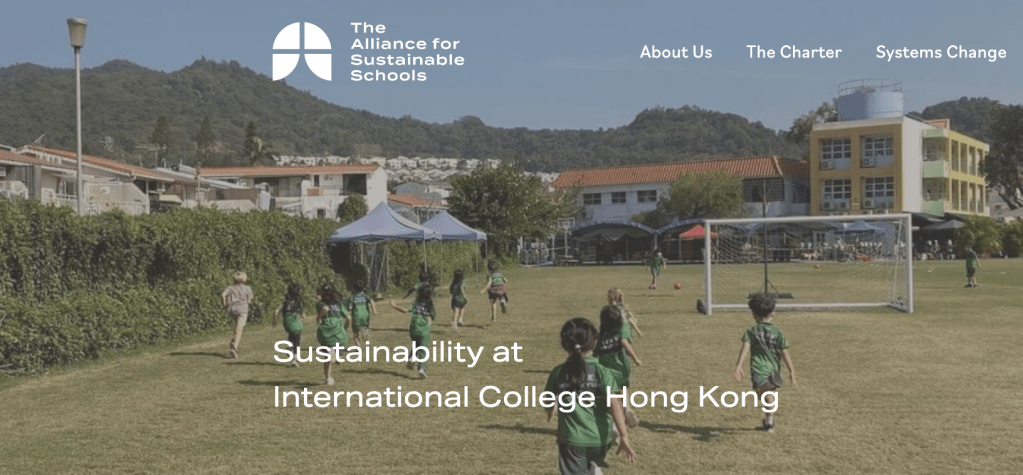
We are a member of The Alliance of Sustainable Schools, which is a network of schools within Hong Kong and globally, that seeks more sustainable solutions in how they operate.
As a member school, we recognise the seriousness of our ecological crises – including climate change, biodiversity loss, deforestation, pollution and water scarcity – and the challenges they pose for the health and wellbeing of our students and the global community.
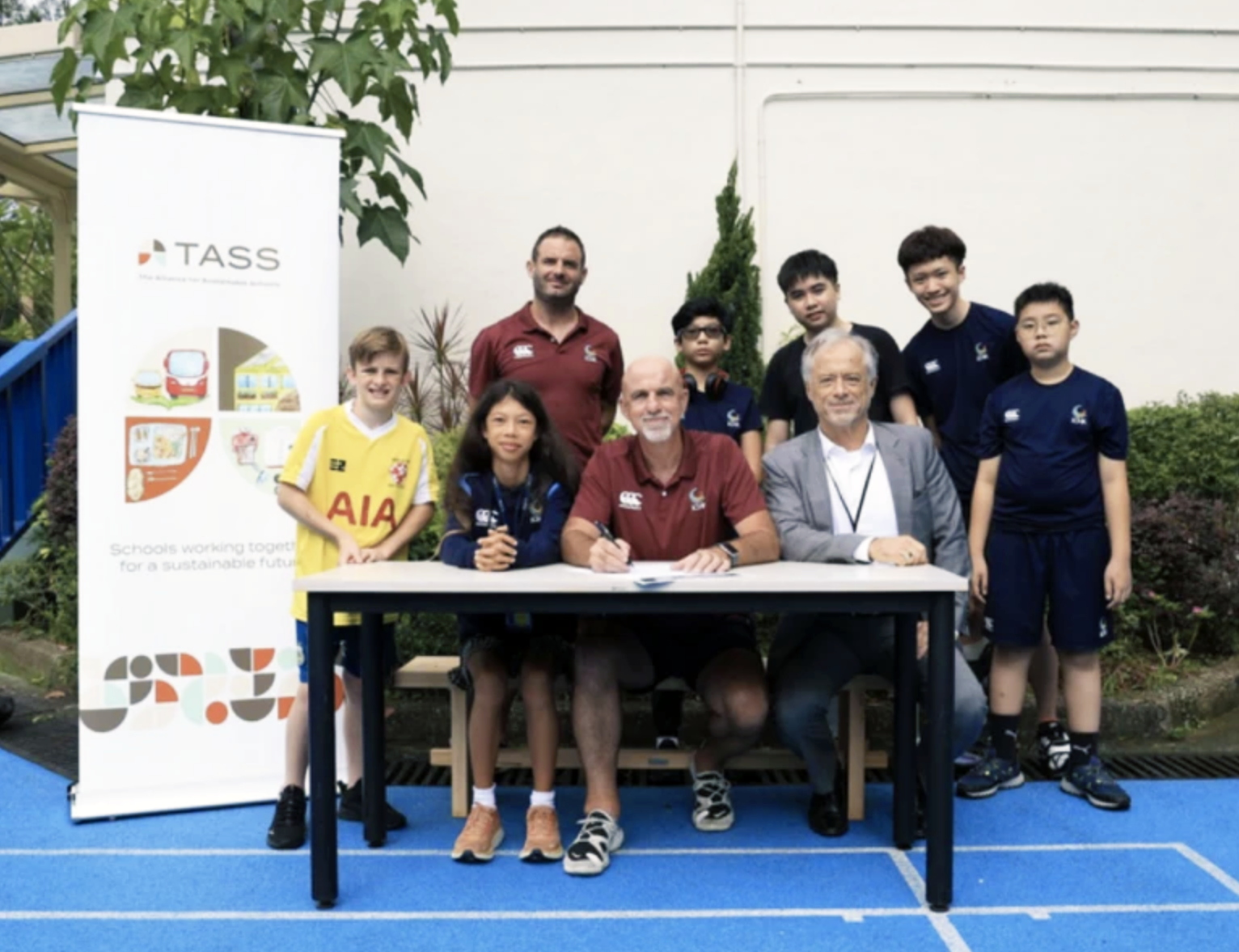
In signing the TASS Charter in 2023, we pledged that ICHK would develop practices that enable students to develop the knowledge, skills and competencies required to become sustainability stewards.
Under the guidance of Sustainability Coordinator Jon Rees, a team of Eco Warriors is leading a number of initiatives to reduce our carbon footprint. Our two TASS ambassadors are part of this team, and they connect with our School Representative Council and School Media Team to promote key sustainability issues within ICHK. These include the reduction of food waste, increased recycling and the removal of single use plastics.
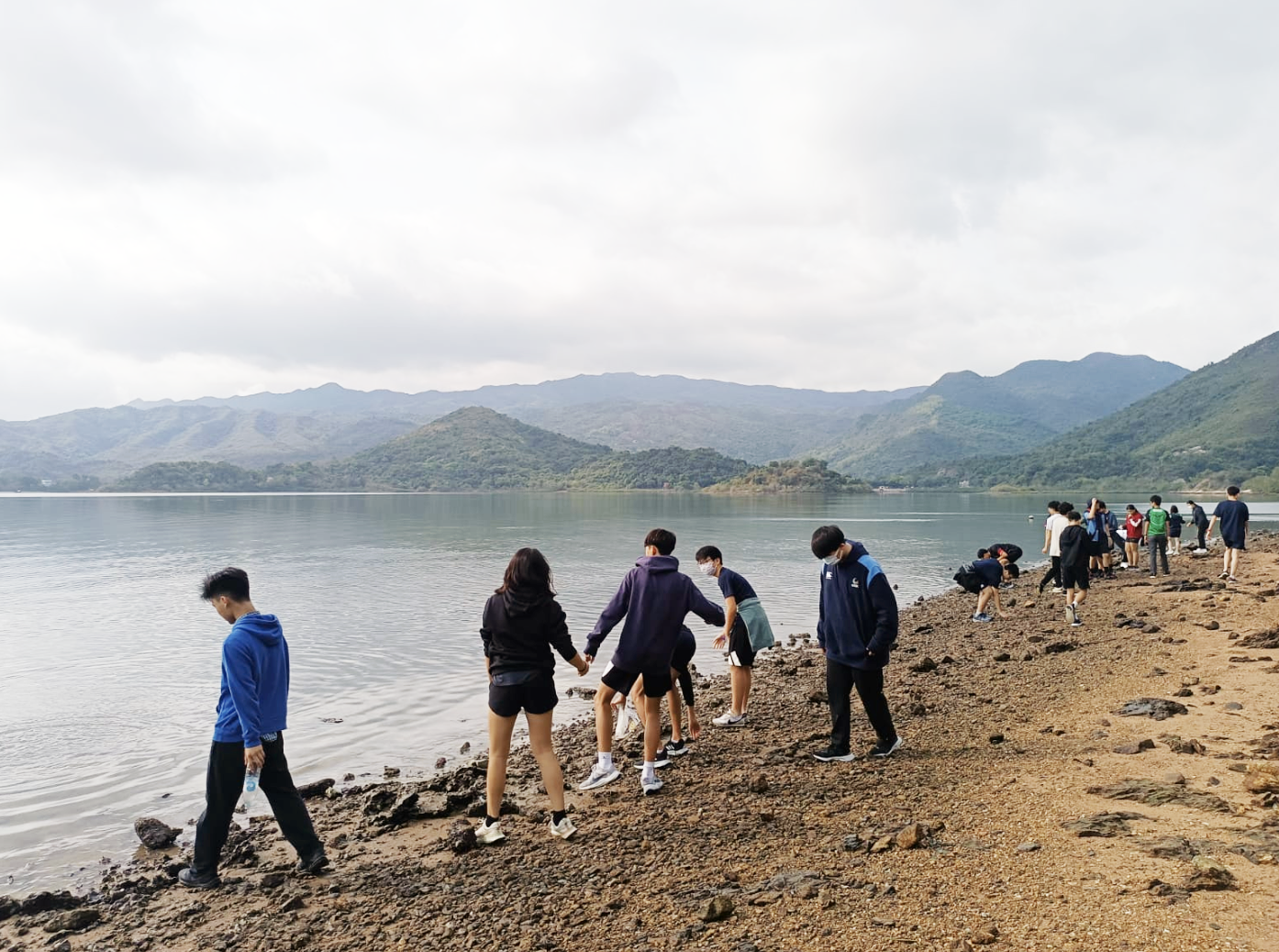
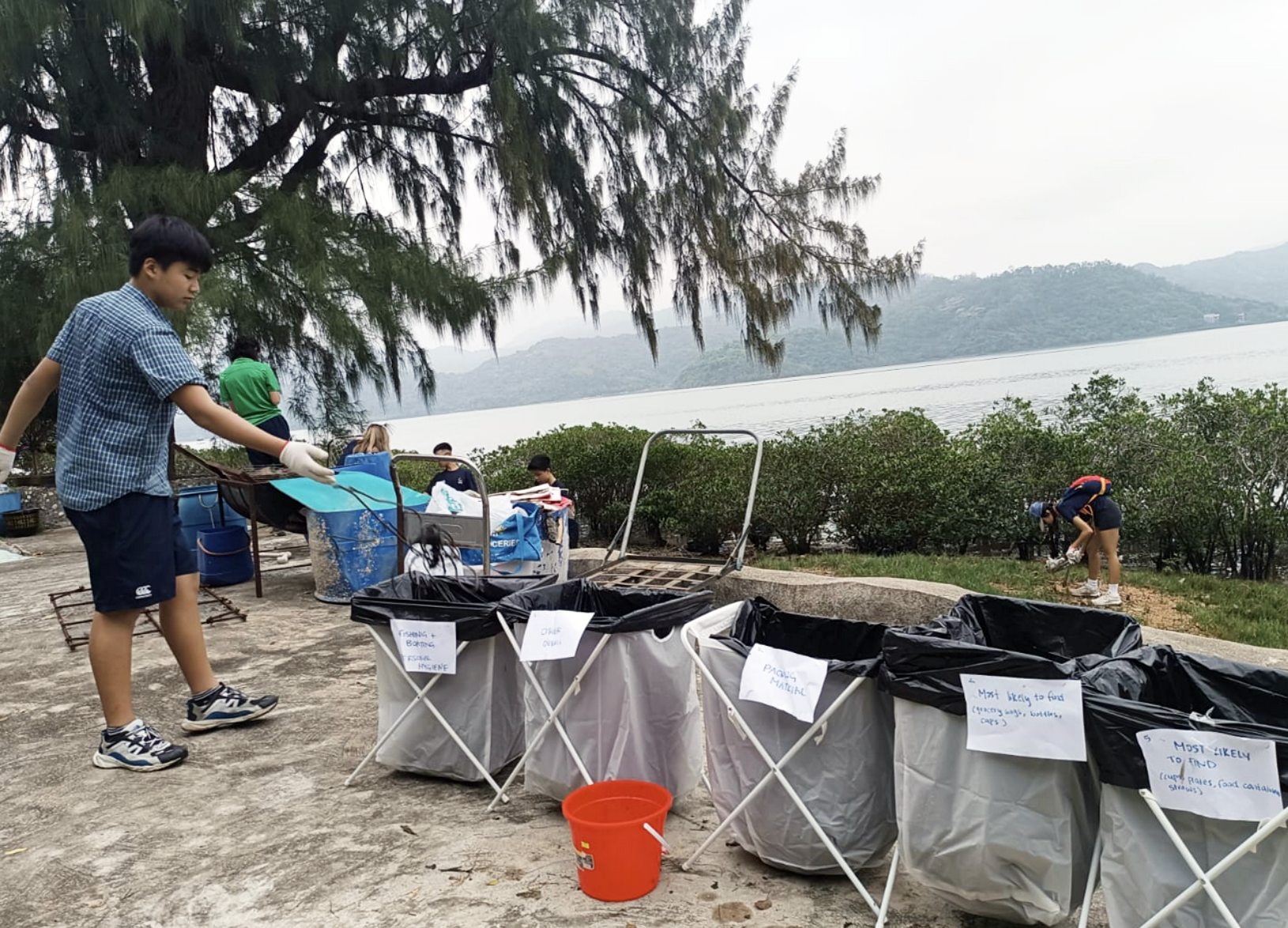
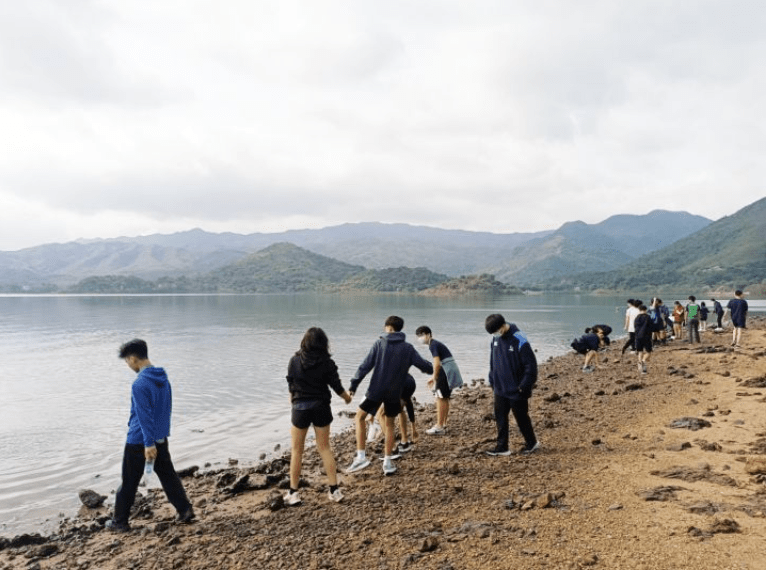
Students engage in regular clean-ups along our neighbouring shoreline, reminding them how important it is to care for their community and helping them to develop sustainability practices.
Connections are also made with ICHK’s flagship programmes including Deep Learning and Enrichment & Flow, where students get out and explore the world around them and come face to face with environmental issues in an authentic manner.
Above all, we strive to develop caring, empathic students who understand that through their actions, they can make a difference, and sustain a positive impact upon the world.
Find out more about ICHK’s approaches to sustainability>>Learn More
Human Tech: Dyadic Relationships- Forming Memories
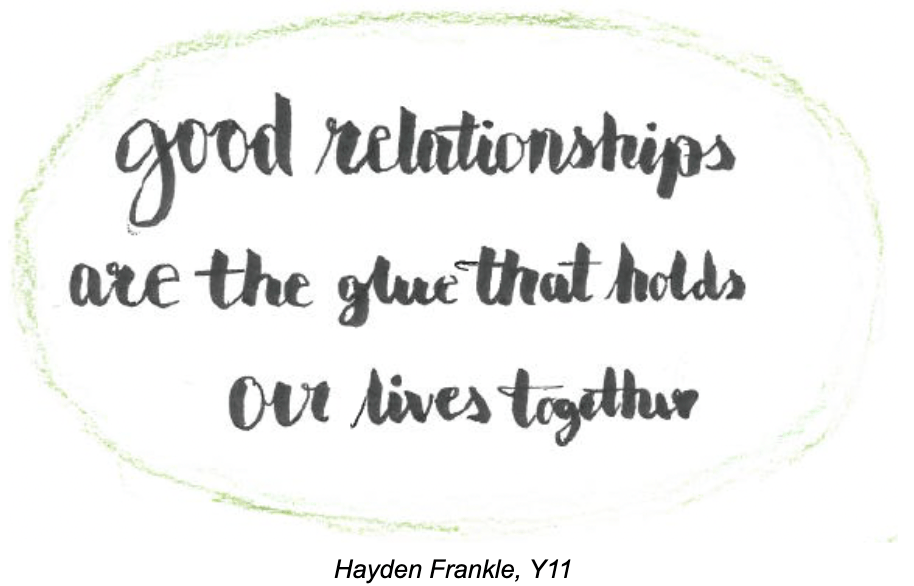
We humans are highly complex beings: Our brains are said to have an average of 86 billion neurons and 85 billion non-neural cells. There’s 8 billion of us now, too, so we are a remarkably diverse, cognitively complex, and evolutionarily successful species.(https://www.pnas.org)
Hayden Frankle, Y11
However, rather surprisingly, a generic primate brain has approximately the same number of neurons as ours. So, while we are truly complex, we also bear surprising similarities to our primate cousins and other ‘K-strategist’ mammalian species (whales, elephants, primates) who have comparatively few young (to ‘r–strategist’ species such as frogs, salmon, turtles that give birth to hundreds of young at a time). And amongst all ‘K-strategists’, humans spend the longest time being nurtured and cared for, often by the mother, given the need for milk and nutrition, by whoever- parent, helper, guardian, grandparent- is the primary caregiver.
In Human Technologies, we are exploring “the art and craft of being human.” We want to put the lid up and peer into how our brains are wired- even delving waaaaay back into our evolutionary past, and engaging with ideas and theories from cognitive neuroscience and psychology- to better understand our own species and ourselves, and the sorts of habits, behaviours and social relationship patterns that define who we are, and who we want to become. Recently, we have been engaged with learning how human beings form their first memories and impressions of the world.
In the absence of language and with only rudimentary cognitive capacities, our tender young brains are still forming in the “fourth trimester” outside the womb, in a state of total, utter dependence on those providing our care.How we form our first expectations of what the world is like is based upon our relationships with our primary caregivers.
It will take some months or so before infants develop the sensory connections to be able to recognise the fleshy faces that float in front of their crib, and the earliest memories my Y11 class and myself could pin down were maybe when we were three years old…and these were often vague, dislocated, memories at best. The reason being, our prefrontal cortex that distinguishes our specific type of mammalian brain from other species and allows us to puff our chests out and declare ourselves, homo sapiens, (wise men), is still under development.
As we learn as babies, our cognitive apparatus is making stronger connections between patterns and expectations of behaviour. We come into the world with our own unique biogram, DNA, and a temperament which is distinguishable from our own brothers and sisters.
Vulnerable, but highly complex creatures, hardwired with a capacity to make meaning of their world.
Yet, we are not simply ‘blank slates’, for encoded in the complexity of our DNA and biograms, research presented by the American psychotherapist, Daniel Stern, is the capacity for making meaning of the world in our very early infant years through Representations of Interactive Generalisations (RIGs).
So, what are RIGS?
While a baby can’t yet either form the words “love”/”worry”/’hunger”/”comfort”, their primal calls for attention, and the response that follows from the caregiver, help them to form representations of whether the world will be a comfortable place where they are likely to be soothed and made to feel OK, or not. (Sadly, all too often, the research shows that children who do not develop a basic sense of “OK-ness” are likely to grow up more cautious and anxious of the world. Reasons for this are varied, but include the two temperaments of the baby and caregiver not aligning, or, babies who are born into situations of socio-economic hardship, so that attention is just hard to come by…)
A baby can understand that a hug represents love and protection. And if a pattern of hugs and care occurs across time, then that baby is building a series of connections that are already affecting how he/she will come to the world.
To understand these ideas, students were introduced to the captivating snow art of the Canadian artist, Simon Beck. You can check out his beguiling masterpieces here, where he uses the vast white snowfields of Banff National Park to create his huge murals which embrace and compliment the richness of the natural setting in which they are created.
With one footprint after another, eventually patterns of connection and meaning start to emerge in the snow.
Our students enjoyed artistically representing this visual metaphor through the creation of marble-art pieces, where one marble, dipped in paint was rolled across the white page. They attempted to roll the next marble along the same ‘pattern of connection’, and the results were very beautiful, but also a very useful symbolic representation of the learning that took place within the unit.
Amelie Chan, Y11, Marble Art to show of Representations of Interactive Generalisations
What we are really keen for students to understand is that if we extend the snow footprint metaphor further, they are still so young and their capacity for self-agency is now coming to the fore; my Y11 class increasingly have the language, rationality and wisdom to make more independent decisions.
While the very nature of us as ‘K-strategists’ means that we have been totally dependent upon the decisions of our primary caregivers to take us to this point, students can now start to push back upon the world and make decisions not only about the here-and-now, but the ‘Self-2’ that they want to become in the future.
Given the teenage brain’s vast plasticity and capacity for learning not merely academic content, but the no-less beneficial social technologies that will give their lives meaning, purpose and value, they still have time to realign their focus, adopt new habits and behaviours, to create new ‘footprints in the snow’, that, over time will become new conceptions of how they perceive and act in the world.
To know the ways in which we are hardwired as a species, gives students real insight to that age-old maxim to “know thyself” in a way that is pragmatic and objective, without being too self-critical; also, by recognising the myriad differences between ourselves and others we can hone our sense of empathy and understanding. These are skills that, according to Attachment theory specialist, Dr. Joanne Wu, allow us to “improve our relationships and our well-being”. Read that again. That’s like a superpower. That’s what schools could/should be about. Give me that- the ability to improve my relationships and my well-being- over a narrow fixation on scores/results anyday.
At ICHK we interpret sustainability holistically, at the personal, somatic and psychological level.
We need to be sustainable within ourselves before we set out to fix problems we might see in the world. If we are calm and balanced internally, then we will have the energy and capacity to effect change in a more sustained fashion in the future.
The Human Technologies curriculum we run here at ICHK asks students to explicitly reflect on their backgrounds, their values, and their future goals. We run a wide panoply of environmentally-focused extracurricular activities that work to develop a growth mindset within our students. Uniquely, compared to other Hong Kong schools, we are situated in the spectacular natural environment of the Pat Sin Leng Country Park, so students are always engaging in hiking, camping, cycling, and science trips to embrace the outdoors and appreciate issues of sustainability at the local level.
A team of Eco Warriors is leading a number of initiatives to reduce our carbon footprint, under the guidance of Sustainability Coordinator Jon Rees. Our two TASS ambassadors are part of this club, and they connect with our School Representative Council and School Media Team to promote key sustainability issues within ICHK.
We have been collaborating with our caterers, Chartwells, to reduce single-use plastic, increase the range of the vegetarian options offered on the menu (and the reduced carbon impact that these provide). We’ve also launched an air-con awareness programme and are looking out for many other ways to make positive connections throughout the school.
Jon Rees is Sustainability Coordinator and a Teacher of English and Theory of Knowledge at ICHK
Monday, April 22nd saw ICHK kick off a week of celebrations to allow for a multidimensional exploration both to celebrate the beauty of our planet, as well as understand the scope and scale of the challenges ahead.
To adapt, and hopefully to thrive, in a precarious future we must look to first be “Sustainable Humans”: by learning how to cultivate the energy, empathy and balance withinourselves, we can project more positively out into the wider world and effect greater change through the quality of our relationships and ability to work in collaboration others, regardless of whether their views accord with our own.
You could make a strong argument that every day is Earth Day at ICHK. Certainly “the art and craft of being human” is a motto that is lived daily within the school and the regular explorations of the city through Deep Learning, the Outdoor Learning department, the pastoral programme, and extracurricular activities.
For example, just the week before, Year 9 students were preparing for a Rite of Passage ceremony to mark their entry into the upper school, and showed their sense of responsibility for the planet by continuing a longitudinal science study of the health of our local mangroves. And our Drama department, led by Liam Greenall swept the boards at a school theatre awards. The performing arts, and the sports activities the school runs are just the most powerful means of cultivating “sustainable humans” equipped with the socio-emotional skills to thrive in the future. Building a shared commitment to these habits, dispositions and behaviours will be more formally recognised through the implementation of the new “ICHK Pin” initiative, launched by Head of School, Toby Newton this week.
On the Friday before Earth Week officially began, Marcus Lee led the Environmental Action Group to organise a very successful Toy & Stationery drive for Crossroads Foundation. Marcus was inspired to do so after hearing Crossroads’ founder, David Begbie, speak at an SDG event. Outdoor leader, Dave Addis, has opened up a permanent line of communication to Crossroads, ensuring that they have first refusal on furniture from renovations.
Additionally, the week before, Carly Leung from the environmental start-up, VAIR, came in to speak with our Year 12s about sustainable careers and how to make effective choices to pursue positive academic and social futures. Carly Leung was one of the HK delegates at COP 28 in Dubai, so they were lucky to receive such useful advice from a dynamic young leader within the city.
Our SMT worked fantastically to turn a range of nature messages, including ancient Chinese wisdom about living in balance with our environment, (thank you Ms. Luk!), into posters for display around campus. The SMT also helped judge the winners of our hand drawn and digital Earth Week poster competition.
The SRC helped us to launch a Kadoorie Farm: Sponsor a Tree project too. We are collaborating with Year 8 parent and Kadoorie plant specialist, Craig Williams, to acquire a range of native HK species to promote the regeneration of biodiversity atop the Nature Trail that runs behind school, in an area cleared by Dave Addis’ Bushcraft and Year 10 ENF students.
Christian Pilard, an ICHK parent, and founder of Eco-Systems Action Foundation came in and spoke to all of our Year 9s, Year 12s, as well as the +1 Centre students about the incredible range of projects which his organisation has made a positive contribution to across the last twenty years. His compassionate and proactive message seemed to work as a catalyst for some animated Year 12 SoCO planning later in the week which was wonderful to see.
English classes had a special lesson devoted to inquiring into the issues that beset our species, captured through Carl Sagan’s compelling, A Pale Blue Dot, monologue. We looked at how the UN Sustainable Development Goals offered some solutions, but also pointed to very limited progress in many of the categories. HT classes listened to meditations, explored Earth Day songs, and took walks down to our local temple to immerse themselves in nature.
Across the week, a range of different links were posted for students to dip into courtesy of BBC Earth, and Ted Talks with prominent conservationists such as Jane Goodall and Al Gore. A range of documentaries played at lunch throughout the week, including Plastic Ocean, My Octopus Teacher (selected by the EAG’s Guy Traittel), Cowspiracy, Before the Flood and The Walk that Made Me. Additionally, an Earth Day 2024 playlist was compiled and linked here if you want to enjoy a range of songs connected to the themes mentioned.
Our Economics department ran a series of lessons on the circular economy. And this was fantastic groundwork for the visit of Tiffany Leung, from Redress, an organisation devoted to reducing our patterns of over-consumption. This event was ably put together by a group of Year 12 students, so congratulations to Ani, Caiden, Ariv, and Elkan for their positive actions for our community which benefited our Year 7 and Year 8 students. It also helped deepen the Year 7s’ understanding of reducing waste as they pioneered bringing in a reusable container for the canteen. The HK Government marked Earth Day by bringing in some very welcome legislation banning single-use plastics from the thousands of cafes and restaurants across the city. Our canteen largely replaced plastic cutlery long ago, but if we can also reduce unnecessary wooden forks and paper plates ending up in landfill too, all-the-better.
Wednesday, saw a small but highly motivated group of Year 10 students accompany science teacher, Mr. Alex Yim, and Jon Rees down to PNEC Organic Farm. Look out for a further post about the excellent community work PNEC are engaged in, but great thanks to Kootyin and Pinewood for their usual generosity and kindness, and for gifting us with a copy of the newly published oral storytelling history of Nam Chung and Sha Tau Kok.
The work will surely carry on in classes, Deep Learning inquiries, extra-curricular activities, and the library, so thanks, then, to Ms. Palmer who has curated a series of books regarding Sustainability so that students can carry on their engagement with these topics.
















 Sustainability, Human Technologies and Theory of Knowledge