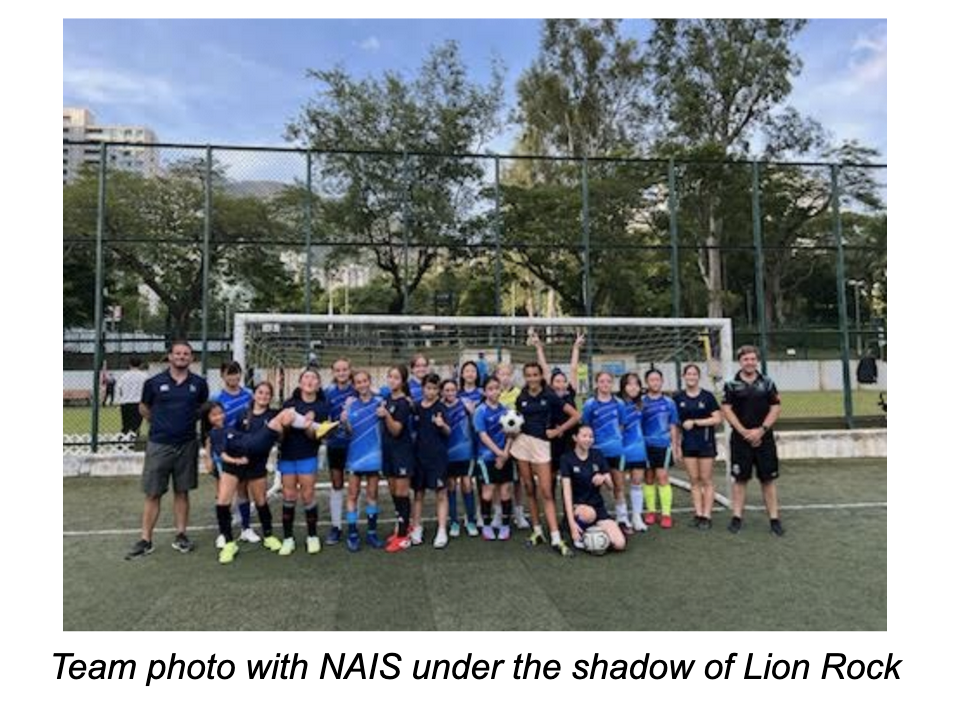
BALI:  a land of Hinduism, Animism

…and encroaching development. 

By Jon Rees and Jesse Driver

Edited by Wayan Merli, and Putu

24th April, 2024

Bali is an incredible place, with family temples on every compound, as well as larger temples and even trees wrapped in shrouds. Unlike Muslim dominated Java, it can appear that the dominant religion is in Hinduism- given the lavish ritual observances connected to a Hindu faith system that arrived on Bali from India, over 1,000yrs ago; however, it is more like these rituals form a cloak over an omnipresent, even more ancient, deeply-felt spiritual belief system of animism. 

I was lucky enough to visit Bali over the Easter break, and luckier still to meet up with an old teaching friend, Jesse, and his lovely partner, Merli, and their daughter Pu Tu. As Merli is Balinese, she grew up inculcated in the Island’s culture, myths and traditions. She was able to point out some of the differences between what it was possible to observe, and what was being truly experienced underneath the surface. As Merli stated, “often ceremonies are carried out as public displays more intended to assuage neighbours who may castigate people for not following these traditions.”

Visiting Bali was one of the best holidays I’ve ever had and this photo essay was compiled across my ten days there, with the Driver family adding anecdotes and explanations along the way- thank you for a great stay! In fact, Jesse made most of the key fact checks, though given the complexity of the faith-based systems here, he points out that there are very many features which we were not able to unpack, including the Balinese philosophy, Tri Hata Karana, “which brings together the realms of the spirit, the human world and nature” (UNESCO)

Devotion and care. Temples (not shrines, I understand), are ubiquitous across Bali. 

Deities are cared for and daily rituals are offered. I loved this pair of gods, though I have no idea what their names and roles are within the spiritual realm of Bali. They sit atop a small altar next to the beach, and away from the main village temple. They are so old that their faces have been eroded by the salt in the sea air, and the passage of time has obliterated their expressions to which the mason gave form when carving them out of the chunks of volcanic rock from which the island derives its existence. 

Expert artisanal craftsmanship is a key feature of Balinese life and accounts for the deeply woven beauty in the objects, temples and crafts visible throughout the island.

Ulan Danu Beratan Temple: one of the most important religious sites on Bali, this temple features on the currency. It also sits within the caldera of the Mt. Batur. The prevalence of the volcanoes whose explosive eruptions, along with massive tectonic movements, created the islands, including some still active volcanoes like Mt. Agung, that erupted just a few years ago, are stark reminders of the enormous violent forces of which nature is capable; therefore these stark reminders of the fragility and vulnerability of human existence- they are visible from across most of the Island- very likely play into the strong religious observance of a people who see nature for what it is- very much alive.

Also, Ulan Danu Beratan Temple. Instagram/Dino-tastic/postmodern melange..Jesse, Merli and Putu, my excellent hosts.

Yet, immediately next to Ulan Danu Beratan, on what used to be sacred land for the Hindu’s grazing cattle, there are now strange, Instagrammable phenomena such as this “Dino-park”/cactus house. There are also cutesy, cartoon-like fairytale castles and other chintzy plastic creations that now line the shores of the lake to allow the modern tourist to better frame their Instagram posts. So, while the temple used to appear on the bank notes, it is also being used to generate more income for the Balinese government through the tourist Dollars. 

It reminds me of seeing scenes of the Bhagavad Gita depicted on certain family temple walls. These scenes would communicate important moralistic tales of Vishnu and the cast of sacred characters from that holy text. Now adverts and billboards implore the viewer to buy your luxury home of “overflowing abundance” complete with swimming pool, that consumerist sign of having achieved financial security and acceptance into the burgeoning middle/upper classes. Yet, filling all the swimming pools depletes the water table.  families need freshwater – what happens when the wells go dry? Cautionary tales dot the landscape such as the folly of the  luxury hotel built on a beauty spot on the approach to Mt. Beratan, but the developers found that they couldn’t connect a water supply from the lake. Merli speculates that particular episode may have had more to do with political shenanigans than engineering oversights, though. 

The amazing view from this mountain-side hotel that was completed, but abandoned as water could not be connected. Given the locality of a nearby lake, and that the Hindu architects had perfected systems of aquaduts 1,000yrs ago when the Balinese culture was at its epoch, perhaps political machinations at play?

Kilometre square remnant of Bali’s primary forests. The rest of the island has been given over to agriculture. This is not at all dissimilar to the United Kingdom for example. Draw parallel to UK (98% cultivated/urban land); China’s eastern seaboard; Easter Island. At least they stopped before the last tree did come down…

Lai Chi Wo Village[edit]

Five-finger Camphor (Cinnamomum Camphora)[edit]

The Camphor measures 25 metres tall and 3 metres in diameter. It gets its name because it had five branches like five fingers, although only four of them remain today. It was said that during Japanese Occupation, when Lai Chi Wo was occupied as a military backup base for the Japanese Army, the Japanese cut down many trees for fear that their enemies will hide near the area and make sudden attacks. When the soldiers threatened to chop this five-finger Camphor, the villagers stood up to protected the tree with their lives. Therefore, only one of the “fingers” has been cut.

UK woodlands ‘at crisis point’ amid wildlife decline

https://www.bbc.com/news/science-environment-56738428

A religious procession – this parade was to celebrate the guardian, and the parade accompanies the guardian.  The guardian is an actual spirit in the Baraong Landung – the black one is a boy guardian and the white one is a girl guardian.  The hairy creature is a barong.  There are several types, but these barongs represent the village guardians.  The frond thing is called umbul umbul – which translates roughly to umbrella (like a luxury umbrella you’d attend a king with)..

We saw the elaborate funeral pyre of a 7th generation from the King of Ubud beginning to be constructed. In the two Instagram links you can see the tower being crowned and the huge procession through the streets of this relatively minor member of the Balinese Royal Family, which stopped all the traffic in Ubud.

https://www.abc.net.au/news/2024-02-10/ubud-bali-russian-development-hidden-city/103413004

One of countless beautiful temples across Ubud, and Bali. They incorporate nature beautifully into their harmonic designs.Balinese never use the word shrine and always use the word temple.  They have different words for small temples and big temples and house temples and kitchen temples – but they are all temples and not shrines

These guardian temples are found on each rice paddy in Bali. This particular rice paddy is very close indeed to Merli’s dad’s fields. A heavy storm flattened the rice crop just as I left Ubud, but fortunately as it was so close to harvest, a team of workers were able to get in and save the crop this time. 

The oldest statue in Penestanan village! It’s sacred for the spirits of the water to that particular river.. I asked permission to take a photo of this lady who was performing acts of devotion and tending to the site. It is wonderful to see how the cycles of life are respected as the face of the being has long worn away, and moss and other plants have begun to grow up and around. 

The village temple for Penestanan Kaja village

Selfy-time! Jesse and I posing for a long overdue reunion photo. Behind are the beautiful, verdant, UNESCO protected rice terraces of Tegallalang. Above us, and artfully obscured from the frame, are tourists whooping as they slide across high wires, as well as various other unnecessarily Instagrammable objects littering the hillside, including, obscurely, a wooden fishing boat, despite us being miles inland. 

This man is bent double in the Sun, picking up winkles from the beach, in between the tidal surge. I am having a coffee on a sunbed. I did think twice about the exploitative nature of the photo here, but it tells a story I think is worth telling. 

Even the stones that could be found on the hotel’s beautiful sculpted walkways were likely sourced here at the beach. In the relative cool of the early morning sunshine, a team of workers could be found laboriously sorting stones according to various sizes. That must be a tough life and it starkly highlights the differences in incomes found on the island, and between the two separate Balines and tourist economies that function here.

A drink and a snack at this spectacular bar, The Rocks, built into the cliff face, is very probably quite a lot more money than the lady in the previous photo would make in one day…two days work?

The grim face of “development” in Bali. Hot, asphalt roads teaming with traffic. Though, it’s likely the case that motorised machinery for transport and agriculture represent something of a miracle. There’s the overly romanticised gaze of the tourist that likes the aesthetics of the villager at work in the field with water buffaloes and a plough. I wonder, until you’ve done it for a few hours in the Sun, or a lifetime- to survive- what the advent of a motorised cultivator for your rice fields, or, a car that could transport your goods to market, and your children to school would mean?

Beauty, nature and architecture in harmony. Hindu  Uluwatu Temple – one of the main 7 guardian temples on the island. Temple viewed from the clifftop walk.

A monkey navigating its way along a glass verandah at a bar restaurant called Ritual. Religious and spiritual observances give way to the range of services offered to tourists who account for approximately one third of Bali’s GDP- a figure that was devastated by the Covid Pandemic a couple of years ago…

(L)A cow doing exactly what it pleases; (R) Nature repurposed.

The Sun sets on one of my favourite trips from the last decade. 

Extra Links

Sang Hyang Widhi Wasa (left), the Divine Oneness and supreme god of Balinese Hinduism. https://en.wikipedia.org/wiki/Balinese_Hinduism
HUMAN TECHNOLOGIES AND TOK

HUMAN TECHNOLOGIES AND TOK

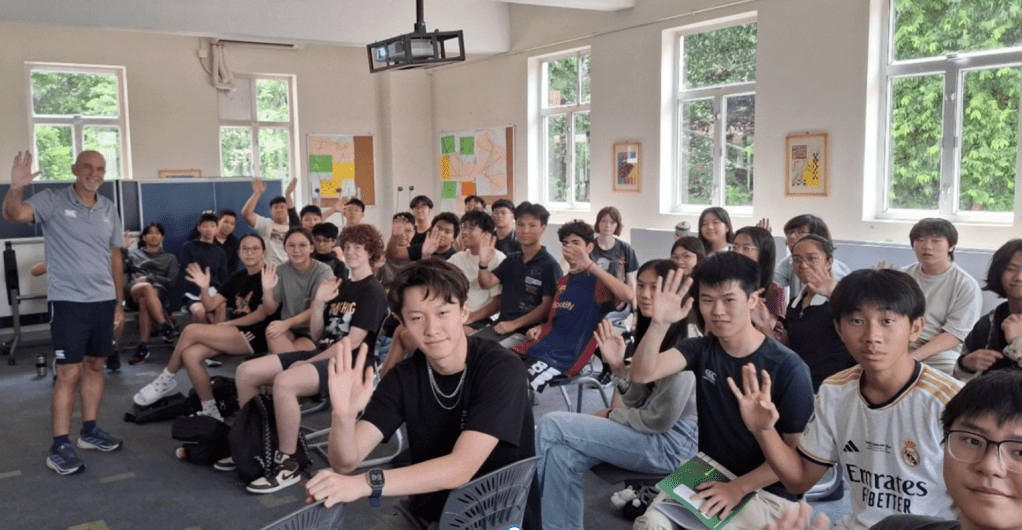
Last week, Executive Head of School and Human Technologies progenitor, Toby Newton, delivered an excellent talk to our Y12 students, pointing out the ways in which their Human Technologies curriculum had prepared them for some aspects of their IB Theory of Knowledge course.

Deputy Head of School, Flora Lai, pointed out some of these pathways in her pertinent article published in last week’s Bulletin which you can read here; it was a real bonus for our Y12s to get a lifetime’s worth of insights about evolutionary biology, human nature and cognition distilled to one hour and then connected to TOK.

It might be argued, the way in which TOK focuses on just 5 Areas of Knowledge reinforces an outdated notion of academia as “siloed” off into different disciplines, a notion reinforced by the physical architecture of university departments which still houses different subjects such as The Arts, The Sciences, The Humanities in separate buildings. Today, though, this compartmentalisation of areas of study seems increasingly outdated. An ecologist, for example, must base her scientific data on precise mathematical calculations, as well as have a nuanced understanding of Systems Thinking to understand the complex range of climatic, economic, and societal issues that impacts her topic, as well as use inter-social and computing skills to first gather, then communicate her research.

Human Technologies can be described as a guidebook for living, and its moving horizon (you can never arrive at the destination!) is to push lifelong learners towards the pursuit of “The Good Life.” But so many schools today focus merely on academic performance, and do not give the students a chance to explore their own values and identity – how they are wired, and the implications of this to identity formation, and then how to develop their own sense of self-agency as they encounter the world.

To prepare students for this complex world, Toby created, and then collaborated with like-minded individuals to evolve the HT course to address what he believes should be essential concepts within a modern educational system that speaks not just to the narrow aims of exam success. On this occasion he chose the work of Etienne Wenger to illustrate this point:

Education, in its deepest sense and at whatever age it takes place, concerns the opening of identities – exploring new ways of being that lie beyond our current state. Whereas training aims to create an inbound trajectory targeted at competence in a specific practice, education must strive to open new dimensions for the negotiation of the self. It places students on an outbound trajectory towards a broad field of possible identities. Education is not merely informative – it is transformative.

Etienne Wenger, Communities of Practice

Toby pointed out in his talk that we are meaning making creatures. We see patterns in the constellations and can use the capacity of our evolved consciousness to construct entire systems of religions and mythologies out of the starry skies. And our future selves, similarly, can be formed from a galaxy of possibilities.

The future world is one that is going to be increasingly complex and interconnected. The era of global capitalism has led to human societies being inevitably intertwined; we also live in a dizzying age of semiotic potential constructed through the mainstream and social media. TOK can help students understand the various ways in which knowledge can be constructed, as well as refining some critical thinking strategies so that they can discriminate fact from fiction as it flies at us from the algorithmic superhighway.

Finding ourselves, understanding the physical and psychological forces that have shaped us, understanding who we are and how we have been encultured… and then learning that we have the capacity to take control of the direction of these beliefs, values, predilections and biases, to make lives of real meaning: that is the goal of Human Technologies. And Toby was explicit in asking the students to never forget these lessons.

The Merchant of Venice, the Seven Deadly Sins… 

& Society’s Dangerous Obsession with  Celebrity Culture

The Merchant of Venice, the Seven Deadly Sins, 

& Society’s Dangerous Obsession with  Celebrity Culture

Shakespeare’s play about love, lust and greed is a searing critique of humankind’s attraction towards the Seven Deadly Sins, as set out in Christian doctrine. 

The recent defamation trial between Amber Heard and Johnny Depp exposed to the world some of the worst excesses of Hollywood greed. But it should also give us great pause individually, and as a society, for our obsession with celebrity, and some of the misogynistic bile that was spewed forth by a public keen to excuse Depp, the piratical rogue, and cruelly lambast Heard with the zealousness of a Monty Python-esque witch trial. 

Whatever your opinion of Heard through this process, Depp lost the UK version of this trial. That means that a UK court did not find there was sufficient evidence to suggest that Heard’s claims to have been the victim of physical and verbal assaults within their tumultuous relationship were false. That is serious stuff. (This article explains some of the key differences between UK and US defamation laws.) Neither of the protagonists in the trial, Heard or Depp, came out of this well. Their legal fees are in the millions; embarrassing details of their private lives and excesses have been laid bare for all and sundry to pick over; and, presumably, both their future careers and personal credibility will suffer through this process. 

Most crucially, though, as cutting, provocative, and occasionally funny, as some of the tidal waves of Tik Toks, memes and gifs produced over the last month might have been, the crude characterisation of Heard as a fame-seeking, deceitful and violent liar, seriously compromises the chances of others who are the victims of bullying or physically violent partners to have the bravery to stand up in the future, as well as prejudicially influencing their chances of being believed.  

As the trial ran concurrently to our Y9 study of Shakespeare’s The Merchant of Venice, it offered us a very good opportunity to understand some key elements of how the legal system functions; the key plot device centres around Shylock’s drawing up the macabre terms of a bond with the anti-semitic Antonio- that being an agreement he may cut a pound of Antonio’s flesh from wherever Shylock choose should he renege on payment. That insistence on the precise terms of the bond proves to be his downfall, though, as he is bamboozled by the cunning logic of a Venetian legal team, who first seem to cede to his terms, to exact “a pound of flesh” as it is written in the terms, but then make the impossible demand that he do this without shedding one drop of Antonio’s blood (“..a pound of flesh, and nothing more.”) It seems it pays to have the right lawyers behind you.

In our current time of rising inflation, food shortages, the Ukraine Crisis… amongst a world still reeling from the ravages of the pandemic, the exorbitant legal fees incurred by both Heard and Depp are wince-inducing, not to mention the distraction this spectacle took away from other far more critical matters. Estimates suggest Depp’s legal team were assembled for $5.5USD million. Amber Heard’s approximately $2million. So, it might be said that in some instances, justice is predicated not just on your right to a fair trial, but by the lawyers you can afford. 

The Merchant of Venice is set in two very distinct locations, Portia’s home of Belmont, and the streets and courts of Venice. Even the illusory space of Belmont- which on the surface is a place of enchantment and dreams- is a realm where Shakespeare offers us a cynical reflection of the proud, vain and arrogant aspects of our human nature: The English duke who arrives to woo Portia is drunk upon arrival; the Moroccan Prince is a preening boaster who is beguiled by the golden casket, rather than seeking true love;  while the Duke of Arragon is more in love with his own reflection than anything else…

Originating in Christian theology, the seven deadly sins are pride, envy, gluttony, greed, lust, sloth, and wrath. Pride is sometimes referred to as vanity or vainglory, greed as avarice or covetousness, and wrath as anger. Gluttony covers self-indulgent excess more generally, including drunkenness.

https://www.dictionary.com/e/religion/the-seven-deadly-sins

But the play’s most dramatic and memorable tragic monologues are based in the dark heart of Venice’s Jewish ghetto, or in the trading square of the Rialto where deals are done and gossiping stories of Shylock’s decline are gleefully relayed by Bassanio’s cronies, Salarino and Salerio. 

There’s a modern parallel to the divisive, emotionally-driven way that social media can see people’s reputations shredded in microseconds by a “like” or “retweet”- without a sufficient analysis of the facts- and their subsequent fates begin to trend in the court of public opinion. The pervasive nature of technology was also laid bare with clips from the trial showing the violent mood swings, accusations, threats and slammed doors in the Heard and Depp penthouse. 

This was a relationship so utterly broken that the two participants had taken to covertly filming each other. Hopefully, this extreme example can give our Y9s some pause for thought when they think about using their phones to either record a bullying incident, or, sending a cruel and thoughtless message in the heat of the moment. 

Hopefully, Y9s, you might recognise through the terrible example played out before you in the trial the power of language, and its ability to cause lasting harm, not just to the intended victim but, ultimately to the sendee too. 

Be careful, and sleep on it before hitting send is some advice there. 

And if we see someone being the victim of this kind of hate-filled nonsense, hopefully you might have the integrity to ask that person to stop, rather than mawkishly watch the spectacle unfold with the relish of Elizabethan patrons of a bear baiting pit (one such could be found just a few hundred yards along the South Bank of the Thames from the Globe Theatre, where this play was first performed).

At the end, Shylock is utterly destroyed. He has lost his daughter, his estate divided between the State and Antonio, (who bequeaths it to Lorenzo, the Christian husband Shylock’s daughter, Jessica, eloped with)… and perhaps most tragically of all, his Jewish religion, as he is forced to renounce his faith by Antonio. 

Shylock at the close of the play has been utterly overwhelmed by the conspiring powerful forces of politics and religion. Yet he was cast throughout the play as a cruel, callous man who treats his daughter in a possessive, overbearing manner, and exploits and berates his servant, Lancelot. 

In him, Shakespeare presents us with a complicated protagonist, but this could also be a very clever piece of engineering from his perspective: sadly, anti-semitic beliefs would have been very much a cultural norm of Elizabethan society. Indeed, Jewish people had been expelled from Britain two centuries earlier; so, Shakespeare was doing something very radical and progressive by making Shylock the most compelling central figure of this tragedy.

He is far more arresting in his moments of raw indignation at his treatment by the Christian Venetians- “If you cut me, do I not bleed?”– than his counterpart, Antonio, who is  self-indulgent, vain, as well as clearly prejudiced. His protege, Bassanio, is merely foppish incomparison. 

By compelling his largely Anglican Christian audience to sympathise with a figure who represented a religious group then much-maligned in society, Shakespeare achieves something culturally important then, and still pertinent now, as the dark spectre of anti-semitism and fascist thought has arisen across parts of Europe and been thrown into  sharp relief by the comments made about Ukraine’s Jewish President Zelensky by the Russian Foreign Minister at the beginning of the Ukraine Crisis. 

Surely even Shakespeare’s genius could not have predicted the awful fate of the Jewish people during the period of the Nazi Holocaust- 6 million people annhilated in the notorious death camps that spread across Poland and Germany in the Second World War. But the casual racism in the streets, and the trashing of Jewish businesses- such as happened in Kristallnacht in 1938- would have been well within the realm of Shakespeare’s imagination, and his theatre going public. 

In these very trying times, Shakespeare urges us to choose kindness over cruelty. Whether it be anti-semitism, homophobia, mysogyny or bullying, exposure to literature can evoke in us deep feelings of empathy and understanding for others. The echoes of these universal themes can be seen in the world around us. And after the passing of 400yrs, Shakespeare’s message of compassion is as pertinent as ever. 

Works Cited

https://www.independent.co.uk/news/world/europe/zelensky-jewish-hitler-lavrov-russia-b2069625.html

https://mashable.com/article/depp-heard-verdict

https://muratkhanmoldir00.medium.com/gender-roles-in-merchant-of-venice-shakespeares-aim-to-challenge-male-dominated-society-be3f6dfc11be

https://www.newsweek.com/price-johnny-depp-amber-heard-lawyers-trial-1710442

Sustainability @ ICHK

August, 2021

Jon Rees is Sustainability Coordinator at ICHK

It’s my second term working in my new role as Sustainability Coordinator, and I’m really enjoying the professional challenge of reading into the subject, finding ways to support other staff members in this aim, learning how to bind together aspects of the ICHK school experience such as Human Technologies, Deep Learning, the Y7 Pastoral programme, Enrichment and Flow, as well as developing resources within the traditional curriculum subject areas too.

I chose to share the above photos to represent what attracted me to the position of Sustainability Coordinator. The first photo is at Old Harry’s Rocks from a summer holiday hike with old university friends in Dorset this summer. My love for nature and hiking was inspired through a childhood growing up in the countryside and these remain core passions today. ICHK’s Outdoor Dept. allows our community to develop these interests, and I’m delighted to be joining students and Outdoor leader, Arthur Wong, for a week-long series of hiking and outdoor activities during Deep Learning later this term.

Human Technologies, a subject I’m teaching at Y8 and Y10, allows us to examine how we experience our world, and make choices, from the various material, social, spiritual and cognitive technologies through the lens of our own bodies. While there are certain genetic blueprints which are handed down to us from our parents and ancestors, there are choices we can make about diet, nutrition, fitness and mental well-being to impact our lives, and it is sports and hiking which allow me to calm my mind, stimulate my imagination, build friendships and many other positives. These are important lessons which I feel are essential to share with students.

The sustainability role here at ICHK means more than just implementing the more traditional technologies of sustainability that exist at most other schools and which are offered as solutions to the effects of Climate Change, such as, recycling, solar panels, reducing our carbon footprint etc. It’s not to say that those material remedies aren’t important, they are, but these technologies are more symptomatic of a global economic system in need of radical systemic overhaul, the success of which will hinge on new mindsets, social systems, and spiritual aspirations. Sustainability at ICHK encompasses those elements no less urgently.

So it is that the achievable goal we cultivate is the idea of being sustainable humans from an internal, holistic standpoint, as well as learning how we can develop the social and cognitive technologies of empathy and understanding others, exploring and inquiring about the world, building positive relationships to help us lead more balanced, sustainable lives. 

At ICHK, we want students to have the energy and motivation to explore the world around them, to be aware of the lifestyle changes they might make to impact the planet more positively, rather than engage in hand wringing for a carbon consumptive lifestyle which has been foisted upon them by the social and economic systems of the world they are born into…

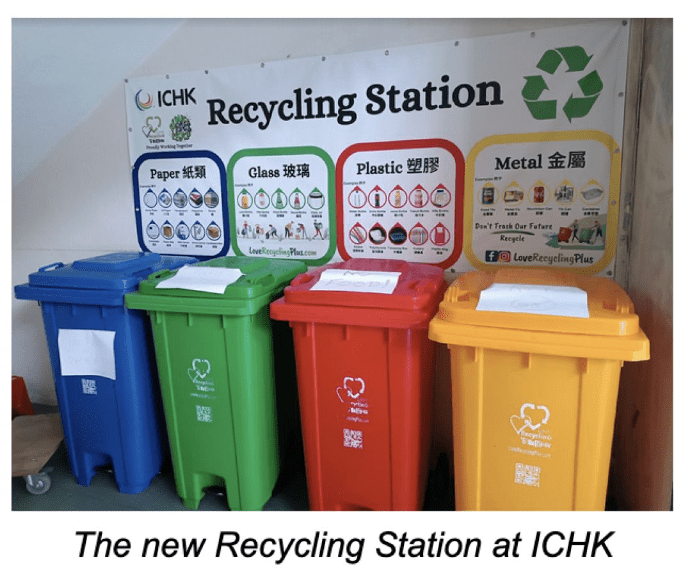
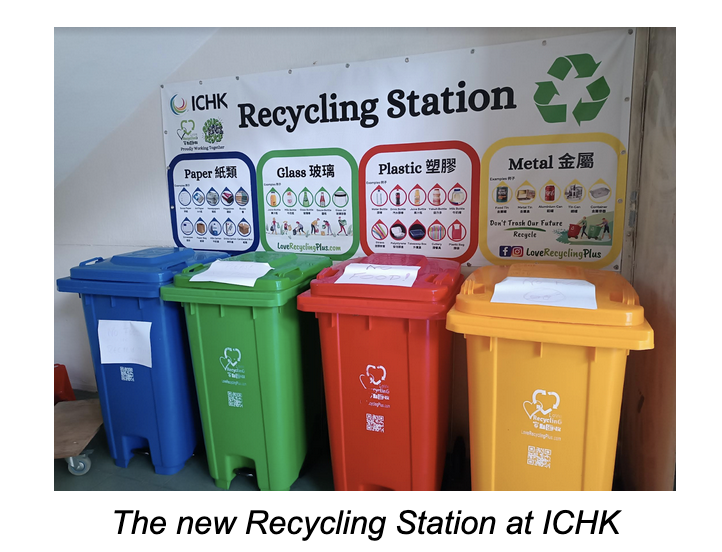
Every bit helps and concrete action also prompts conceptual change, so, we have joined up with We Love Recycling to ensure that all our glass, plastic, paper and metal bi-products are recycled properly…and we are looking forward to receiving data back from the company who itemise what we send off to their recycling plant so that we can be more explicitly aware of our patterns of consumption, and how to reduce, and reuse, and then hopefully lower the volume of what we then recycleIf you don’t have recycling bins close to your homes, please feel free to bring in items from home and place them in the recycling station!

Over the last term, I’ve been working with Nelly Loi-Fong, Head of Y7, about how we can develop Compassionate Systems throughout the Y7s Transitions programme at the school. I also had the opportunity to speak with our wonderful Y7 students, as well as our SRC coordinators, Phoebe Wong and Alyson Donaldson, about the possibility of creating a sustainability group within ICHK. I’m looking forward to also supporting Michelle Rines, Head of Science, and Outdoor Leader, Dave Addis, on their project to map the mangrove swamps around Starling Inlet to create an evolving record of the local ecosystems to help make the case for their conservation years hence…

At ICHK, unique and nuanced approaches inform how we help students learn about the complexity of their worlds

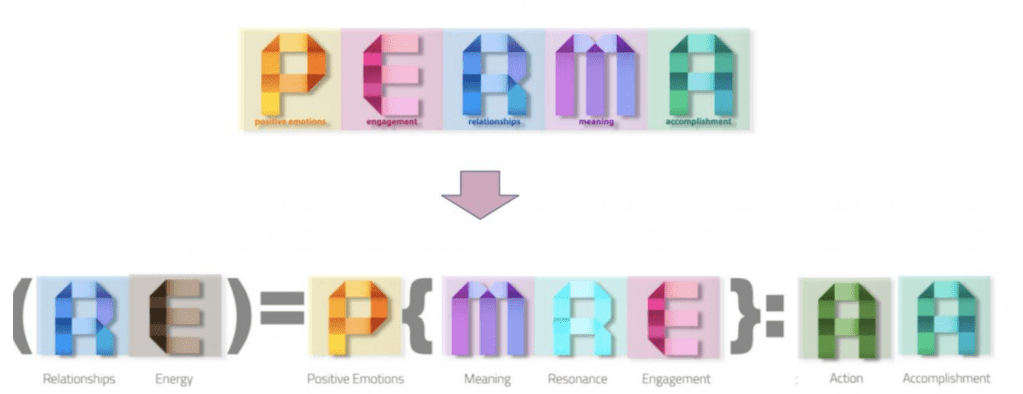
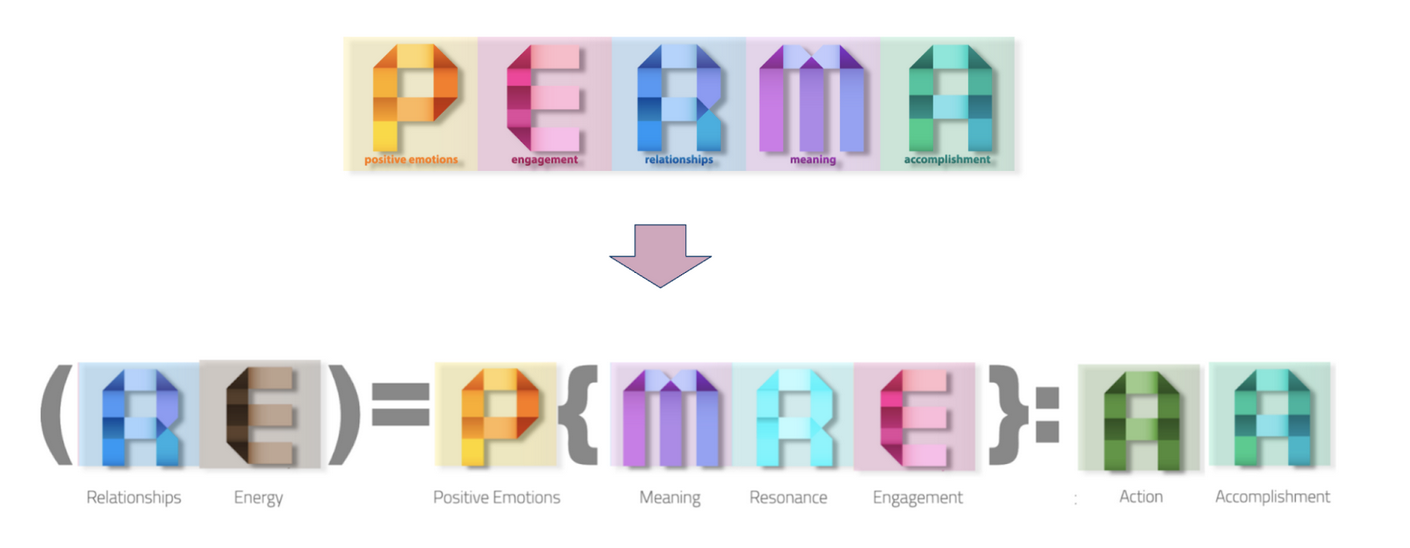
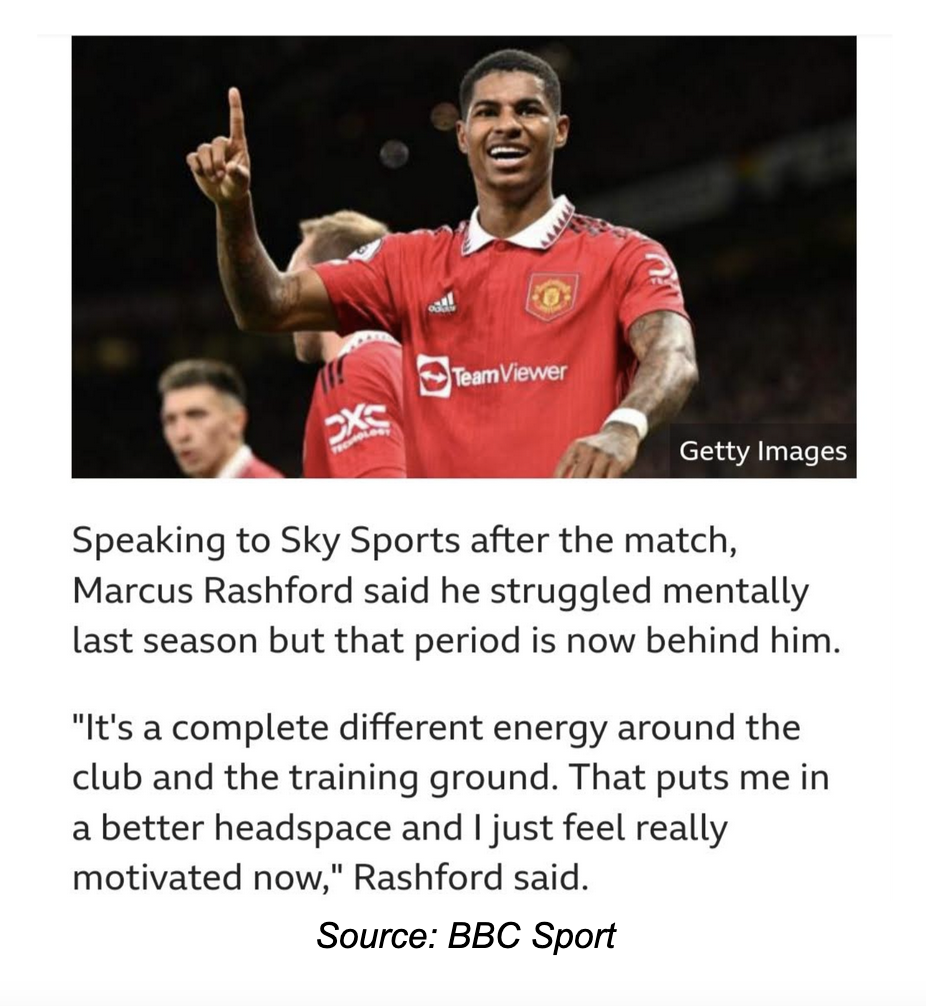
So, a busy and incredibly fulfilling brief that speaks to my own varied interests within the complexity of a highly innovative school. In our staff professional development at the beginning of term, we explored how Martin Seligman’s concept of PERMA took us a good part but not all of the way to defining what it is that ICHK is trying to achieve for its students. One ingredient that was missing from Seligman’s formulation is energy. My goal will be to help support this mission of bringing energy to school life – and to draw on it to cultivate relationships, leading to positive emotions, so energising a school experience founded in meaning, resonance and engagement, leading to action and accomplishment. To that end, I’ll share shorter updates about my progress to this goal throughout the year, as well as any interesting books, podcasts, articles and documentaries which might be of interest to members of our community. Be in touch..!

Written by: Jon Rees

In: Teacher Insights

When: 2 years ago

Psychosomatic HT Insights from my Summer Trip to Ladakh

Summer, 2024

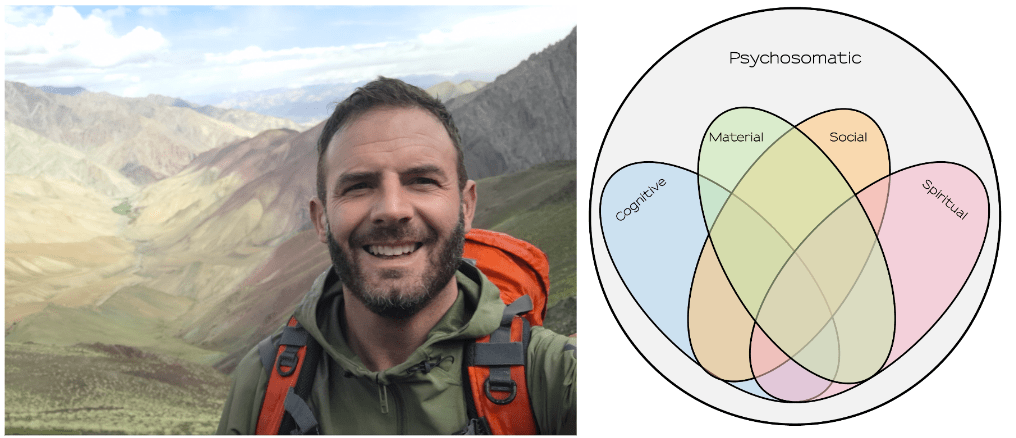
Across the summer holiday, HT teacher, Jon Rees, took an extended trip through Ladakh, in Northern India. As part of a series exploring Human Technologies, Jon relates his insights- focusing this week on the enveloping psychosomatic lens.

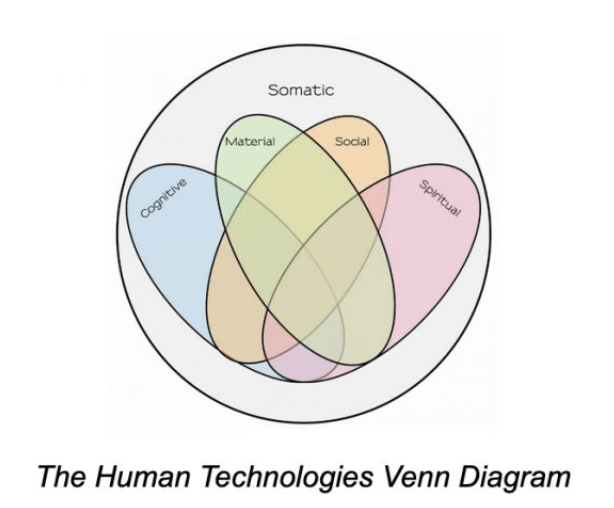
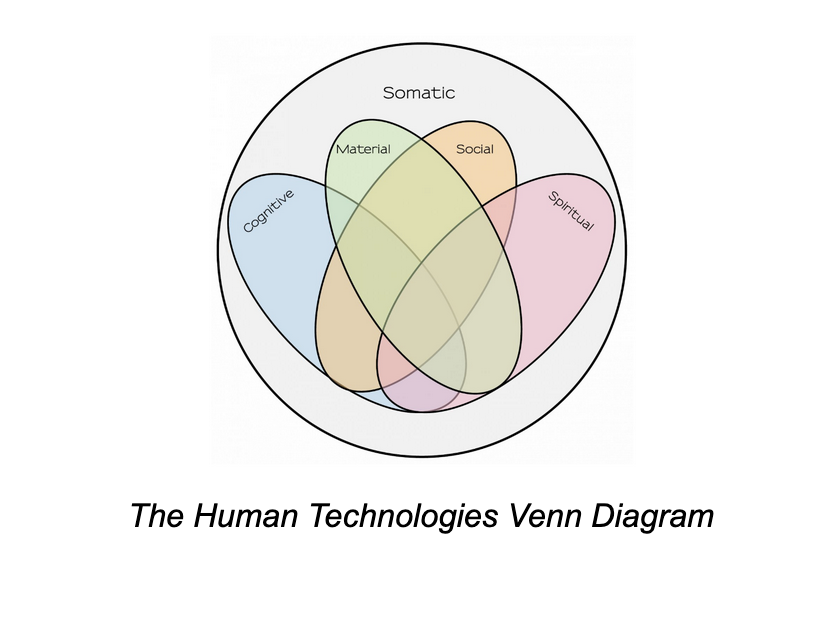
(l)The view from halfway up the valley to the Stok-La Pass from Rumbak, which can be located through the bright green splash of cultivated valley floor; (r) The HT Venn Diagram

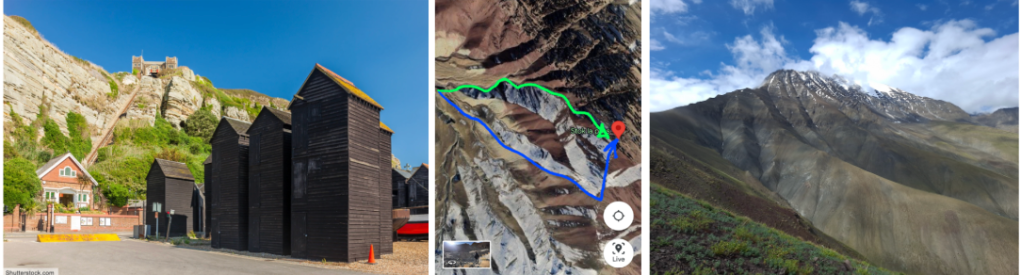
I came to the realisation that I was stuck. Perched high above Rock-a-Nore Road, and clinging on to the Hastings Cliffs that rose up from the dark, wooden fishermen’s smoke shacks below, my legs had locked up and were quivering, my hands were clammy and I had a tight knot in my stomach as adrenaline coursed around my system. 

I was probably 7yrs old and my friend, Chris’ mum, had taken a group of us out for a day trip to Hastings, Kent. We had stopped for an ice cream after the cinema and then we had the freedom to go clambering up the rocky cliff face. Except, I realised, I had gone too far, probably showing off and now found myself trapped half way up towards Hastings Castle, staring at the road below and the faces of the pedestrians who all seemed to be mockingly gazing up, and none of whom were offering help. 

Places that I have been psychologically and physically stuck: (l) the Hastings Cliffs up to the Castle above the fishing huts when I was seven or eight;  (c) the path up from Rumbak towards Stok, via the Stok-La Pass (4900m). The path in blue which I took, and in green, where I should have gone. (r) Stok Kangri (6153,) can be seen rising up along the ridgeline connected to Stok-La Pass.

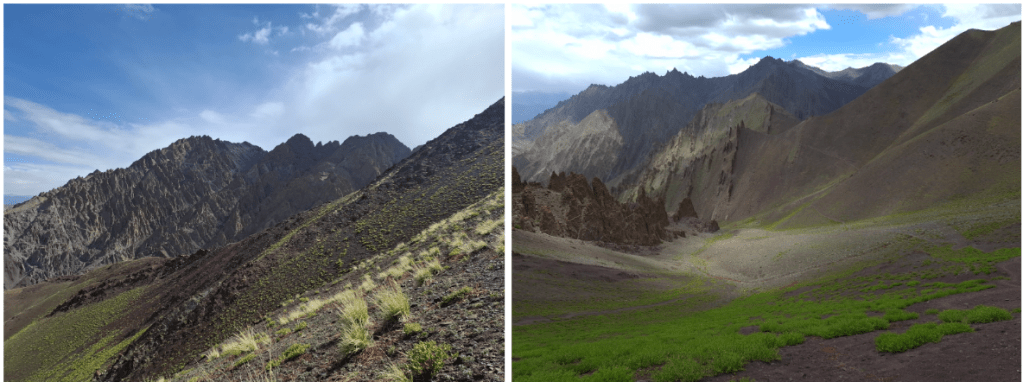
It was a memory of a moment of physical and psychological duress, a curious deja vu that I came back to almost 35yrs later as I clung onto the side of a bank of shale in Ladakh this summer. So close, just 70m or so, below the top of the 5,000m ridgeline adjoining the Stok-La Pass. Despite taking precautions like Googling and screenshotting the satellite contours, and after assessing what I thought to be the easiest route up the unmarked trail, I had opted for a dog-leg that seemed to follow an easier gradient and that would take me away from the formidable ridge-line ahead which appeared to me like the jagged silhouette of a giant bread knife.

Not sure the photo does this justice, but staring up from the valley floor, I didn’t fancy the route that lay ahead at all. My inclination towards the gentler looking dog-leg off to the right I spied on the Google Satellite image was reinforced through coming-upon rock cairns signifying a used trail ahead.

The purpose of HT, and this article, is to get students to think about the way in which they can regulate their lives through adopting some physical and mental technologies to lead more purposeful, fulfilled lives. I hope to share through some of the lessons I learned along my trip, how I was able to reflect upon one particularly vivid experience that led to a significant shift in my perspective on life. So, as I read this article together with my Y11 group, I will ask them a series of questions so that their own reflections on life can emerge…

Eagle-eyed HT fans might have noticed the updated HT Venn Diagram to include the overarching lens re-labelled from “Somatic” to “Psychosomatic”; what prompted Toby Newton to initiate this change was the clear awareness that not only do we experience and interpret the rest of the other HT circles: Material-Spiritual-Social-Cognitive through our bodies, but also our minds. We are born with our DNA, biograms, genetic dispositions, but for the most part we can’t (yet?) augment our physical and psychological selves. 

Back to Ladakh: other precautions I took were researching the route through conversation with a local tour guide, as well as purchasing a Trek Ladakh book with maps of the area, but not, alas, of this exact route. The tour guide confidently suggested that as this was a well-used path, populated by herders driving their flocks, as well as hikers, I could just ask for directions. Actually, there were very few hikers, as I set out for the top early at around 5:30 am, and unlike previous preparatory hikes in the Balkans, and along some of Hong Kong’s 4 main trails across the previous year, there were no handy signposts along the way. 

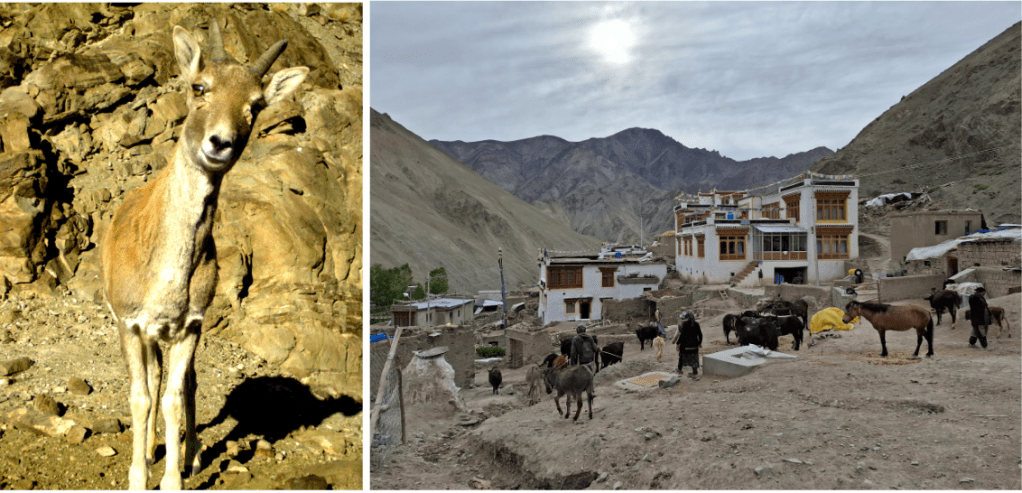
I had followed what appeared to be a used trail from a distance, and, indeed it was; yet, as I put my full weight gingerly down on the loose top rocks and found my foot slide back down the mountain, I quickly ascertained that this was a path for the surefooted blue sheep and mountain goats that could nimbly traverse the slightest edges with their incredible agility and uncanny sense of balance, and not one for an 80kg+ human being. And, as luck would have it, it also started to hail, so, I dug on to the mountainside with my fingernails and spent some time regretting my choices.

(l) Photo c/o The Snow Leopard Conservancy: The Stok-La Pass presents no problems for this urial, or his blue sheep brethren; (r) a tranquil pastoral scene as the villagers of Rumbak brought their animals down off the hills to the shelter of their pens

In short, the main advice here is not to hike on your own, especially in an area in which you are not familiar. I’m an experienced hiker, and all the way up to the top of the Pass, I could see human habitation back down the valley to Rumbak where I set out. Therefore, I reassured myself that I could be “sure” I was going to get back down if needed. But a twisted ankle, or broken limb could have been really bad that many hours away from help. 

I wondered, too, what had caused the decision to embark upon this physical challenge anyhow? What compels us as human beings to pursue these physical goals? I think it is to “know thyself” as the universal maxim across religions speaks to. We want to know our limits, and show a “growth mindset”, as psychologist Carol Dweck would say, as referred to by Natalie Bailey in her Weekly Bulletin article last week.

Perhaps there are also certain psychological underpinnings that compel us to the need to achieve, to be commended, some remnant of childhood, that is, intractably, not simply a legacy of who we were, but who we are today. The Russian Dolls HT metaphor is a simple, but effective way to think about our continued psychological development. 

The HT Russian Dolls

As I soon turn 43yrs, and am aghast to find myself in middle-age, I have come to hear more frequently my body’s signs as my metabolism slows down and I notice, for example, my speed diminished in football (not that I had much to begin with). 

Yet, my stamina remains strong, and I believe it was the foundation of cross country runs and football undertaken in my youth that have allowed me the platform for enjoying plenty of physical exercise now. Knowing this, I want to engage in physical challenges today while my body still says, “Yes,” rather than wait too long and regret the chances that might have slipped by…

One message for the young students reading this is to really treat your body with respect. You only get one, and, so the adage goes, if your body was a Ferrari you’d garage it, and polish and tune it regularly so that you could enjoy the maximum performance. 


And time spent doing physical exercise unlocks many positive benefits for our bodies and mental wellbeing. Check out this short video from Insider Tech

Back on the mountainsideFrom this vantage point, with my cheek pressed against the rock, I took some deep breaths to calm my nerves and assessed my options., I turned my head to the left to see the harder rock surface so temptingly close, just another 20m away, and shuffled my foot forward to gauge the resistance. Bad move. Any time I adjusted my body more front-on to the mountainside and attempted to manoeuvre across, the loose rock would abruptly shift beneath my foot and send me jolting another few centimetres down, watching small rocks and pebbles cascade to the bottom of the sharp climb. 

So, I gripped the shale and spread myself out starfish-style to try to spread my body weight over a large enough area to prevent me sliding all the way back down to the bottom of the section- about 60 feet below- and thought about what to do next.I had a decision to make: to struggle upwards was impossible, so I could either a) gamble on edging further forward and risk sliding down the bank; b) have a little cry (I really did give this some consideration), or, c) head back the way I had clambered, and evaluate from a safer position. 

The rocks around me were so small, the consequence of hundreds of thousands of years of erosion caused by exposure to the fierce winds and freezing winters, so, I felt no great worry about sliding back and creating an avalanche where big boulders would be dislodged following me down, but I did feel that the mental and physical defeat of that moment could just spell the end of the hike and a sorry return to my homestay at Rumbak. 

I took some more deep breaths, breathing in through my nose and then slowly out through my mouth as I had used this 4-1-7 breathing technique learned from cognitive neuroscientist, Andrew Hubermans, before to calm myself before an important football match, or whenever I might have to speak in public, or suchlike. You breathe in through your nose, slowly and deeply for 4 seconds, then take a final top-up extra breath so your lungs are replete with oxygen, and then breathe slowly out through your mouth for a count of 7. If you do just a few of these repeatedly, you can really feel the tension leave your body and your heart rate slows.

I also knew that I needed oxygen in my system as the air at nearly 5,000m is very thin, at just 11.2% that is half the oxygen available at sea level. My lungs were really burning and I could only move a short distance before stopping and sucking up more air. I learned through reading the hiking companion, Trek Ladakh, that you should only really look to ascend 500m or so each day, ideally sleeping above your destination point the next day, to allow your body time to acclimatise. What I was trying to do was go from 3,900m to 4,900m in one day, and my body was not happy with me.

Previously while hiking, I’ve noticed the effects of thin air at around 2,500m, and this was the highest I’d ever been and my lungs were burning with the sensation of climbing upwards at this height, but also on a surface that felt like trying to run in soft sand on the beach.

Researchgate.net: Graph showing correlation between altitude and oxygen concentration. Millions of people live at high altitudes and their bodies have adapted physiologically to their environment

And, so, the physical effects of the altitude were also impairing my thinking. Through the recentering that took place with a series of deep breaths I reminded myself of one of the reasons why I was taking the hike in the first place. 

Before the end of the summer term, I felt a “knot” in my stomach and because of my father’s/grandfather’s history of colon cancer, I recently went for an endoscopy and colonoscopy. It was with a slight sense of dread, as, to borrow from the realm of medical jargon, they perform this mildly invasive operation by sticking a camera up your arse. 

One thought which struck me quite profoundly was the idea that were the diagnosis severe, this might be the last time I climb this mountain. Or, regardless of that, at 43yrs, at middle age, given my hopes and ambitions to travel to many other places, then, it was more than reasonably likely, that no matter how beautiful this scenery was, that I would never climb this mountain again. It really gave me pause to slow down and appreciate the moment, as well as compel me to carry on.

Writing in The Body Keeps the Score, by Besser van der Kolk, and in Gabor Mate’s book, The Myth of Normal: Illness, Health and Healing in a Toxic Culture, both authors affirm that we are impacted by our psychological profiles in profound ways. Mate criticises Western medicine’s tendency to administer pharmaceuticals to treat the symptoms of our unrest; yet, Mate and van der Kolk both make the case that in this modern world there can often be psychological factors causing physical symptoms.

Luckily, upon my return, I got the all clear, aside from gastritis which could be linked to diet and to stress, though the summer trip  to India was highly restorative from a mental and physical viewpoint. And, of course, once you have received some positive news, that also ameliorates the stress that was exacerbating the gut spasm, and so a healthy mental-physical feedback loop is created. 

So, eventually, I can let you know that I was able to reroute my path, get to the ridgeline, and then descend down to Stok-La Pass, where I was rewarded with the most sublime view of mountains, valleys and rocky desert that I have ever seen. 

Life has a funny way of throwing things in your path, and you need to try to maintain a clear head to make progress through the various obstacles and tests that come your way. 

As HT students you have the potential to start to think today about the ways in which you can technologise your body and mind for a healthier and more positive tomorrow.

======================================================================

Follow-up questions for students to write their own personal psychosomatic reflections

  • Can you describe a moment when you were “stuck”? This could be a psychological moment, or related to where you’d reached the limits of your physical strength. It need only be a vivid moment, and please make sure it is one you are comfortable sharing. No expectation to share anything too personal.
  • What’s an early childhood memory that comes to mind based upon what’s been described? I’d like you to stop to think about it for a moment or two, and see if you can examine how you were thinking and feeling at the time, and why that memory might have been retained by you for so long…
  • As you think back to that one particular moment in time, what thoughts were going through your head? Perhaps you only retain the emotional imprint of the moment, rather than vivid details. But try to think back as clearly as you can and see if you can unlock some associations through sensory memory.
  • What do you think about this claim: that we experience the world through our minds and bodies? At school we spend so much time focused on developing our cognitive technologies, but those are moments prescribed by the timetable and whatever homework you might have. Much of the world that we experience is through tacit knowledge, that is, time spent as sensory creatures establishing our meaning and position in the world. 
  • Do you agree? How so if you do? Can you think of moments where your body has given you a message to respond intuitively to a situation? When have you stopped deep cognitive thinking, and embraced being immersed in your own tactile experience of the world?

The Little Museum of the World

Nov 13, 2023

Two of our Human Technologies teachers were very lucky to be invited to preview ‘The Little History of the World’.

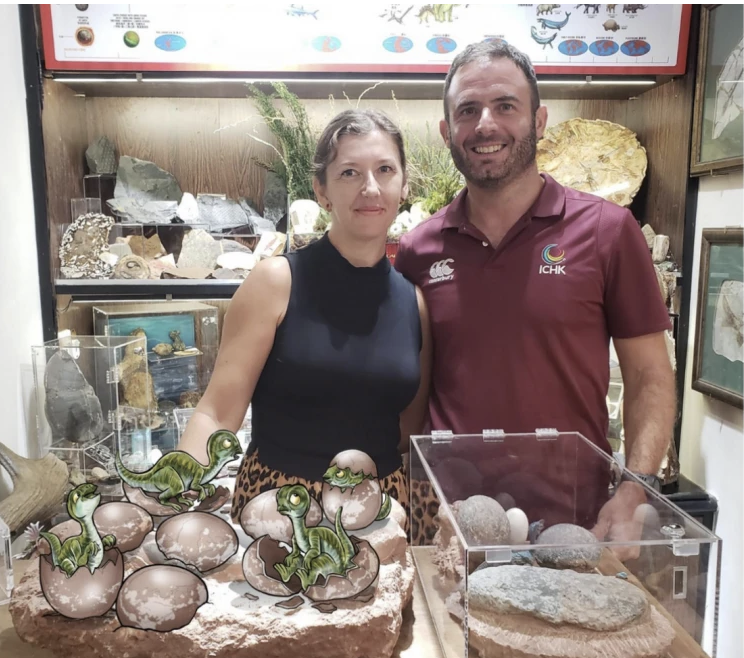
Natalie Bailey and Jon Rees visited Christian and Stella Pilard’s incredible museum in Chai Wan, which they have built after a lifetime of inquiry.

Their Little Museum’s slogan is “A Time Machine for Building Peace” as within a tiny square footage in their museum space, they take visitors back to the dawn of life on this planet in an amazing fossil museum featuring rocks that at 4.2 billion years old are some of the earliest in existence.

We can take a leap forward to the first life on Earth with traces of bacteria in the fossil record to dinosaur eggs and skeletons from the Jurassic age, and then onwards again- in just a few steps- to view the first moments of our human story on Earth with paleolithic axes and spearheads.

This all within one small room, and Christian has an amazing story to tell you about every one of the hundreds of exhibits here that cause you to reflect on the vast scope of our planet’s evolutionary history; then, visitors step into the 20th Century and the stratospheric speed of development of human technologies in just over the space of a century that have connected us through phone, film and internet, taken us up into the air, and then out into space…and onto the Moon. You can see fragments of the parachute that delivered the Apollo 11 astronauts back to Earth, as well as moon dust and meteors that act as postcards from our solar system.

Sports fans will love the signed shirts of Pele and Maradona, as well as boxing gloves signed by Muhammad Ali and other photos of the evolution of sporting teams such as the 2023 World Rugby Champions, The Springboks, whose nation used sports as a catalyst to unite after the suffering inflicted under years of Apartheid.

The exhibition takes you right up to the present day and the problems that we face through overpopulation and the threat our expansion and consumption of resources places upon the lives of all other species with whom we share this planet.

The scope for teachers at our school and others across Hong Kong to connect students with visceral stories from history, science, ecology and human history is vast. Christian and Stella have done an incredible job with this museum, curated across the last 2.5yrs but built upon a lifetime of inquiry.
You can find out more at /The-Little-Museum-of-the-World/

Kadoorie Farm Pangolin Talk 

with Liz Rose-Jeffreys and Y9/10 ICHK students.

By Jon Rees; Edited by Liz Rose-Jeffreys. March 8th, 2024.

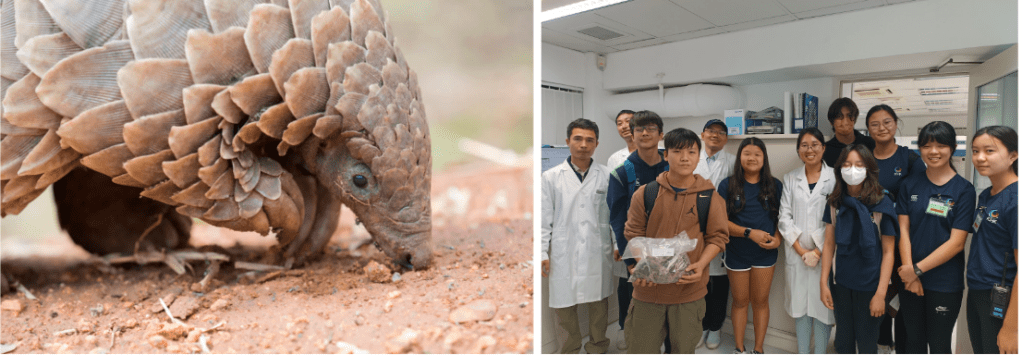
Photo: BBC Wildlife; Kadoorie Scientists and ICHK students

This week, Y9 and Y10 students from ICHK travelled the short journey to the world-renowned conservation centre, Kadoorie Farm Botanical Garden (KFBG), to hear a fascinating talk about one of Hong Kong’s most critically endangered species, the Chinese pangolin. 

Resident expert, Liz Rose-Jeffreys, who also works with ICHK parent, Paul Crow, in the reptile research and relocation facility, shared some fascinating information about this beautiful, peaceful creature- it has no teeth, so can’t bite, sucking up ants and termites with its 40cm long tongue, and rolling into a ball when threatened.

However, Rose-Jeffreys also revealed some shocking and demoralising statistics about a species that in Hong Kong, and around the world, is teetering on the verge of extinction. 

Before we get to that, a good news story: last year, Kadoorie Farm took in 1,600 snakes that had either been rescued because they were injured, or needed to be relocated as they had slithered too close to human habitation. Although more snakes are received during the warmer months, that works out at an average of nearly 5 a day- and the great majority of these are released once they’ve been identified and health checked. It’s a very healthy indicator of the biodiversity that does exist throughout the city’s country parks.

So, how many pangolins do you think that Kadoorie Farm takes in by way of comparison? Well, the answer is shockingly low, and an indicator of how very rare they are here: since 1997, the Kadoorie facility has only received 15 pangolins, and they were only able to release 10 of these back to the wild (in extremely secret locations to try to give them the best chance of survival). 

We were able to see some charming footage of one of their most recent residents back in 2020; Liz revealed a funny and touching anecdote, that when the pangolin was trying to balance on the wooden log placed in its enclosure it fell off- face first into its food bowl!- and while there, realised that eating was actually a good idea, so it started to chomp away after a period of shock and readjustment to its circumstances.

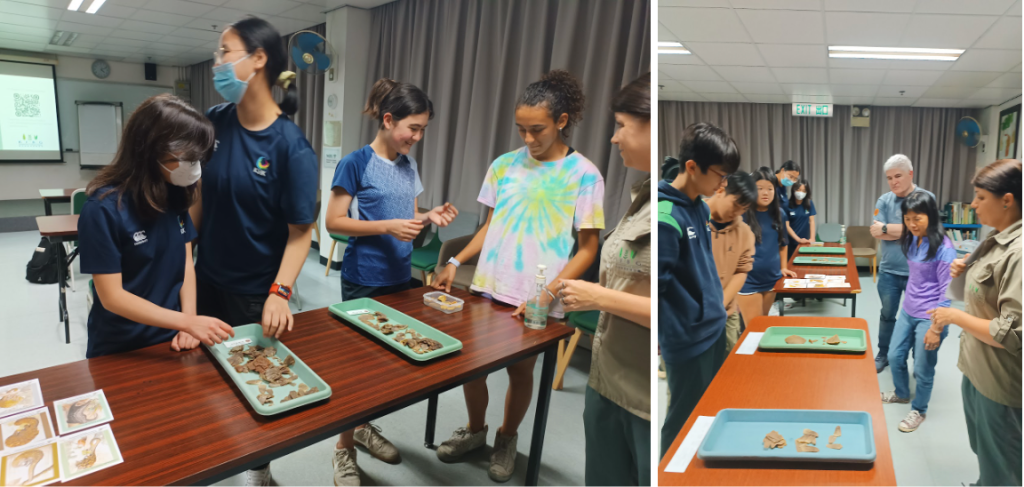
At the end of Liz’s excellent talk, we were able to then see some samples of scales that had been seized by customs officials and donated to KFBG under special permission and held under permit, for education and research purposes. 

Left: Charis, Anna, Jazzy and Kenza examine the scales from various species of pangolin. Right: Under the guidance of Liz Rose-Jeffreys, Angus and Nathan, along with Christian and Stella Pilard of Eco-Sys Action Foundation, inspect some more samples.

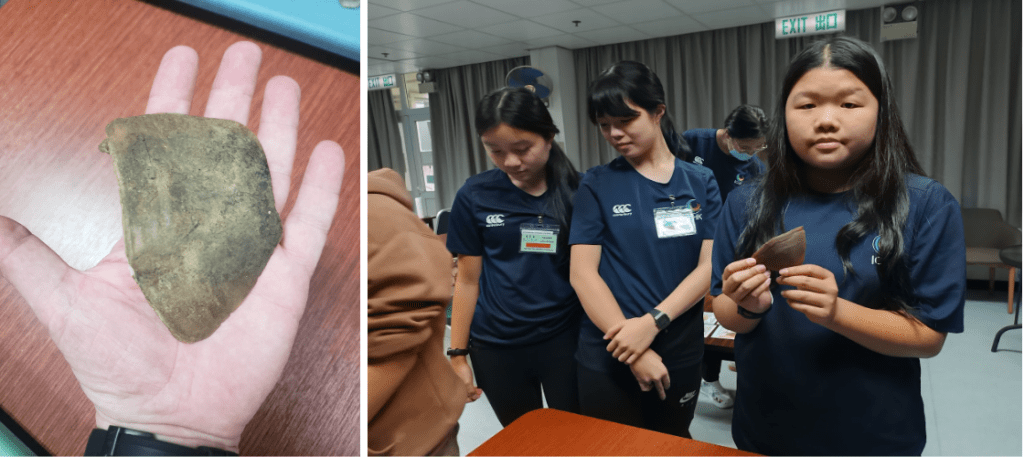
Jasmine and Fafa look on as Haile holds up the enormous back scales of the giant pangolin, found in regions of western and sub-saharan Africa. Scientists (L-R):  Huarong Zhang, Benny Lai, Peter Yang, Aiko Leong. Students (L-R): Angus Ho, Nathan Cheung, Haile Cheng, Max Lefevre, Charis Chan, Anna Zhou, Fafa Wong, Jasmine Chow

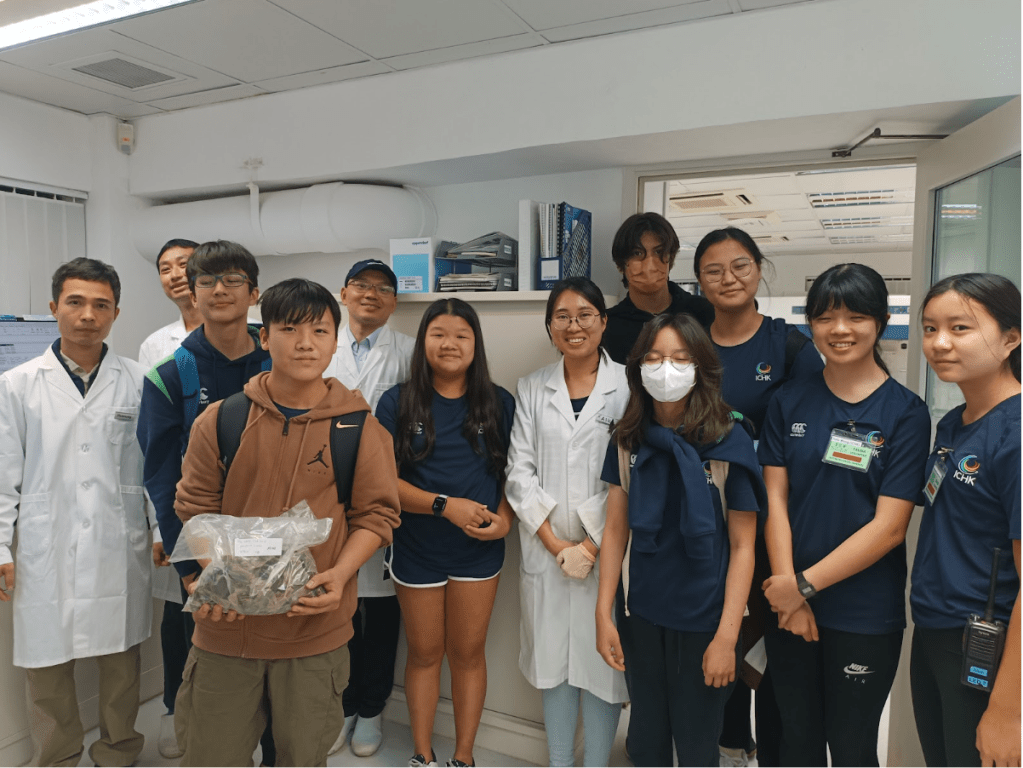
The team of scientists at Kadoorie’s DNA/Genetics research centre are a remarkable group. We were lucky to meet them after the talk and hear about their work in their laboratory. (Aiko Leong’s work on otters is an excellent story I would like to focus on next time…) These guys are proper superheroes going about their work with quiet dedication and humility. 

They were “rewarded” too with discovering a new species- that of the Asian Mystery Pangolin. Through testing of scales seized by customs officials, which included the scales and a claw from the back foot of one sample they received, they realised the genetic codes did not match any of the 8 known species- and so, a new species had been discovered! Yet, in a very sad way, the reason it is called the Asian Mystery Pangolin is because no-one has ever seen one in real life, only in fragments taken from a trafficking shipment. Their research paper is linked here if you’d like to take a look: “Genomic analysis reveals a cryptic pangolin species”.

In the team photo above, Nathan is holding a bag of around 1.5kg of scales. Rose-Jeffreys told us that 1,000kg of scales would equate to around 1,700 dead Chinese pangolins, although this figure does vary depending on the species. And in one shipment alone Hong Kong customs officials confiscated about 8,000 kilos of scales, which could mean about 14,000 dead pangolins. 

The scale of the global operation is vast, and the criminal gangs who smuggle these animals (dead and alive) are highly sophisticated. An excellent expose by a young Vietnamese investigative journalist was recounted to me by Mr. Holland, and I post it here for anyone who would like to take a look. “Van”- her real name is concealed because of the threat to her life- took part in a 4 year investigation, and with incredible bravery and execution, eventually coaxed one of Nigeria’s biggest dealers to reveal key details that led to law enforcement officers being able to bring to a halt a trading network that accounted for half the world’s pangolin sales. 

Huarong Zhang and  Peter Yang (Benny Lai on computer in background) display the scales attached to a claw retrieved from a seized shipment of pangolins that they analysed with their DNA testing machines, revealing a new, 9th species of pangolin, the Asian Mystery Pangolin

Amidst all of these thoroughly dejecting statistics and facts, Huarong Zhang and Peter Yang, state that they are somewhat hopeful that the situation can be turned around and the pangolins saved. They say that the volume of shipments coming through Hong Kong is starting to be reduced. Also, more awareness from the public due to the kind of work they are conducting is helping to educate people that the scales have no proven medicinal value as they are made of keratin- that’s exactly the same material as your fingernails. The fact that pangolin has been taken off the official list of traditional Chinese medicines in 2020 (SCMP/Green Queen) is another huge step to ensuring their survival, and hopefully revival

Kadoorie Farm is a real success story and its principles are a perfect model for you students reading this article. The people who work for this organisation are principled, knowledgeable, empathic and proactive. 

Jasmine, Fafa and Max have been very lucky to conduct their work experience in such a wonderful organisation, and are to be commended for their proactivity in acquiring their placements, and their excellent attitudes across their time there. I think we have a bright future of vets and conservationists with folks like these.

And a huge thanks also to our Y10 Work Experience programme partners, Christian and Stella Pilard at Eco-Sys Action Foundation, who also run The Little Museum of the World- a Museum for Building Peace, and who have hosted Leo Birnbaum and Angus Ho. They couldn’t be under the guidance of two more compassionate and kind people, and I was assured that both young men had been excellent ICHK representatives.

Christian helped to organise the event at Kadoorie and he and Stella were in negotiations with HK authorities for weeks so that they could acquire some pangolin scales to feature alongside the hundreds of other objects in their collection that tells the story of our planet and our species. With people such as these- there’s hope!

A Human Technologies Insight into U14 Girls Football

Nov 03, 2022

A Human Technologies Insight into U14 Girls Football

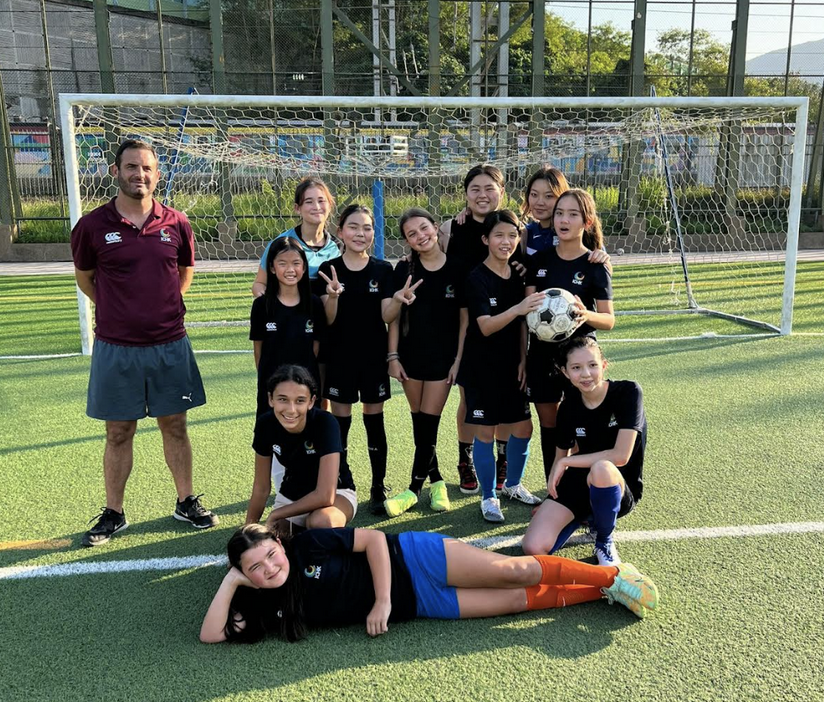
Our U14 Girls Football team have just come to the end of their season. It’s been wonderful playing against other schools again, and applying the skills and strategies of training to competitive fixtures. Human Technologies allows us to look more closely at some of other crucial aspects of socialisation, fitness, and mental fortitude that allow students to be successful in sport, and beyond to so many walks of life…

“Look at the size of them..!” said Agatha, staring across as the DBIS team got off the bus and entered our pitch at Kwong Fuk Park. Almost half of our U14 team are Y7s and Agatha, Sara, Jessie and Perlie most intensely experienced that peculiar feeling of worry about being ready to take on another team after a short pre-season training period. 

It is always the case that as we kick off in Term One ahead of all the other sports, and compete against schools often twice our population, that our football students battle those feelings of nerves as adrenaline spills over into apprehension. Not only that, but these are the first set of competitive football fixtures many will have played at all for the last few years owing to the impact of Covid on organised sports in Hong Kong.

In Human Technologies, we have been learning about the structure of homo sapiens Triune Brain- a three part brain system of reptile, mammalian and prefrontal cortex formed through the process of evolution across millions of years. 

This sophisticated supercomputer set equips us with all the instincts of survival- fight, flight, flop and freeze- that can be found in less advanced species such as lizards; this operates together with the limbic system which helps regulate our emotions, embed our memories and build social relations amongst mammalian species (hence why elephants, chimpanzees and whales have such complex societal systems); It is between these two where the amygdala and hippocampus can be found. As we prepare for competition, the amygdala pumps out cortisol and adrenaline preparing us to perform and our increased breathing pumps the oxygenated blood to our muscles so that we can perform whichever action is needed.

These essential functions have ensured the survival of our species across approximately 200,000yrs or more- yet, if we don’t engage that unique supercomputer of the prefrontal cortex to regulate our emotional state and allow us to rationalise whichever tough situation we might find ourselves in, it can all appear too much for a Y7 footballer…we might wonder whether we can get through the next 90 minutes! We need to feel safe, secure, and connected to a cause if we are to thrive. 

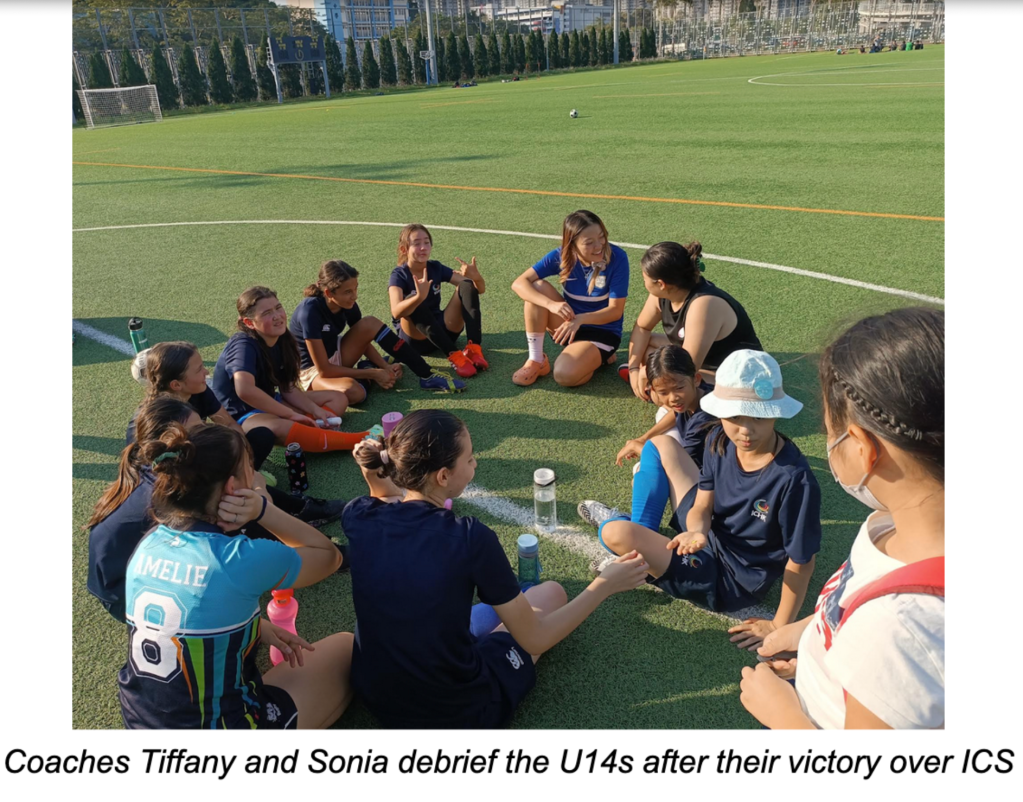
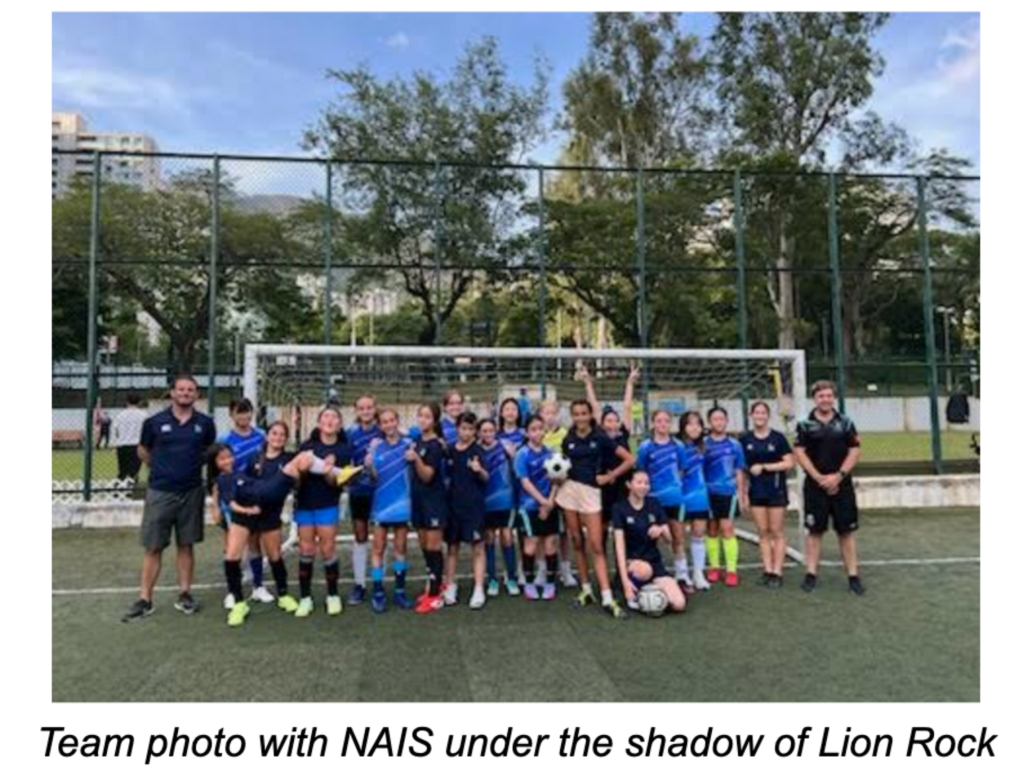
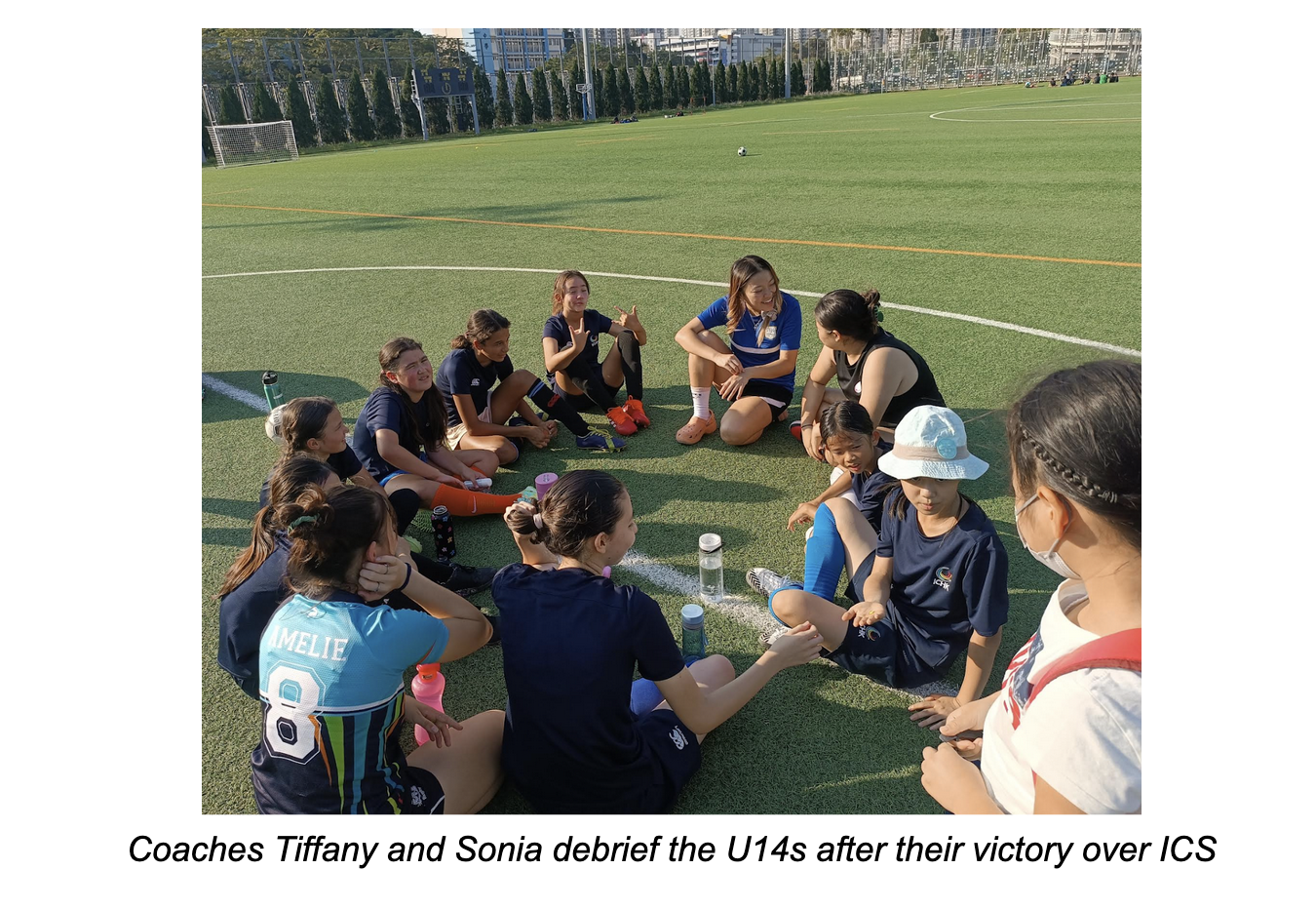
Across this season, our U14 Girls evolved together as a team. They were excellently led by Coach Tiffany and Coach Sonia, two Y13 students who devoted their time and experience of playing both football and rugby to a high level. They formed wonderful role models for the girls, inspiring confidence and sharing tips from training sessions and life lessons along the way. 

This was a crucial part for the cohesion of our side, and with smiles on their faces, the girls got better at their shooting and passing drills, and even adapted rapidly to understanding how to play together effectively in a system where in defence we compacted our shape- like a hedgehog rolling into a ball- and attacked together moving forward to make our lines compact and increase the pressure we could put then upon the opposition. 

Lucy Burton operated as Captain throughout the season and she quickly learned to give support and direction to others on the pitch so that Kenza could apply her knowledge of defence and capacity for running from the rugby field to the football pitch. Amelie was great in goal and gave us solidity at the back, and could turn defence into attack with her excellent distribution. As she graduates from U14 football she is another student with certain capabilities to coach and play at a higher level in the future.

Vicky White worked hard up front- often outnumbered but never outgunned- and her look of disbelief to delight when she scored her first goal was a season highlight. 

Our midfield were run predominantly by the Y7s of Perlie, Jessie, Agatha and Sara with Jazzy supporting with her tireless running. Jazzy totally eclipsed her beep test result from a HT lesson early this term, as she channelled her focus, adrenaline and desire to track back and support her teammates with a look of grim determination on her face. Positionally, all of our players showed great improvement and Agatha, Perlie and Jessie were all rewarded with goals as a result. Perlie has such a magnificent touch and could turn on a sixpence. She will be a vital member in years to come. 

One final mention goes to Jessie in our penultimate game: she received a couple of kicks, nothing nasty, just what you expect in a well-contested match. When it seemed things might get too much, she picked herself back up, received some supportive words of advice and touchline warm up from Coach Sonia… then came back and scored for us within 30 seconds! 

It was a wonderful example of how Jessie rationalised the situation, using her prefrontal cortex to regulate the flow of adrenaline to once again gain control of her mind. Because she knew she could rely on the strong social bonds of her team- who needed her skills in turn on the pitch- Jessie was able to be present in “The Now”, and recognise that, while her injury was painful, the situation was not insurmountable. It was an excellent example of someone who didn’t give up and that is exactly the attitude that will serve her well in future tests of mental fortitude, be it sporting, academic, social relationships or otherwise. 

All the girls are to be congratulated on their humility and good spirits throughout the season. Year 7s made friends with Y13s, and so on, and they can all look out for each other across the year in and out of school. That is what football can do, but it is what any chosen sport can do as if you are prepared to give it a go and stick through the hard times. If you commit to a team or activity the rewards are enormous and the playing, coaching, and supporting of any team will set you up for a lifetime of fulfilment. 

Written by: Jon Rees

In: Teacher Insights

When: 2 years ago

Banned Books!

BANNED BOOKS!

SRC’s November Reading and Writing Theme: Banned Books!

SRC November Challenge: Every member of our community to read a book in November!

It’s strange to think that the book you hold in your hand could be deemed so explosive that both the writer and the reader could be thrown into jail for its possession. Some of the most famous books we can read today, that are revered as “classics”, so shocked the societies in which they were produced that they were banned. This includes the current GCSE/IB DP text students are studying, A Doll’s House, by Henrick Ibsen. The protagonist, Nora, is one of theatre’s great female heros; but her actions of leaving her family and children in a bid for personal freedom were deemed deplorable and corruptible by the traditional, moralising mindset of the age.

On the Y7 camp I read Madame Bovary, by Gustav Flaubert. It is widely considered to be one of the greatest novels ever written, owing to Flaubert’s incredible attention to crafting each sentence, and finding the mot juste (perfect word) to capture the events and sensations his characters undergo. Yet, Madame Bovary’s adulterous behaviour- and the attacks upon the class structure and religion – were deemed scandalous by French society and it was initially banned in 1856. Yet, Flaubert was able to argue that he was simply documenting society as it was- with all its foibles and hypocrisies governing the different standards of “acceptable behaviour” that were applied to males and females within society. Of course, the notoriety his text had gathered by that stage only helped sell more copies when it was finally released!

The most powerful banned book I have read is Aleksandr Solzhenitsyn’s, On Day in the Life of Ivan Denisovich. It is only just over 100 pages long, a factor necessitated by the conditions of its production. Solzhenitsyn wrote this fictionalised account of one man enduring 24 hours in the freezing conditions of a Siberian gulag (prison camp), based on his own experiences as a prisoner. He was sentenced to exile in Siberia for 8 years as he was an outspoken critic of the Soviet Union. One Day in the Life… is a harrowing account of an individual’s struggle for survival and dignity while being crushed by the dark powers of a totalitarian system. The system of writing is an act of rebellion and an act of liberation. For prisoners, “writing letters now was like throwing stones into a bottomless pool. They sank without a trace.” Any attempt at expressing your own opinions was subject to additional punishments such as beatings, reduced rations, isolation. Yet, Solzhenitsyn did write this account as he so desired for the world to know of his, and others’ plights. He wrote the entire novel on toilet paper, but this was discovered and destroyed by guards. Yet, as this was an account of real, lived experience, and he had committed the text to memory, he was able to re-write the text in full and publish upon his release.

The right to think for ourselves, express our opinions and listen to the words of others is integral to a fulfilling life. The right to free speech was deemed so important to the foundation of the United States, separate and distinct from the Old World colonial monarchies, that they enshrined it as the First Amendment of the Constitution.

“The First Amendment guarantees freedoms concerning religion, expression, assembly, and the right to petition.  It forbids Congress from both promoting one religion over others and also restricting an individual’s religious practices.  It guarantees freedom of expression by prohibiting Congress from restricting the press or the rights of individuals to speak freely.  It also guarantees the right of citizens to assemble peaceably and to petition their government.” 

(https://www.law.cornell.edu/constitution/first_amendment)

If you have not yet began your reading challenge for November perhaps you would like to celebrate your freedom and the individuality of your spirit, by starting with a banned book!

Here’s a couple of links to get you going:

https://www.goodreads.com/list/tag/banned

http://www.bannedbooksweek.org/

http://www.ala.org/advocacy/intfreedom/freedomreadstatement

The Chinese Written Language and its Capacity to Communicate Wisdom across the Centuries…

…and the Challenges Faced in Translation 

Tim Clissold shows how the unchanging nature of the Chinese written word connects the past to the present in ways that do not exist in the West.  This connection helped a Chinese scientist to win the 2015 Nobel Prize for medicine.  It is also used in present day economics.

But Tim argues that the greatest lessons for many come from poems written more than 1,000 years ago, that deal with problems that are all too familiar in modern times.  These include the plight of refugees, social inequality, homelessness, tax evasion, substance abuse and even the perils of excessive logging. 

What, he asks, can mankind learn from these lines as they echo down the centuries? 

Royal Geographic Society infomercial

==================================================================

The ideas in this feature article are often taken directly from a Royal Geographic Society talk I attended in November, entitled, “Ancient Words for the Modern Age” by the author Tim Clissold who has lived and worked in China for over thirty years. He’s written a number of books about his experiences, including Mr. China, Chinese Rules, and his most recent work, Cloud Chamber. I’ve tried to give credit as clearly as I can to where an idea was introduced by the presenter. 

The talk was inspired by what Tim Clissold identified as the Chinese written language’s capacity to pass down wisdom in the fields of engineering, medicine, poetry and philosophy across millennia due to the comparative constancy of its characters (as opposed to, say, the English language). 

He discussed how he fell in love with Chinese culture and language when he first arrived in Hong Kong and was fascinated by its beautiful stylised calligraphic form; but how, he wondered, could he ever penetrate the complexity of a language that featured, for example, the 26-stroke character that is the first of the two character word for “Wan Chai”?

Wan Chai MTR Station: the emotive flourishes of Chinese calligraphy first captured Clissold’s interest

I’m also extremely grateful to our Chinese language teachers, Vincent Wang and Jessy Tu, who were very generous with their ideas and time to help me support my classes with a range of clear examples. They were able to add colour and depth with some excellent insights into the challenges/methods that a language learner faces and utilises when translating Chinese into English in fun and exciting ways. These dual themes of the propensity for the Chinese language to communicate wisdom, and the challenges of “taking the language out of its original context” (to refer to a May 2024 TOK Essay Title), were the dual themes of Clissold’s talk and this article.

I hope this article may provide some motivation for those, like me, who have struggled to learn Cantonese or Mandarin by approaching it from a more visual and poetic standpoint, as well as providing some interesting cultural and historical perspectives on the language.

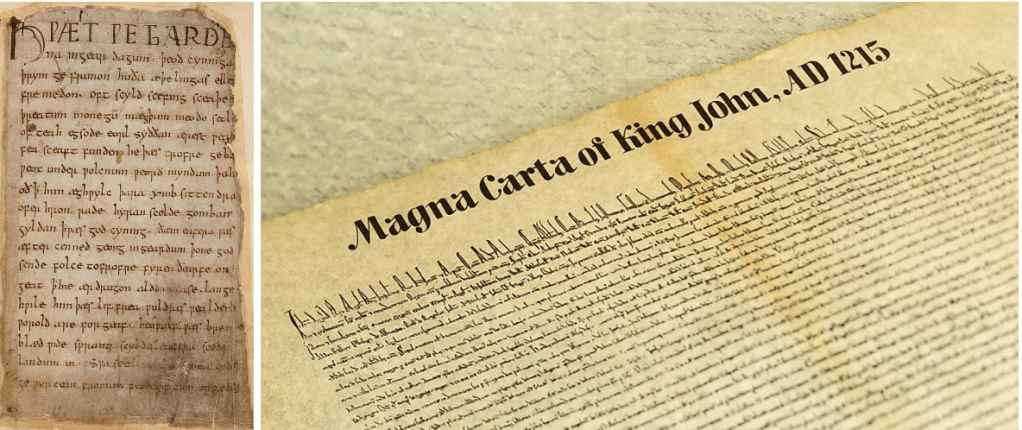
Beowulf, c. 800-1000 AD; The Magna Carta, 1215 AD. 

Clissold made the point that while Shakespearean English from 500yrs ago is largely comprehensible to a secondary student, the epic poem, Beowulf, written in the West Saxon (Germanic) dialect of Olde English approximately 1,000 yrs ago is not. Following the Norman Invasion of 1066, Latin became the language of the courts and the nobility. Both these texts would be incomprehensible to a modern reader of English. https://www.britannica.com/topic/Middle-English-language

However, take this beautiful line from the Tang Dynasty poet, Li Bai. 

“Without a word from the Sky, the four seasons rotate (and thus all things continue to change), and without utterance from the Earth, all life continues to be born, grow and flourish.”

  • Li Bai, c. 750 AD

The wonder and eternity of nature are communicated with an immediacy that is hard to believe given the poet wrote these lines over 1,200yrs ago. And there is a tradition for Chinese politicians to use lines of ancient wisdom within their speeches to connect their thinking to the past. President Xi Jinping used Li Bai’s words in his speech at the December 2020 Climate Ambition Summit. And this can, Clissord attests, be read directly from the original text. https://www.thechinastory.org/the-underappreciation-of-classical-chinese-idioms-xis-climate-speech-1/

When faced with a similar task of translating a line from perhaps the most famous ancient Chinese poet of them all, Du Fu, Y12 TOK students, Tuscany, Henry and Oliver were able to make some meaning and offered a lovely interpretation of a line from an excerpt of Du Fu’s, “On Visiting the Temple of Laozi”, written approx. 750 AD. They explained how the poet observes, “the stitching of the Sun and the Moon on the windows..”

https://en.wikipedia.org/wiki/Du_Fu

The opening to Du Fu’s, “Spring Gaze” was read out by Tim Clissord, and it contains such an evocative opening line as the poet or speaker walks around the ruins of the city after an uprising in Chang’an : 

You can see the work the translator has undertaken to represent the literal meaning of the original, while ensuring both the vocabulary and truncated rhythm of the line capture the starkness of the dramatic situation, and nature’s power to endure. 

Yet, as you can see with this academic website, many translators have tried to emulate Du Fu’s timeless words, but they all interpret the lines subjectively, sometimes with some quite marked differences that can really change the overarching effect of the line. You’ll be able to pick your own favourite interpretation by viewing the selection via the link: https://homepages.ecs.vuw.ac.nz/~ray/ChineseEssays/ChunWang.htm

Yet, it’s not just a matter of choosing the right word to capture the best impression. In the following short video, ICHK Chinese teacher, Jessy Tu, delivers an interpretation of a Chinese nature poem, while making clear the problems of pronunciation in Chinese translation. As we shall see, a change in pronunciation can alter the meaning significantly! 

The plum blossoms are so beautiful I see the fallen leaves lying on the ground with sorrow I hear from afar the sound of a running stream The whole area is full of the green of springtime The riverbank reveals the green-like jadeI have no culture, I have low IQ,If you ask who I am,A fat stupid donkey,I am a donkey,I am a donkey,I am a stupid donkey

Translation on right hand column by Y12 Henry Wang

Ms. Tu preceded her engaging reading with a few core lessons that explain some of the hurdles a new Chinese language learner must face.

Firstly, like English words, one character can have very different meanings, such as the examples below, depending on the context in which they are used in the sentence: 

There’s also the issue faced with an artistic interpretation of an original text by a calligrapher. An excellent actor or artist will add a certain element of colour and distinction to a script or their interpretation of a certain theme or idea. You can visit the Hong Kong Museum of Art to find out more with their current exhibition, “The Melodious Notes of Chinese Calligraphy”, from which the image on the left below is taken:

As with artists such as pianists, painters, singers and poets, calligraphers themselves can interpret the meaning of a text by the creative flourishes of their brush. 

This idea can be explored further when applied to understanding Chinese classical art. The video below is a quick 3-minute masterclass to uncover the craft, uniqueness and value of landscapes by Bruce Maclaren, Global Head of Chinese paintings and calligraphy at Bonhams, who describes the close study of art as an “enlightening” experience.

To return to the fundamentals of language, though, Jessy recommended the Chinese language website, The Silk Story, which provides a good bank of resources that focus on the etymology of the Chinese language and its characters. Take this example for “mouth”- the shape clearly resembles in basic form an open mouth, so the simplistic symbolic depiction of rice paddies, the human form etc within the language makes for an accessible means of unpacking simple words.

https://www.youtube.com/watch?v=CVvIA5aahN8


Many mouths together can indicate a plural but also more to do with tasting as well as quality.

The same variability exists, too, with the character for a person. You can imagine how the first writer in Chinese to decide upon this character saw the figure of a human walking and simplified it to this elegant two-stroke form, before using a stick or flint to etch it into the earliest writing tablets of clay or ox bone. 

Yet, you can also derive the words: people, person, human and human being from the same character. This translation business can get really tricky if you’re trying to just state the obvious, let alone communicate artistic nuance…

So, how can you unlock all this knowledge of ancient languages to win a Nobel Prize? 

Well, that’s exactly what the Chinese scientist Tu Youyou did when she was awarded her prize for research into a cure for malaria in 2015. Her work was actually carried out much earlier, back in the 1970s at the time of the Vietnam War when both the American and Vietnamese militaries were desperate for a cure for malaria. At the time, Clissord stated, American soldiers were dying more from malarial infections than wounds inflicted in the battlefield at a rate as high as 5:1. 

Youyou Tu with Prof Lou Zhicen in the 1950s. She has been working in the China Academy of Chinese Medical Sciences in Beijing for decades, and is now Chief Scientist. Photo: Xinhua

The Americans went all-in on the scientific method and pursued the cure in their laboratories…to no avail. Ho Chi Minh asked the government of Mao Zedong if they could help, and they too used the latest scientific methods, as well as turning their attention back to the hundreds of regional medicine books that had survived across the centuries. Clissord reported a rather stomach-churning cure for leprosy involving eating the scab of a leper. Sounds gross, right? But that process is what we recognise today as vaccination….documented hundreds of years before the “discovery” was accredited by Western scientists to Dr. Edward Jenner for his treatment for smallpox in 1796. https://www.who.int/news-room/spotlight/history-of-vaccination/a-brief-history-of-vaccination

The books of folkloric knowledge studied by Tu Youyou eventually revealed the answer, and she then applied the scientific method to examining the veracity of these ancient traditional herbal remedies. 

And the examples go on… solutions for burst dams that have helped engineers in modern times, as well as naturalistic poetry inspired by the Tao Te Ching which was itself written as early as 200BCE (and which provided many central ideas for my Deep Learning unit: Zen and Sustainability). 

I am very grateful to another of our excellent Chinese teachers at ICHK, Vincent Wang, who replied in a very detailed manner to explain the translation technique which he learned at university and which forms the pedagogical approach for his teaching. The full email reply can be found in the notes at the end of this article, but he writes: 

“During my graduate studies, I took a course called “Translation Studies,” which discussed a Chinese translator from the modern era named Yan Fu. Yan Fu developed a translation theoretical framework known as the “Faithfulness(信), Expressiveness(達), and Elegance(雅)” translation system. “信” refers to faithfully conveying the meaning and information of the original text, ensuring that the translation corresponds to the content of the original.”

It seems that students in both Ms. Tu’s and Mr Wang’s classrooms are in very good hands indeed- no wonder they’ve performed so well at the recent Debate Competition!

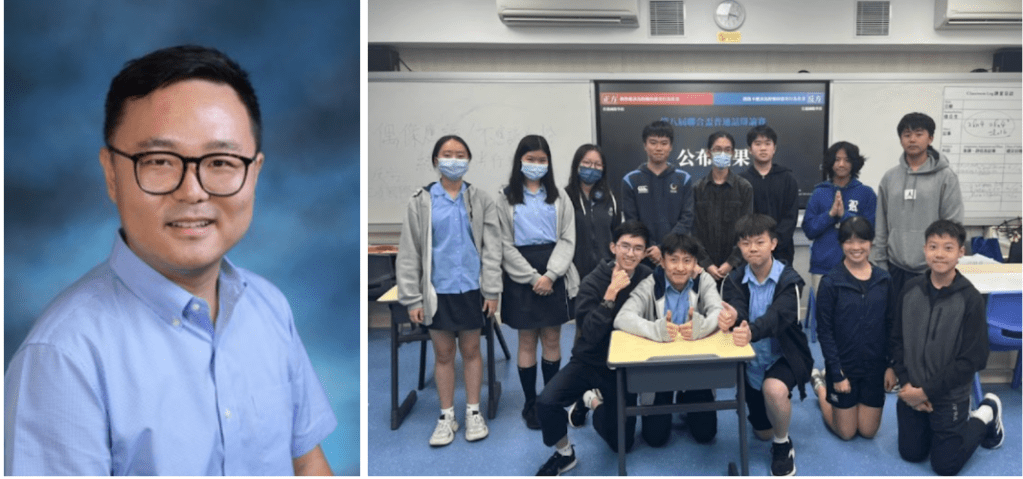
Vincent Wang, and members of his excellent Debate Team

So, will Tim Clissord’s talk propel this “ying guo ren” to buckle down and eventually break through Chapter One of my Chinese language books at home? We shall see, but it was a really enjoyable talk that has made me really want to open my eyes and pay more attention to the world around me for the lessons of culture and history that can be revealed through paying closer attention. 

Other implications for translating Chinese to English

  • Chinese characters can have many meanings, sometimes they are paradoxically contradictory (certainly the English language also shares this problem). There are 7 symbols in lines of Chinese classical poetry, and let’s say there are (at least) three potential meanings for each character, then you have a problem in translating the meaning of this successfully which could be mathematically represented as 3*3*3*3*3*3*3= 2,187 minimum potential interpretations of just one line. 
  • The Chinese language, unlike English, is a null-subject language. This means that it is not possible to determine the subject based on the verb alone, e.g.
  • There are no changes in the tenses, e.g.: Today, I eat vegetables and drink green tea; Yesterday, I eat vegetables and drink green tea; Tomorrow, I eat vegetables and drink green tea etc. 
  • The Lion-Eating Poet in the Stone Den“: The famous example given by Tim Clissold was a nonsense poem written by Yuen Ren Chao featuring tonal variations of the same shi sound…repeated 96 times! 
The Lion-Eating Poet in the Stone Den
https://ninchanese.com/blog/2022/05/09/the-lion-eating-poet-the-meowsome-one-sound-poem-you-can-only-read/


https://www.youtube.com/watch?v=9jtiw721RAg&t=19s

Vincent Wang Email to JR

Hi Jon, 

Thank you for your email. I regret that I won’t be able to attend the lesson, but I have some ideas regarding Chinese translation.

During my graduate studies, I took a course called “Translation Studies,” which discussed a Chinese translator from the modern era named Yan Fu. Yan Fu developed a translation theoretical framework known as the “Faithfulness(信), Expressiveness(達), and Elegance(雅)” translation system. “信” refers to faithfully conveying the meaning and information of the original text, ensuring that the translation corresponds to the content of the original.

“達” refers to the translation’s ability to make the reader understand and resonate with it. In addition to conveying the information from the original text, translation should also adapt to the target language and cultural background. 

“雅” refers to the translation’s need for artistic and aesthetic qualities. Translation should strive for linguistic elegance and fluency while maintaining accuracy and clarity. This requirement is of the highest level and is also the most challenging goal to achieve.

It is interesting to note that there are similarities and overlaps between these perspectives and the theory proposed by a German translation scholar, Reiss, regarding text types. Reiss introduced the theory of text types, which emphasizes the importance of considering the specific characteristics and requirements of different types of texts during the translation process. Later criticisms have emerged suggesting that this translation theory may face challenges due to the inherent difficulty of fully categorizing texts based on their types. 

When I teach the Y9 Kingston Chinese class, I will simply introduce the overlapping aspects of these two theories to help them better understand modern translations of ancient poetry. Reiss proposed that texts can be classified into two main categories: informative texts and expressive texts. When it comes to understanding ancient texts, I usually employ the informative type for teaching purposes. This is because my goal is to quickly convey the meaning of the text to students. Let me provide an example of translation in both Mandarin Chinese and English. For instance, if I want you to understand the term “春節” (chūn jié in Mandarin), I would translate it as “Chinese New Year.” This way, you would grasp the content of the text. This process can be seen as me, acting as a “translator,” building a bridge for students and guiding them across. However, when I teach using the expressive type, I would directly translate it as “Chunjie” and provide subtitles. When I employ the expressive type as the primary method of translation, my intention is to sacrifice the literal content of information transmission and allow students to appreciate the cultural, auditory, and formatting elements behind the text.

Therefore, when it comes to poetry or certain ancient literary texts, if our aim is to help students understand cultural phenomena, I would focus on teaching the format and encourage students to explore the underlying meanings. However, when dealing with non-literary texts, I no longer emphasize cultural elements. That’s why you may see that I allow students to freely express themselves, whether it’s in terms of format or symbols, with the goal of helping them grasp the content.

I saw the translation you provided in the link about the poem translation in Chinese. https://homepages.ecs.vuw.ac.nz/~ray/ChineseEssays/ChunWang.htmYou can see that these translation types are not used independently. The expressive and informative types I mentioned earlier are combined in their usage. In some cases, the focus on conveying meaning may result in the loss of the format and rhythm of ancient Chinese poetry. On the other hand, in some instances, prioritizing the preservation of rhythm may lead to the loss of certain aspects of the content and require readers to explore the underlying meaning of the text. 

The above are some interesting translation theories and ideas that I find useful, especially when teaching ancient Chinese works. I hope you find them helpful as well.

Thank you!

Vincent 

Other Sources:

https://en.wikipedia.org/wiki/Three_Chinese_Poets

https://en.wikipedia.org/wiki/Du_Fu

https://www.maayot.com/blog/chinese-words-with-multiple-meanings/

https://homepages.ecs.vuw.ac.nz/~ray/ChineseEssays/ChunWang.htm

https://www.parliament.uk/magnacarta/
The effect of language on economic behaviour. This paper is relatively recent but has not realy been fully explored and adopted  – link to some questions there. Read the abstract. Thanks to Alex Hall for this link.