Do Androids Dream of Electric (Otters)?

Do Androids Dream of Electric (Otters)? 
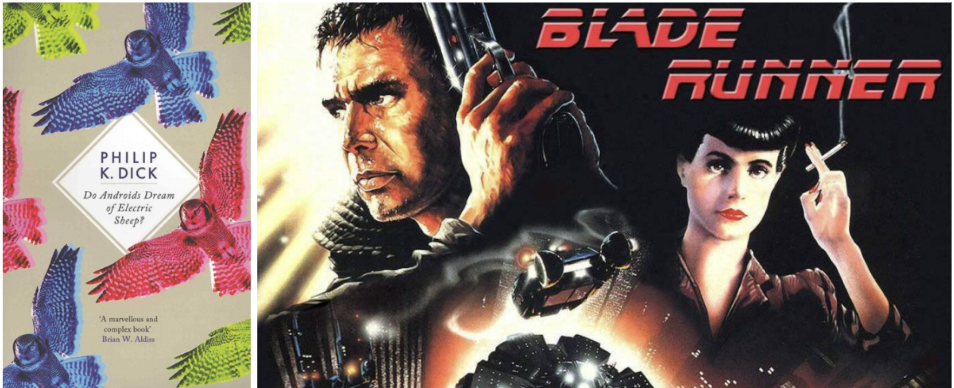
The front cover of the Weidenfeld & Nicholson version; the original Blade Runner film poster.

In the 1960s, the prodigious Science-Fi writer, Philip K. Dick, produced his far-sighted masterpiece, Do Androids Dream of Electric Sheep? This dystopia would become the template for Ridley Scott’s iconic 1980s film adaptation, Blade Runner, starring Harrison Ford. 

It is rather a prescient read with the explosion of AI into the mainstream, as PKD imagined a human world threatened by rogue androids, whose intelligence had become so sophisticated they had learned to reject the servile, exploitative role foisted upon them by their human masters. A set of bounty hunters within the San Francisco Police Department, including the protagonist, Rick Deckard, are tasked with eliminating this threat. 

Like many Sci-Fi worlds, the future San Francisco that PKD depicts is a bleak wasteland, choking with the “dust” following the fallout of a nuclear World War. The division between the haves-and-have-nots of this world is Stark (AKA Tony Stark, AKA Elon Musk, who would have all-of-us-who-can-afford-it blast off to live on Mars.) 

Bladerunner Trailer for its 30th Anniversary Release. 

In the novel, there has been a mass exodus from Earth and those who have the financial means to do so have escaped to live in the far reaches of the Solar System; those that remain, include the misfits and mercenaries who can make a quick buck in the black market economy, or others such as the downtrodden JR Isidore, a victim of the War, whose mental faculties have been diminished by the choking environment: fail the intelligence tests, and you are condemned to remain on the blighted Earth, performing the sorts of menial tasks which the robots are destined to take over. 

(So, ICHK students, focus on developing the range of technologies that make you uniquely human, reliable, able to work in a team, empathic, creative, and an indispensable problem solver…as well as pass your IGCSEs/IB exams. No pressure…)

In such a barren landscape, nature has been largely destroyed. The very few animals that remain command exorbitant prices from the animal traders who peddle them in exclusive shops with eye-watering price tags. They have become the ultimate commodity, replacing some elements of our society’s desire for shiny new objects such as Tag Heuer watches, Gucci handbags, and the various other talismans with which we humans adorn ourselves- perhaps as protection against the inevitability of the human condition?
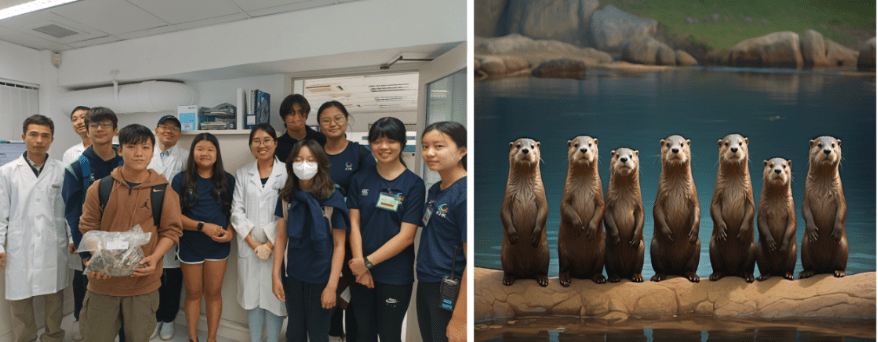
There are estimated to be fewer otters in Hong Kong- seven- than the number of ICHK students in the photo on the left with Kadoorie Farm scientists.

Last term, we were lucky to be invited to Kadoorie Farm to hear about the plight of pangolins. We met with researchers such as Aiko Leong, the female scientist in the centre of the picture who was engaged with analysing traces of otter DNA found in stools, and other scant samples to try to establish patterns of movement and population numbers etc. Work conducted by students at HK University led the researchers to conclude there are an estimated seven otters left in Hong Kong. Yes, I thought I misheard too. Not seventeen. Seven. You can read more about that in this excellent feature article: https://www.kfbg.org/en/KFBG-blog/post/In-search-of-the-last-otters-of-Hong-Kong

The electric sheep that grazes on the rooftop of Rick Deckard’s flat is his prized possession, but he longs for the day where he might be able to not just gaze at the real rabbits, goats and giraffes for sale beyond the shiny glass shopfronts and purchase his very own status symbol to show off to his neighbours. 

Global biodiversity loss as a bi-product of human activity has been documented by groups such the World Wildlife Fund, who state that we are now living in an age known as the Sixth Mass Extinction; within Hong Kong we have creatures such as pangolins, pink dolphins and otters who are hanging on by a thread. In a follow up to this piece, I will reflect further on the precarious systems in balance and the strategies and technologies that have been proposed if we are to be successful in- hopefully- ensuring that these species survive, as well as ensuring the flourishing of the dignity and prosperity of human life. 

But if we aren’t, maybe in the future you might covet finding an electric otter wrapped up under the Christmas tree.

A thin slither of mangroves and fish and shrimp ponds that constitute the Mai Po Marshes stand in stark contrast to the mega-city of Shenzhen. Land cleared for development is visible. 

We are at an age where certain aspects of science-fiction have been replaced by science fact. In the novel, the “Voigt Test ” is administered by officers looking to ascertain whether the “person” they are speaking with has the necessary empathic qualities to indicate they are actually human. Some AI robots today have already passed the Turing Test, and are becoming increasingly sophisticated to the point where they might also be likely to pass whatever empathy tests might exist in the near future.

Indeed, to a perturbing extent, we must now operate like Deckard, although we don’t have the advantage of his sophisticated testing systems. We need to be able to apply a critical rationale based upon our own intuitions and reasoning if we are to detect fact from fake. We are the guinea pigs in a new digital age, conditioned to speaking, and revealing our preferences, to Alexa, Siri, or the chatbot on the bank app etc. 

(l-r) Professor Ian Wilmut with Dolly the sheep, the world’s first cloned animal; a “Tamagotchi”, a massively craze electronic animal toy in the 1990s (it’s highly probable some of your parents owned and accidentally killed one); “Come give me a hug!” Robots today are being developed with empathic traits, such as Osaka University’s Affetto infant.

Then, there’s the rather malign development of AIs that will purport to be our friend, and lend a sympathetic ear to young people who might find themselves increasingly isolated from others owing to an overreliance on tech, either through their own “choice” (the reality is that the algorithms that underpin these seemingly benign technologies are designed to be addictive to commodify your attention), or due to the pressures of family life where mum and dad are working late, so solace is found through staring at their smartphone screens. 

Here, once again, PKD showed remarkable foresight as the “mood organs” that characters dial into to synthesise their daily emotional experience is much like the real invention of the dopamine-delivering technologies that almost all of us carry in our pockets. Dick’s characters search for connection and empathy within, or away from, their world through the Empathy Machines which they can plug into; these machines allow them to feel that they are momentarily like Mercer, the suffering god of their world. In a world otherwise bereft of hope it serves as some sort of spiritual escapism to escape the drudgery and meaningless of their own existence.  

Do Androids Dream of Electric Sheep? Is a fantastic novel, brimming with ideas, many of which feel like they have already come somewhat true, just 56yrs after it was written. As a modern reader, we might use the text to stimulate our own thought experiment as to what the future might hold, and how we should act in it. Some of the technologies and risks that PKD predicted have already arrived. (I do wish they would hurry up with the flying cars, though…)

A graphic novel version of PKD’s seminal science-fiction novel will shortly be appearing in the library..!

Links and Citations

https://www.independent.co.uk/news/science/dolly-parton-scientist-scientists-university-of-edinburgh-b2409178.html

https://www.kfbg.org/en/KFBG-blog/post/In-search-of-the-last-otters-of-Hong-Kong

https://mashable.com/article/blade-runner-which-version-watch

https://theconversation.com/ai-is-closer-than-ever-to-passing-the-turing-test-for-intelligence-what-happens-when-it-does-214721

https://www.theverge.com/2012/7/26/3188043/robot-baby-osaka-university-asada-laboratory

https://www.worldwildlife.org/stories/what-is-the-sixth-mass-extinction-and-what-can-we-do-about-it

Youtube: Bladerunner Trailer for its 30th Anniversary Release. 
Sustainability @ ICHK

At ICHK we interpret sustainability holistically, at the personal, somatic and psychological level.

We need to be sustainable within ourselves before we set out to fix problems we might see in the world. If we are calm and balanced internally, then we will have the energy and capacity to effect change in a more sustained fashion in the future.

Our Human Technologies curriculum asks students to explicitly reflect on their backgrounds, their values, and their future goals. We run a wide panoply of environmentally-focused extracurricular activities that work to develop a growth mindset within our students. 

Uniquely, compared to other Hong Kong schools, we are situated in the spectacular natural environment of the Pat Sin Leng Country Park, so students are regularly engaging in hiking, camping, cycling, and science trips to embrace the outdoors and appreciate issues of sustainability at the local level.

We are a member of The Alliance of Sustainable Schools, which is a network of schools within Hong Kong and globally, that seeks more sustainable solutions in how they operate.

As a member school, we recognise the seriousness of our ecological crises – including climate change, biodiversity loss, deforestation, pollution and water scarcity – and the challenges they pose for the health and wellbeing of our students and the global community.

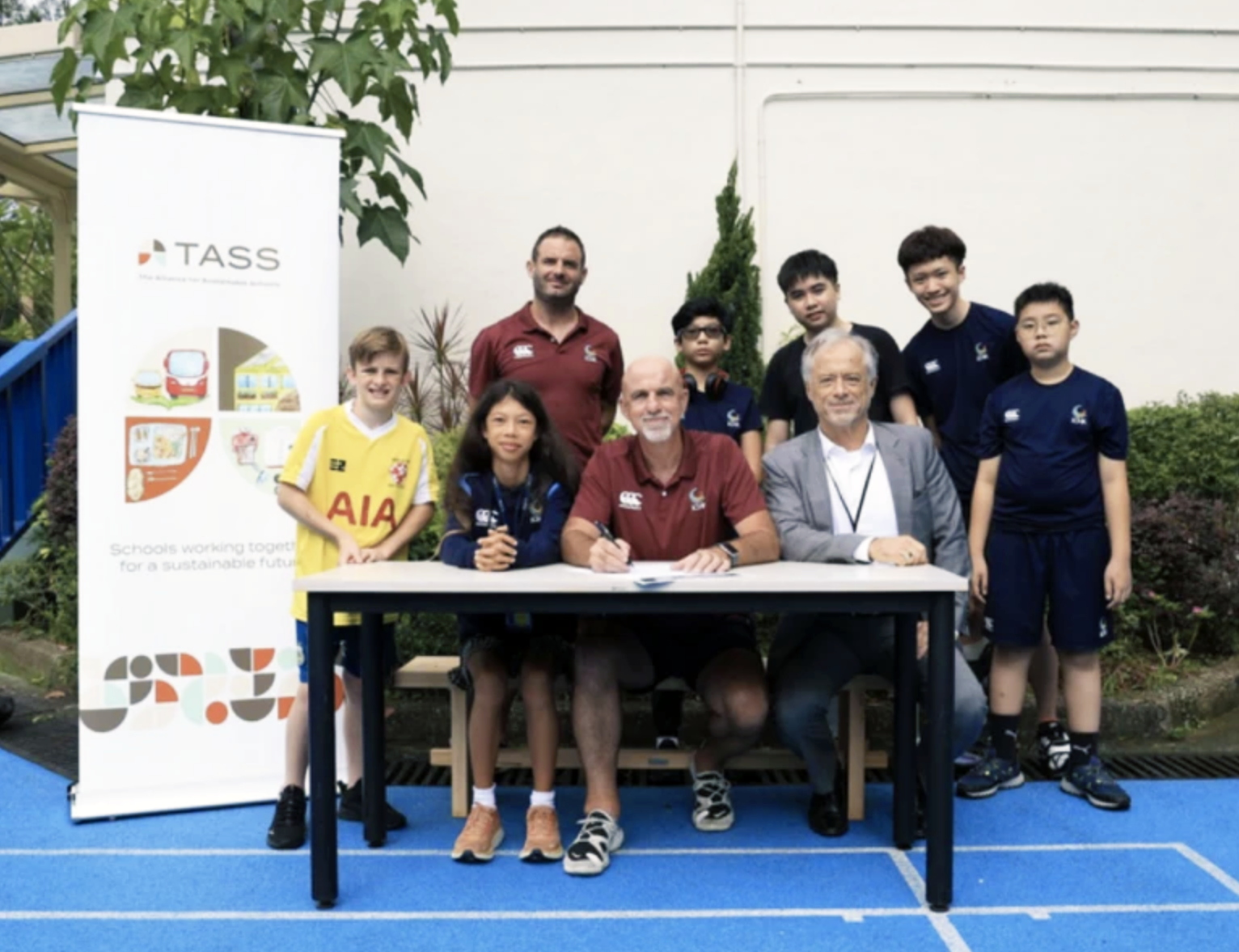
In signing the TASS Charter in 2023, we pledged that ICHK would develop practices that enable students to develop the knowledge, skills and competencies required to become sustainability stewards.

Under the guidance of Sustainability Coordinator Jon Rees, a team of Eco Warriors is leading a number of initiatives to reduce our carbon footprint. Our two TASS ambassadors are part of this team, and they connect with our School Representative Council and School Media Team to promote key sustainability issues within ICHK. These include the reduction of food waste, increased recycling and the removal of single use plastics.

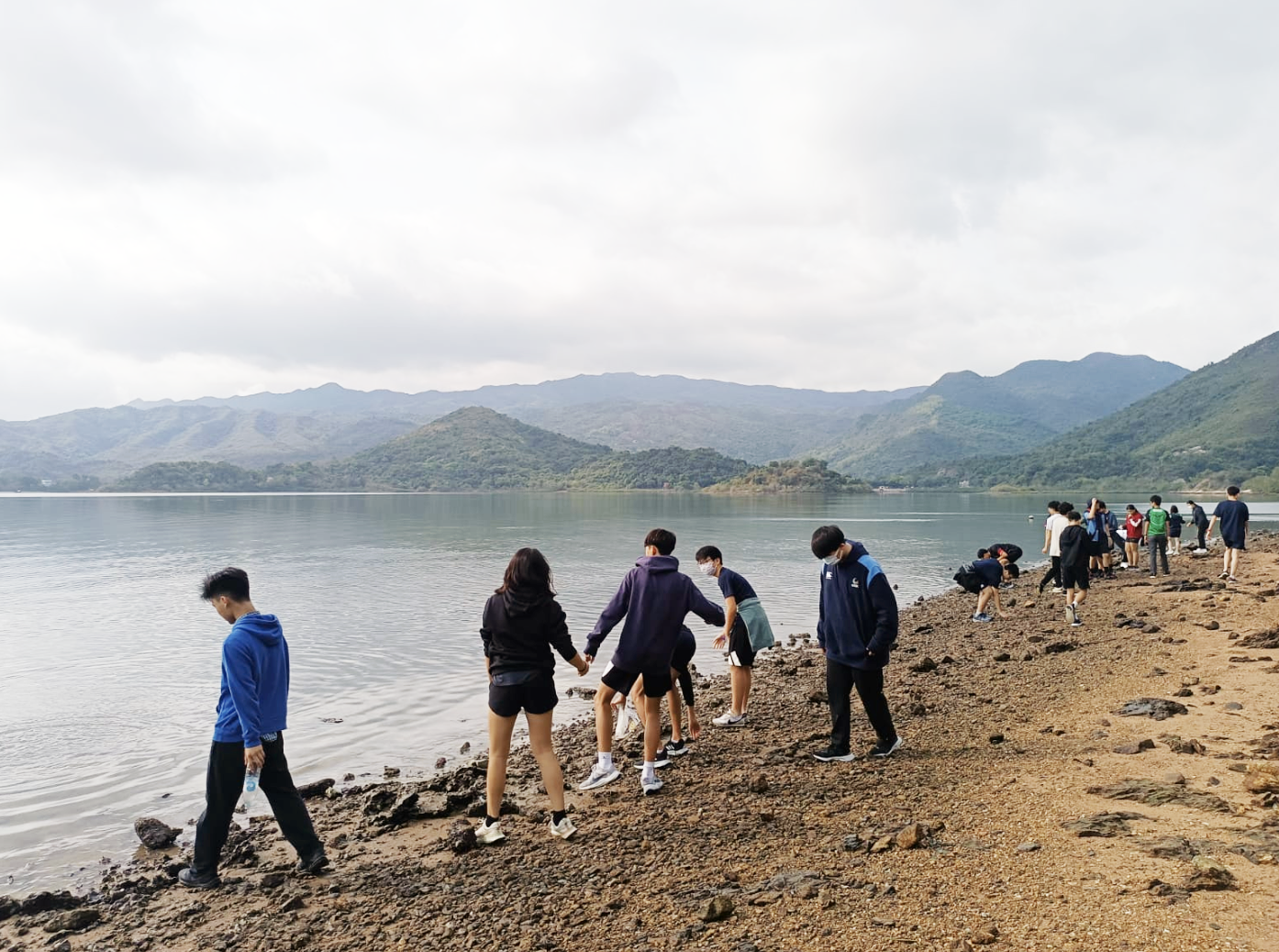
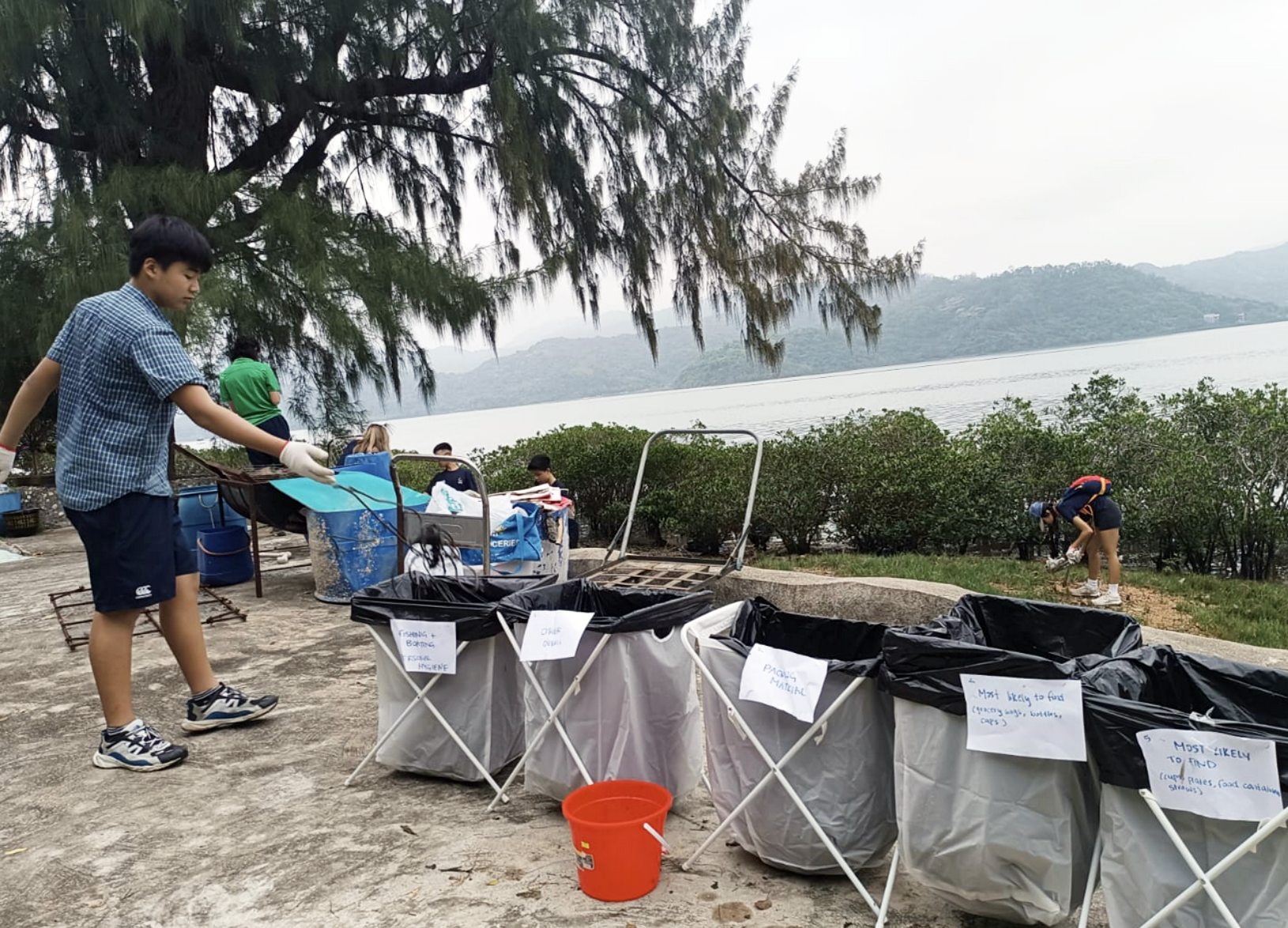
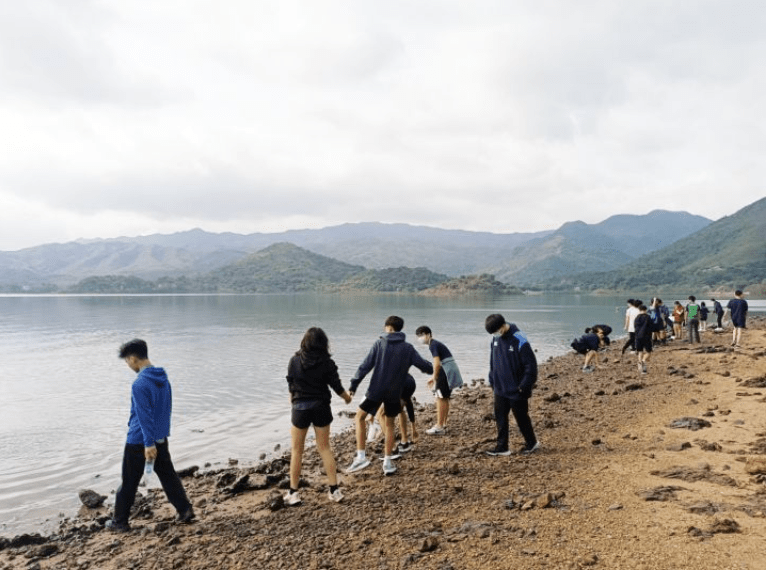
Students engage in regular clean-ups along our neighbouring shoreline, reminding them how important it is to care for their community and helping them to develop sustainability practices.

Connections are also made with ICHK’s flagship programmes including Deep Learning and Enrichment & Flow,  where students get out and explore the world around them and come face to face with environmental issues in an authentic manner.

Above all, we strive to develop caring, empathic students who understand that through their actions, they can make a difference, and sustain a positive impact upon the world.

Find out more about ICHK’s approaches to sustainability>>Learn More

Human Tech: Dyadic Relationships- Forming Memories

Human Tech: Dyadic Relationships- Forming Memories

We humans are highly complex beings: Our brains are said to have an average of 86 billion neurons and 85 billion non-neural cells. There’s 8 billion of us now, too, so we are a remarkably diverse, cognitively complex, and evolutionarily successful species. (https://www.pnas.org)

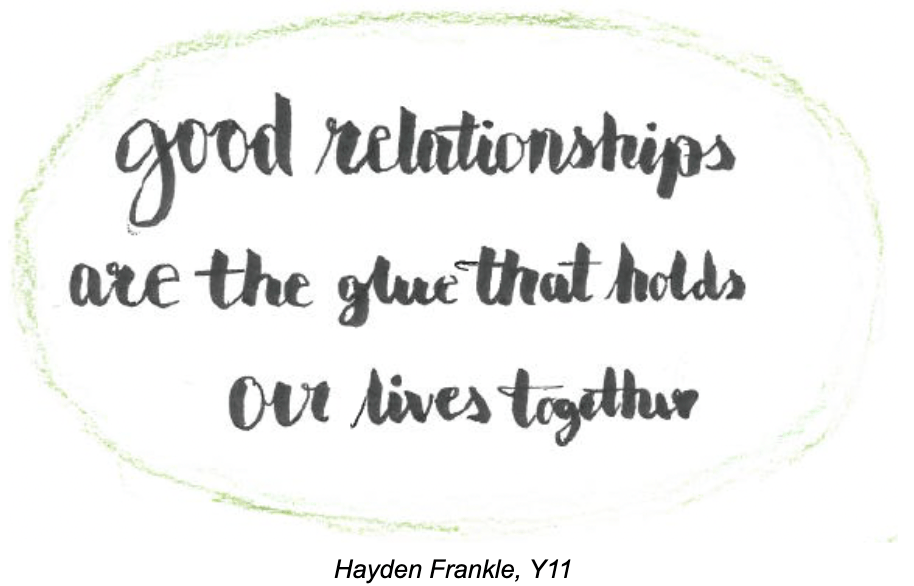
Hayden Frankle, Y11

However, rather surprisingly, a generic primate brain has approximately the same number of neurons as ours. So, while we are truly complex, we also bear surprising similarities to our primate cousins and other ‘K-strategist’ mammalian species (whales, elephants, primates) who have comparatively few young (to ‘rstrategist’ species such as frogs, salmon, turtles that give birth to hundreds of young at a time). And amongst all ‘K-strategists’, humans spend the longest time being nurtured and cared for, often by the mother, given the need for milk and nutrition, by whoever- parent, helper, guardian, grandparent- is the primary caregiver.

In Human Technologies, we are exploring “the art and craft of being human.” We want to put the lid up and peer into how our brains are wired- even delving waaaaay back into our evolutionary past, and engaging with ideas and theories from cognitive neuroscience and psychology- to better understand our own species and ourselves, and the sorts of habits, behaviours and social relationship patterns that define who we are, and who we want to become. Recently, we have been engaged with learning how human beings form their first memories and impressions of the world. 

In the absence of language and with only rudimentary cognitive capacities, our tender young brains are still forming in the “fourth trimester” outside the womb, in a state of total, utter dependence on those providing our care.How we form our first expectations of what the world is like is based upon our relationships with our primary caregivers.  

It will take some months or so before infants develop the sensory connections to be able to recognise the fleshy faces that float in front of their crib, and the earliest memories my Y11 class and myself could pin down were maybe when we were three years old…and these were often vague, dislocated, memories at best. The reason being, our prefrontal cortex that distinguishes our specific type of mammalian brain from other species and allows us to puff our chests out and declare ourselves, homo sapiens, (wise men), is still under development.

As we learn as babies, our cognitive apparatus is making stronger connections between patterns and expectations of behaviour. We come into the world with our own unique biogram, DNA, and a temperament which is distinguishable from our own brothers and sisters. 

Vulnerable, but highly complex creatures, hardwired with a capacity to make meaning of their world. 

Yet, we are not simply ‘blank slates’, for encoded in the complexity of our DNA and biograms, research presented by the American psychotherapist, Daniel Stern, is the capacity for making meaning of the world in our very early infant years through Representations of Interactive Generalisations (RIGs).

So, what are RIGS?

While a baby can’t yet either form the words “love”/”worry”/’hunger”/”comfort”, their primal calls for attention, and the response that follows from the caregiver, help them to form representations of whether the world will be a comfortable place where they are likely to be soothed and made to feel OK, or not. (Sadly, all too often, the research shows that children who do not develop a basic sense of “OK-ness” are likely to grow up more cautious and anxious of the world. Reasons for this are varied, but include the two temperaments of the baby and caregiver not aligning, or, babies who are born into situations of socio-economic hardship, so that attention is just hard to come by…)

A baby can understand that a hug represents love and protection. And if a pattern of hugs and care occurs across time, then that baby is building a series of connections that are already affecting how he/she will come to the world.

To understand these ideas, students were introduced to the captivating snow art of the Canadian artist, Simon Beck. You can check out his beguiling masterpieces here, where he uses the vast white snowfields of Banff National Park to create his huge murals which embrace and compliment the richness of the natural setting in which they are created. 

With one footprint after another, eventually patterns of connection and meaning start to emerge in the snow. 

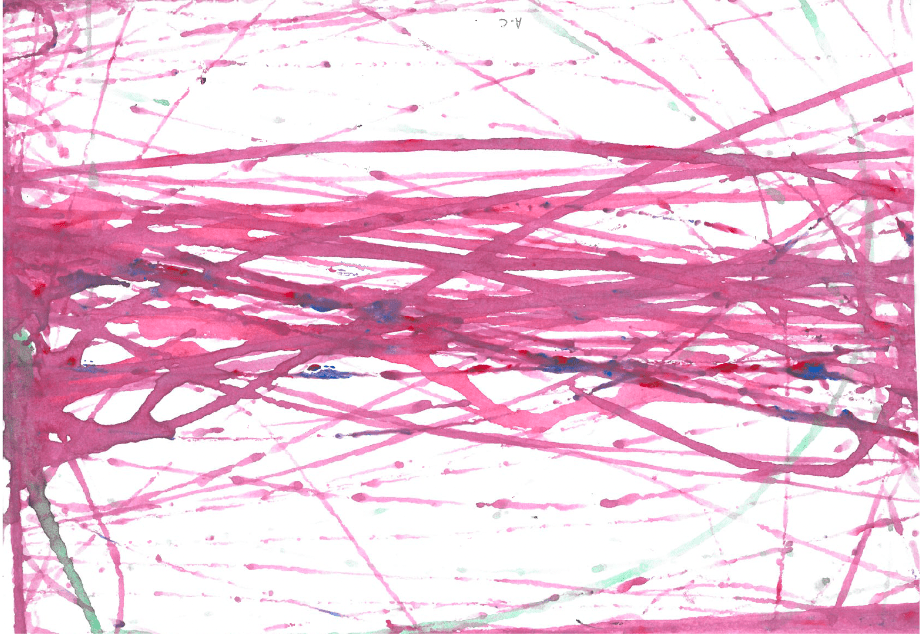
Our students enjoyed artistically representing this visual metaphor through the creation of marble-art pieces, where one marble, dipped in paint was rolled across the white page. They attempted to roll the next marble along the same ‘pattern of connection’, and the results were very beautiful, but also a very useful symbolic representation of the learning that took place within the unit. 

Amelie Chan, Y11, Marble Art to show of Representations of Interactive Generalisations

What we are really keen for students to understand is that if we extend the snow footprint metaphor further, they are still so young and their capacity for self-agency is now coming to the fore; my Y11 class increasingly have the language, rationality and wisdom to make more independent decisions. 

While the very nature of us as ‘K-strategists’ means that we have been totally dependent upon the decisions of our primary caregivers to take us to this point, students can now start to push back upon the world and make decisions not only about the here-and-now, but the ‘Self-2’ that they want to become in the future.

Given the teenage brain’s vast plasticity and capacity for learning not merely academic content, but the no-less beneficial social technologies that will give their lives meaning, purpose and value, they still have time to realign their focus, adopt new habits and behaviours, to create new ‘footprints in the snow’, that, over time will become new conceptions of how they perceive and act in the world. 


To know the ways in which we are hardwired as a species, gives students real insight to that age-old maxim to “know thyself” in a way that is pragmatic and objective, without being too self-critical; also, by recognising the myriad differences between ourselves and others we can hone our sense of empathy and understanding. These are skills that, according to Attachment theory specialist, Dr. Joanne Wu, allow us to “improve our relationships and our well-being”. Read that again. That’s like a superpower. That’s what schools could/should be about. Give me that- the ability to improve my relationships and my well-being- over a narrow fixation on scores/results anyday.

The Alliance of Sustainable Schools @ ICHK

At ICHK we interpret sustainability holistically, at the personal, somatic and psychological level.

We need to be sustainable within ourselves before we set out to fix problems we might see in the world. If we are calm and balanced internally, then we will have the energy and capacity to effect change in a more sustained fashion in the future.

The Human Technologies curriculum we run here at ICHK asks students to explicitly reflect on their backgrounds, their values, and their future goals. We run a wide panoply of environmentally-focused extracurricular activities that work to develop a growth mindset within our students. Uniquely, compared to other Hong Kong schools, we are situated in the spectacular natural environment of the Pat Sin Leng Country Park, so students are always engaging in hiking, camping, cycling, and science trips to embrace the outdoors and appreciate issues of sustainability at the local level.

A team of Eco Warriors is leading a number of initiatives to reduce our carbon footprint, under the guidance of Sustainability Coordinator Jon Rees. Our two TASS ambassadors are part of this club, and they connect with our School Representative Council and School Media Team to promote key sustainability issues within ICHK.

We have been collaborating with our caterers, Chartwells, to reduce single-use plastic, increase the range of the vegetarian options offered on the menu (and the reduced carbon impact that these provide). We’ve also launched an air-con awareness programme and are looking out for many other ways to make positive connections throughout the school.

ICHK EARTH WEEK

ICHK Earth Week, April 25th, 2024

Jon Rees is Sustainability Coordinator and a Teacher of English and Theory of Knowledge at ICHK

Monday, April 22nd saw ICHK kick off a week of celebrations to allow for a multidimensional exploration both to celebrate the beauty of our planet, as well as understand the scope and scale of the challenges ahead. 

To adapt, and hopefully to thrive, in a precarious future we must look to first be “Sustainable Humans”: by learning how to cultivate the energy, empathy and balance within ourselves, we can project more positively out into the wider world and effect greater change through the quality of our relationships and ability to work in collaboration others, regardless of whether their views accord with our own. 

You could make a strong argument that every day is Earth Day at ICHK. Certainly “the art and craft of being human” is a motto that is lived daily within the school and the regular explorations of the city through Deep Learning, the Outdoor Learning department, the pastoral programme, and extracurricular activities. 

For example, just the week before, Year 9 students were preparing for a Rite of Passage ceremony to mark their entry into the upper school, and showed their sense of responsibility for the planet by continuing a longitudinal science study of the health of our local mangroves. And our Drama department, led by Liam Greenall swept the boards at a school theatre awards. The performing arts, and the sports activities the school runs are just the most powerful means of cultivating “sustainable humans” equipped with the socio-emotional skills to thrive in the future. Building a shared commitment to these habits, dispositions and behaviours will be more formally recognised through the implementation of the new “ICHK Pin” initiative, launched by Head of School, Toby Newton this week.

On the Friday before Earth Week officially began, Marcus Lee led the Environmental Action Group to organise a very successful Toy & Stationery drive for Crossroads Foundation. Marcus was inspired to do so after hearing Crossroads’ founder, David Begbie, speak at an SDG event. Outdoor leader, Dave Addis, has opened up a permanent line of communication to Crossroads, ensuring that they have first refusal on furniture from renovations. 

Additionally, the week before, Carly Leung from the environmental start-up, VAIR, came in to speak with our Year 12s about sustainable careers and how to make effective choices to pursue positive academic and social futures. Carly Leung was one of the HK delegates at COP 28 in Dubai, so they were lucky to receive such useful advice from a dynamic young leader within the city.

Our SMT worked fantastically to turn a range of nature messages, including ancient Chinese wisdom about living in balance with our environment, (thank you Ms. Luk!), into posters for display around campus. The SMT also helped judge the winners of our hand drawn and digital Earth Week poster competition. 

The SRC helped us to launch a Kadoorie Farm: Sponsor a Tree project too. We are collaborating with Year 8 parent and Kadoorie plant specialist, Craig Williams, to acquire a range of native HK species to promote the regeneration of biodiversity atop the Nature Trail that runs behind school, in an area cleared by Dave Addis’ Bushcraft and Year 10 ENF students.

Christian Pilard, an ICHK parent, and founder of Eco-Systems Action Foundation came in and spoke to all of our Year 9s, Year 12s, as well as the +1 Centre students about the incredible range of projects which his organisation has made a positive contribution to across the last twenty years. His compassionate and proactive message seemed to work as a catalyst for some animated Year 12 SoCO planning later in the week which was wonderful to see. 

English classes had a special lesson devoted to inquiring into the issues that beset our species, captured through Carl Sagan’s compelling, A Pale Blue Dot, monologue. We looked at how the UN Sustainable Development Goals offered some solutions, but also pointed to very limited progress in many of the categories. HT classes listened to meditations, explored Earth Day songs, and took walks down to our local temple to immerse themselves in nature.

Across the week, a range of different links were posted for students to dip into courtesy of BBC Earth, and Ted Talks with prominent conservationists such as Jane Goodall and Al Gore. A range of documentaries played at lunch throughout the week, including Plastic Ocean, My Octopus Teacher (selected by the EAG’s Guy Traittel), Cowspiracy, Before the Flood and The Walk that Made Me. Additionally, an Earth Day 2024 playlist was compiled and linked here if you want to enjoy a range of songs connected to the themes mentioned.

Our Economics department ran a series of lessons on the circular economy. And this was fantastic groundwork for the visit of Tiffany Leung, from Redress, an organisation devoted to reducing our patterns of over-consumption. This event was ably put together by a group of Year 12 students, so congratulations to Ani, Caiden, Ariv, and Elkan for their positive actions for our community which benefited our Year 7 and Year 8 students. It also helped deepen the Year 7s’ understanding of reducing waste as they pioneered bringing in a reusable container for the canteen. The HK Government marked Earth Day by bringing in some very welcome legislation banning single-use plastics from the thousands of cafes and restaurants across the city. Our canteen largely replaced plastic cutlery long ago, but if we can also reduce unnecessary wooden forks and paper plates ending up in landfill too, all-the-better. 

Wednesday, saw a small but highly motivated group of Year 10 students accompany science teacher, Mr. Alex Yim, and Jon Rees down to PNEC Organic Farm. Look out for a further post about the excellent community work PNEC are engaged in, but great thanks to Kootyin and Pinewood for their usual generosity and kindness, and for gifting us with a copy of the newly published oral storytelling history of Nam Chung and Sha Tau Kok.

The work will surely carry on in classes, Deep Learning inquiries, extra-curricular activities, and the library, so thanks, then, to Ms. Palmer who has curated a series of books regarding Sustainability so that students can carry on their engagement with these topics. 

Written by: Jon Rees

In: Teacher Insights

When: 6 months ago